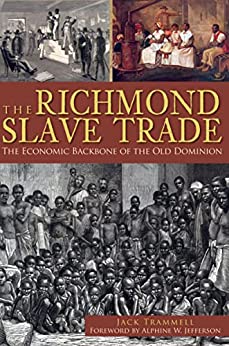
The Richmond Slave Trade by Jack Trammell

Reviewed by Sandra Merville Hart

The Economic Backbone of the Old Dominion

This book deals with a dark part of American history. For that reason, it isn’t an easy read.

The author traces the history of slavery in America. By 1671, there were 6,000 white indentured servants and 2,000 black slaves in Virginia.

I learned a lot in reading this book. For example, a Virginia law passed in 1806 gave newly freed slaves one year to leave the state or risk being automatically placed back into bondage for life.

The author included charts, photos, maps, and sketches to enhance readers’ understanding of information given.

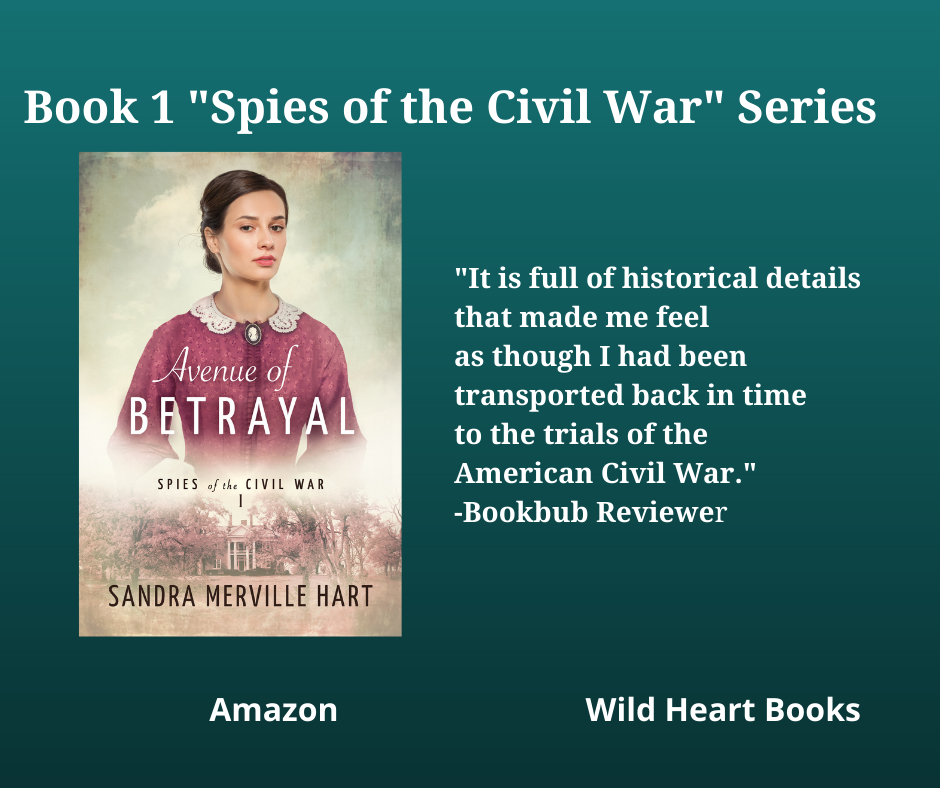
The Underground Railroad is a topic in Byway to Danger, Book 3 in my “Spies of the Civil War” series.

Recommended for those desiring to learn more about the history of slavery.

Amazon

Transcontinental Railroad

by Sandra Merville Hart

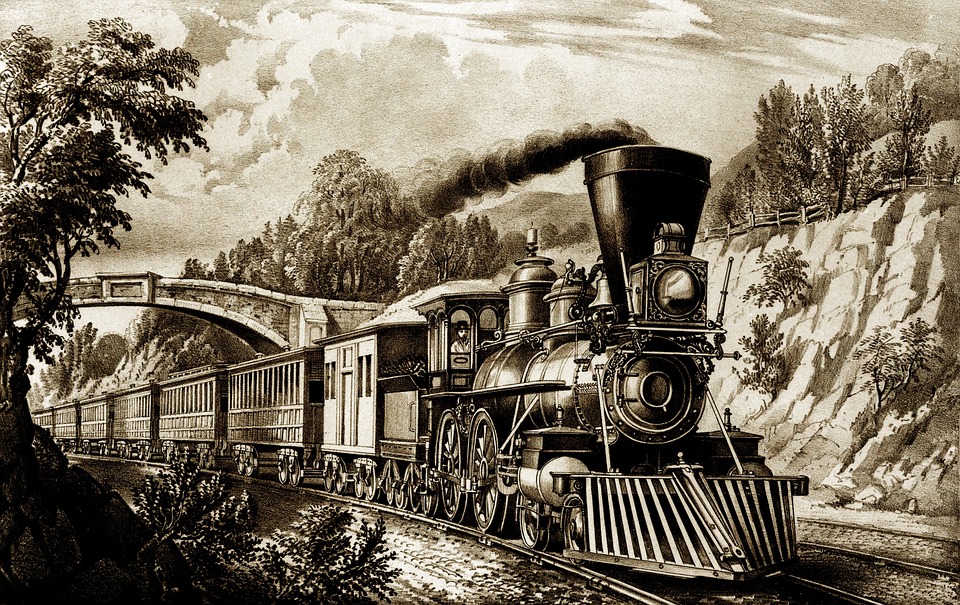
Asa Whitney, a New York merchant, planted the idea of a transcontinental railroad when he petitioned Congress for federal funding of a sixty-mile strip in 1845, but it wasn’t until Theodore D. Judah caught the vision that things began to happen. Judah believed the Donner Pass was the perfect area for the railroad to pass through the Sierra Nevada mountains, and, as the engineer of the Sacramento Valley Railroad, he wanted to build it.

He brought Leland Stanford, Charles Crocker, Collis P. Huntington, and Mark Hopkins in on the project, leading to the establishment of Central Pacific Railroad Company of California.

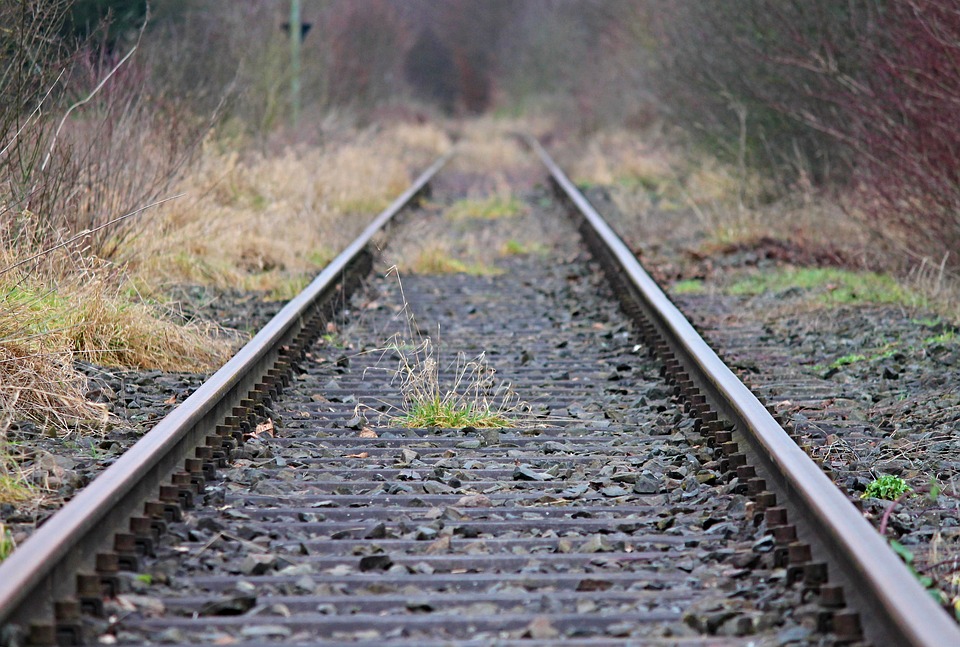
Congress passed the first Pacific Railway Act on July 1, 1862. It stated the Union Pacific was to start in Omaha, Nebraska, and build toward the west. The Central Pacific started in Sacramento, California, and built toward the east to meet them roughly halfway.

The second Pacific Railway Act (July 2, 1864) doubled the land grants to 12,800 acres for every mile of track built. They also received $48,000 in government bonds for each mile. This increased the competition between the two companies.

The Civil War hampered Union Pacific’s efforts to build. Though they began in December of 1863, little was accomplished for the remaining two years of the war.

The western team began about a month before. Sadly, the man who had laid so much groundwork for the project didn’t see it to completion. Judah died of yellow fever in November of 1863, shortly after Central Pacific pounded the first spikes.  

The Sierra Nevada mountains slowed Central Pacific’s progress. They hired Chinese workers for this grueling task. Nine tunnels were blasted the mountains in order for the track to be laid.

Once the war ended, the Union Pacific made progress westward across the prairie. Civil War veterans and Irish immigrants had to cope with attacks from Native Americans. Cheyenne, Sioux, and Arapahoe were among the attacking tribes.

Union Pacific workers had their own difficulties to contend with—the Rockies. Even with these obstacles, the group from the east was in Wyoming in the summer of 1867, and had laid almost four times the miles of track as the western team.

Once Central Pacific made it to the other side of the Sierra Mountains in June, they made significant progress.

The competition was on now. Unfortunately, the workmanship suffered and some the sections were later rebuilt.

In March of 1869, President Ulysses S. Grant told the two companies to agree on a meeting point. They chose Promontory, Utah. A symbolic gold spike was driven in a special “Golden Spike Ceremony” on May 10, 1869. It linked both railroads, marking the completion of the Transcontinental Railroad.

The hero in my novel, Avenue of Betrayal, Book 1 of my “Spies of the Civil War” series, dreams of participating in building the Transcontinental Railroad. The fictional Union officer hopes that the war doesn’t last so long that he misses his opportunity. As you read in this article, Civil War veterans were used to build the railroad after the war ended. I was thrilled to use such an important part of our history in the story.


Sources

“Central Pacific Railroad,” Encyclopaedia Britannica, 2022/02/22 https://www.britannica.com/topic/Central-Pacific-Railroad.

History.com Editors. “Transcontinental Railroad,” History.com, 2022/02/22 https://www.history.com/topics/inventions/transcontinental-railroad.

“Pacific Railway Acts,” Encyclopaedia Britannica, 2022/02/22 https://www.britannica.com/event/Pacific-Railway-Acts.

“The Transcontinental Railroad,” Library of Congress, 2022/02/26 https://www.loc.gov/collections/railroad-maps-1828-to-1900/articles-and-essays/history-of-railroads-and-maps/the-transcontinental-railroad/.

“Transcontinental Railroad,” History.net, 2020/06/19 https://www.historynet.com/transcontinental-railroad.

“Union Pacific Railroad Company, Encyclopaedia Britannica, 2022/02/22 https://www.britannica.com/topic/Central-Pacific-Railroad.

Laying the Groundwork for the Transcontinental Railroad

by Sandra Merville Hart

Asa Whitney, a New York merchant, wanted a railroad that stretched from the Atlantic to the Pacific. His goal was to make trade with China easier after returning from a trip to China in 1844.

In 1845, Whitney petitioned Congress for federal funding of a sixty-mile strip and proposed that land be granted as wages for workers. He didn’t give up when his request was denied. In 1849 he published Project for a Railroad, which outlined possible routes. Congress didn’t accept his ideas, but their interest was growing.

Whitney continued to talk about his dream and the public noticed. A transcontinental railroad brought many benefits. Train travel for passengers was faster and safer than stagecoaches and wagon trains. Mail delivery would be accomplished more quickly. Goods from the east could reach western customers in a timely manner. There were many merits to building it.

Others made proposals but Congressmen didn’t agree on the eastern terminus. Secretary of War Jefferson Davis sent four men to lead the exploration of potential routes for the transcontinental railroad. They learned that any of them worked. The least expensive was the route along the 32nd parallel.

Because routes along the South didn’t please Northern Congressmen and vice versa, debates continued.

Whitney stopped lobbying for the railroad in 1851, but a new champion came along in 1860. Theodore D. Judah believed the Donner Pass was the perfect area for the railroad to navigate through the Sierra Nevada mountains. As the engineer of the Sacramento Valley Railroad, he wanted to build the new railroad.

He brought Leland Stanford, Charles Crocker, Collis P. Huntington, and Mark Hopkins in on the project, leading to the establishment of Central Pacific Railroad Company of California.

Judah traveled to Washington City (as Washington DC was then called) where he talked with Congress. President Abraham Lincoln backed the idea and the first Pacific Railway Act went into effect on July 1, 1862. It stated the Union Pacific was to start in Omaha, Nebraska, and build toward the west. The Central Pacific started in Sacramento, California, and built toward the east to meet them roughly halfway.

It was a long journey of many years and several key people to make the decisions laying the groundwork for the Transcontinental Railroad, not the least of whom were Asa Whitney and Theodore Judah.

The hero in my novel, Avenue of Betrayal, Book 1 of my “Spies of the Civil War” series, dreams of participating in building the Transcontinental Railroad. The fictional Union officer hopes that the war doesn’t last so long that he misses his opportunity. I was thrilled to use such an important part of our history in the story.  

Sources

“Asa Whitney,” Wikipedia, 2022/02/26 https://en.wikipedia.org/wiki/Asa_Whitney.

History.com Editors. “Transcontinental Railroad,” History.com, 2022/02/22 https://www.history.com/topics/inventions/transcontinental-railroad.

“Pacific Railway Acts,” Encyclopaedia Britannica, 2022/02/22 https://www.britannica.com/event/Pacific-Railway-Acts.

“The Beginnings of American Railroads and Mapping,” Library of Congress, 2022/02/26 https://www.loc.gov/collections/railroad-maps-1828-to-1900/articles-and-essays/history-of-railroads-and-maps/the-beginnings-of-american-railroads-and-mapping/.

“The Transcontinental Railroad,” Library of Congress, 2022/02/26 https://www.loc.gov/collections/railroad-maps-1828-to-1900/articles-and-essays/history-of-railroads-and-maps/the-transcontinental-railroad/.

“Transcontinental Railroad,” History.net, 2020/06/19 https://www.historynet.com/transcontinental-railroad.

Grasshopper Weather

by Sandra Merville Hart

I recently read On the Banks of Plum Creek by Laura Ingalls Wilder. Her family moved to Minnesota when she was seven and first stayed in a sod house built into the creek bank. The details of everyday life in the 1870s fascinated me.

The Ingalls family was very poor. They had moved into the sod house too late to plant crops so finances were tight. Laura’s pa put all his hopes on next year’s crop, which promised to be a bountiful one. She dreamed of having all the things they’d done without and eating candy daily.

There was no snow by Thanksgiving of that year. Days were still warm though the nights were chilly. No rain. No more frost. Pa learned that the old-timers called it “grasshopper weather” but no one explained what that meant.

An unusually dry, hot, sunny summer followed. Plump wheat promised a beautiful crop. Pa planned to pay for the farmhouse he’d borrowed the money to build with the bountiful wheat.

Sunshine dimmed at lunchtime a couple of days before the planned harvest. A coming storm blackened the sky. No, not a normal storm. What was it?

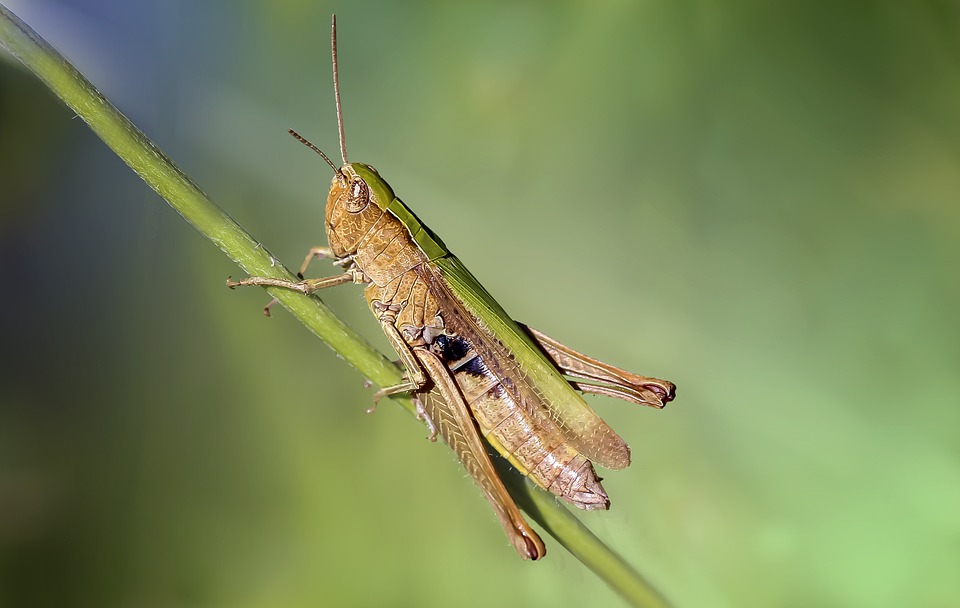
Glittering thin snowflake-like matter blocked the sun. No wind. Then brown grasshoppers dropped to the ground, falling on Laura’s head and arms like hail. When she beat at them, they clung to her skin.

Grasshoppers by the millions ate the wheat crop, prairie grasses, leaves, cornstalks, and every vegetable in the garden. Though all windows were shut, brown grasshoppers came inside the house each time someone entered it.

Laura’s family endured a nightmare.

It’s estimated that one trillion Rocky Mountain locusts descended on the Great Plains in 1874, covering an area around 2,000,000 square miles and causing much devastation.

When large groups of grasshoppers swarm, they’re called locusts. In one day, these swarms can fly as far as 100 miles.

Locusts returned in smaller numbers some years but became extinct early in the 1900s. The arrival of farmers who plowed the prairie grass to grow crops changed the habitat, which many experts believe caused the extinction.   

Sources

“Grasshoppers in On the Banks of Plum Creek.” Study.com, 12 April 2017, study.com/academy/lesson/grasshoppers-in-on-the-banks-of-plum-creek.html.

Nuwer, Rachel. “When Weather Changes, Grasshopper Turns Locust,” The New York Times, 2021/09/29 https://www.nytimes.com/2013/04/09/science/when-weather-changes-grasshopper-turns-locust.html.

Wheeler, John. “Weather Talk: Grasshopper plagues are gone with the wind,” AGWEEK, 2021/09/29 https://www.agweek.com/news/weather/4324688-weather-talk-grasshopper-plagues-are-gone-wind.

Wilder, Laura Ingalls. On the Banks of Plum Creek, HarperTrophy, 1971.

Summer Kitchens in the 1800s

Cindy Ervin Huff, fellow author in “The Cowboys,” has a new historical romance book release that I loved! Welcome back to Historical Nibbles, Cindy!

by Cindy Ervin Huff

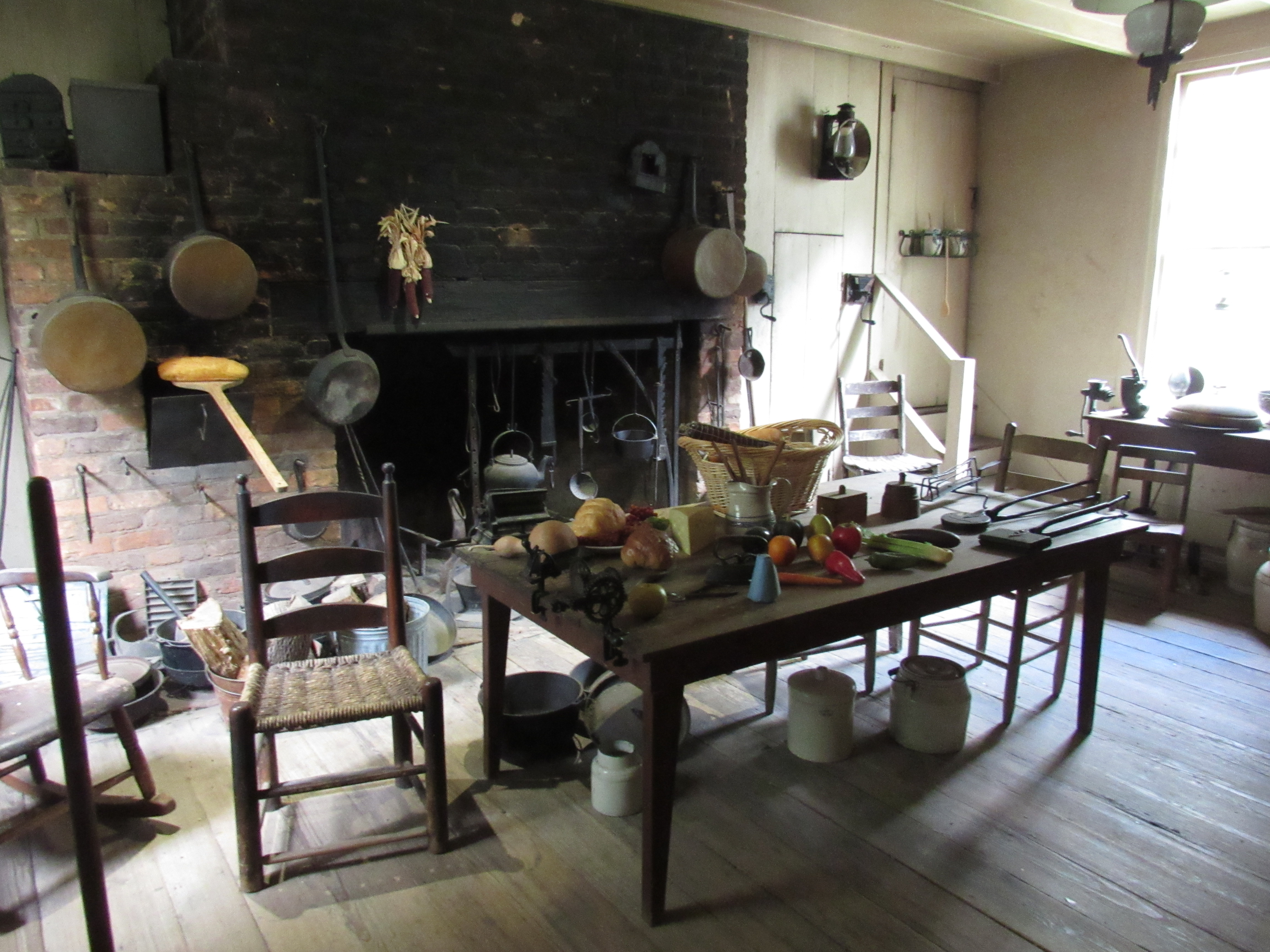
In my newest Release Rescuing Her Heart, Delilah James wants to start a bakery to provide for herself by baking in her employer Genny Holt’s kitchen and sending baked goods to the mercantile in town. Genny persuades her husband to build a summer kitchen for baking and canning in the sweltering heat.

This was not unusual request, considering there were no air conditioners or fans in the 1870s. Many families had some sort of summer kitchen.

Some women did all the cooking for the day in the morning, so the house could cool off before evening. Then the cold food was eaten throughout the day.

For the wealthy, it comprised a brick building in the back of the house near the main kitchen. They did all the cooking and canning in the summer kitchen throughout the warm months. Middle-class families might have a summer porch for cooking or a small, roofed area out back with a stove. Others resorted to building a campfire away from the house to keep the heat out of their homes.

My heroine Delilah James helps Genny Holt do canning and baking in a summer kitchen built by Lonnie and Jed Holt. The ranch has a large garden and some of what is canned, along with the baked goods, are sold in town.

They furnished the summer kitchen with a preparation table, a stove and shelves. Utensils, pots and pans came from the main kitchen.

I am so grateful for air-conditioning so I can cook in comfort throughout the summer!

About Cindy

Cindy Ervin Huff is an Award-winning author of Historical and Contemporary Romance. She loves infusing hope into her stories of broken people. She addicted to reading and chocolate. Her idea of a vacation is visiting historical sites and an ideal date with her hubby of almost fifty years would be live theater.

Visit her at her blog.

Rescuing Her Heart

As her husband’s evil deeds haunt a mail-order bride from the grave, can she learn to trust again and open her heart to true love? Jed has his own nightmares from a POW camp and understands Delilah better than she knows herself. Can two broken people form a forever bond?

First Telegraphed Message from a Hot Air Balloon Happened During the Civil War

by Sandra Merville Hart

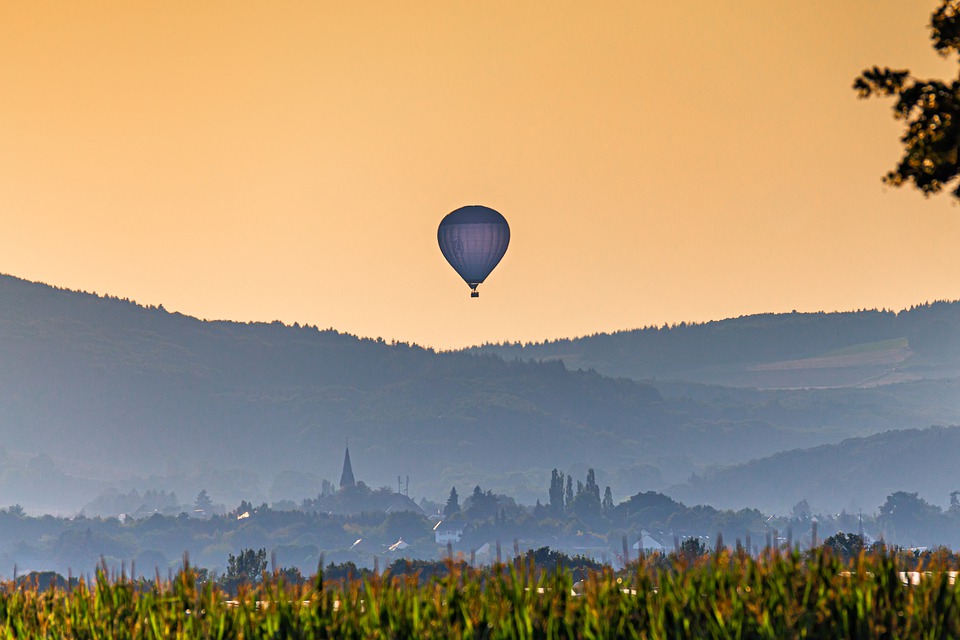
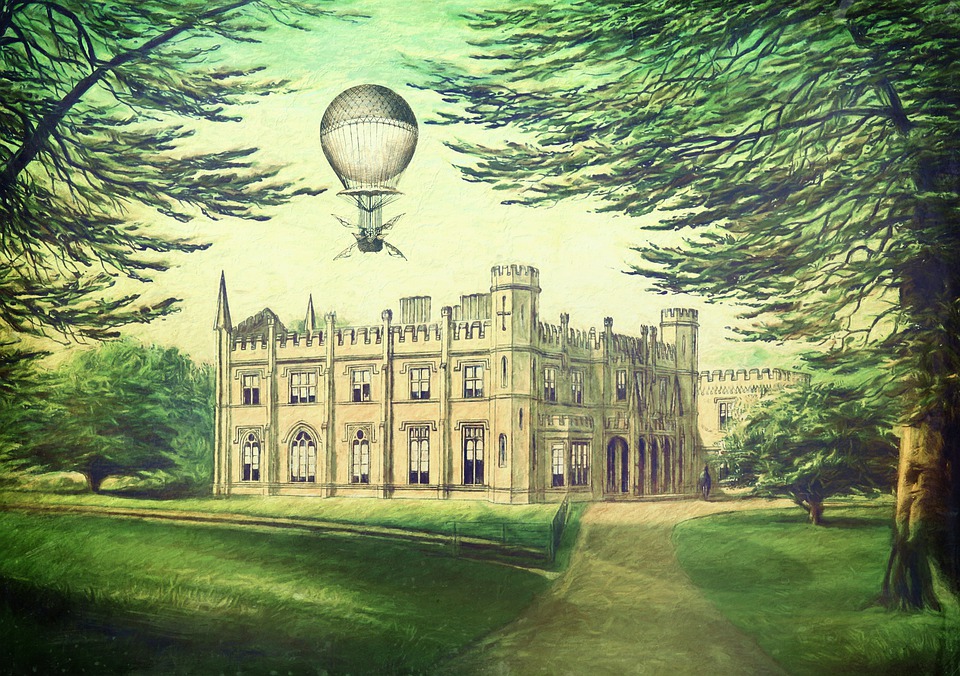
Aeronaut Thaddeus Lowe’s test flight on April 19, 1861, from Cincinnati didn’t go as planned. Instead of landing in the Chesapeake Bay area, winds took his balloon south to South Carolina. He was arrested as a possible spy. He was released after being recognized by a local citizen. What started out as a catastrophe ended with Lowe and his balloon on a northbound train to Cincinnati.

Lowe was now determined that he and his balloons would serve the Union army. He took his balloon Enterprise to Washington D.C.

The Columbia Armory occupied the area where the National Air and Space Museum now stand. It was on this spot, in sight of the White House where President Abraham Lincoln lived, that Lowe launched the Enterprise with American Telegraph Company representatives on June 17, 1861.

They ascended to a height of 500 feet. Lowe telegraphed a message to President Lincoln from the air that he could see 50 miles from his position.

President Lincoln met with Lowe that evening in the White House. Though Lowe wasn’t the only aeronaut hoping to serve the army, he had convinced Lincoln that reconnaissance from the balloon would help his generals. Lowe became the chief aeronaut in the U.S. Army Balloon Corps.

Several Federal officers ascended in these balloons, including John Reynolds, Joe Hooker, George McClellan, Fitz John Porter, Baldy Smith, John Sedgwick, and George Custer.

Sources

“Civil War Ballooning,” American Battlefield Trust, 2021/02/05 https://www.battlefields.org/learn/articles/civil-war-ballooning.

“Civil War Ballooning,” Smithsonian National Space & Air Museum, 2021/02/05 https://airandspace.si.edu/learn/highlighted-topics-/flight/civil-war-ballooning.

Clifford, Command Sergeant Major James, USA-Ret. “Balloon Operations in the Peninsula Campaign,” The Army Historical Foundation, 2021/02/05 https://armyhistory.org/balloon-operations-in-the-peninsula-campaign/.

Fanton, Ben. “Gas Balloons: View from Above the Civil War Battlefield,” History.net, 2021/02/05 https://www.historynet.com/gas-balloons-view-from-above-the-civil-war-battlefield.htm.

Gould, Kevin. “Balloon Corps,” Encyclopaedia Britannica, 2021/02/05 https://www.britannica.com/topic/Balloon-Corps.

Mortimer, Gavin. Double Death: The True Story of Pryce Lewis, the Civil War’s Most Daring Spy, Walker & Company, 2010.

“Thaddeus S.C. Lowe,” Wikipedia, 2021/02/05  https://en.wikipedia.org/wiki/Thaddeus_S._C._Lowe.

Civil War U.S. Balloon Corps

by Sandra Merville Hart

On June 17, 1861, Aeronaut Thaddeus Lowe’s balloon flight from the Columbia Armory (current location of the National Air and Space Museum) snagged the attention of President Abraham Lincoln when he received a telegraphed message from Lowe—from the balloon in flight at a height of 500 feet!

Lowe’s balloon was tethered to the White House lawn that evening while the two met. Lincoln supported the use of balloons in surveilling Confederate troops from the air.

Lowe became the chief aeronaut in the U.S. Army Balloon Corps. The War Department built military balloons for the corps. The first one was ready in August.

Union and Intrepid could carry 5 people and were the largest balloons used by the Union army. United States and Constitution held 3 people. A couple, Eagle and Excelsior, were manned by one person. The larger balloons had room for telegraphers, an important advantage.

Lowe became a member of Major General George B. McClellan’s staff. In September of 1861, Lowe directed artillery fire from his balloon at Falls Church, Virginia.

The U.S. Balloon Corps had several members: Corporal James Starkweather, Privates William A. Hodges, Albert Trunbull, W.H. Welch, Francis Barrington, Robert Wardell, James F. Case, George W. Fisher, John H. Hall, and Lawrence M. Chickey. Civilians also worked in the corps. Among these were Aeronauts James Allen, John La Mountain, and John Wise, who was considered the “Father of American Aeronautics.” Lowe also hired his father Clovis.

Balloons were used at Washington D.C., Seven Days’ Battle, the Peninsular Campaign, Battle of Seven Pines, and Fort Monroe in Virginia, to name a few.

Also, La Mountain made a tethered balloon ascent on August 3, 1861. It is significant to history because it was launched from the steam-powered gunboat Fanny. There are scholars who believe this first flight to be a precursor of the aircraft carrier.

Confederates shot at the ascended balloons. Fortunately, none were shot down. Their height usually kept them out of range. That didn’t prevent the Southerners from shooting. In fact, Lowe earned the dubious title of “the most shot-at man in the war.”

Several Federal officers ascended in these balloons, including John Reynolds, Joe Hooker, George McClellan, Fitz John Porter, Baldy Smith, John Sedgwick, and George Custer.

Unfortunately, problems with aeronauts receiving pay from the army led to resignations. Conservative generals preferred intelligence from spies, scouts, prisoners, and deserters. Vague reports from aeronauts frustrated field commanders. To top it off, Lowe didn’t get along with his staff supervisor Captain Cyrus B. Comstock and resigned on May 7, 1863.

James and Ezra Allen were then the last members of the U.S. Balloon Corps. They reported Confederate movement from Fredericksburg toward the Blue Ridge Mountains as they marched toward Gettysburg in June. The Balloon Corps ceased to exist in the summer of 1863.

Sources

“Civil War Ballooning,” American Battlefield Trust, 2021/02/05 https://www.battlefields.org/learn/articles/civil-war-ballooning.

“Civil War Ballooning,” Smithsonian National Space & Air Museum, 2021/02/05 https://airandspace.si.edu/learn/highlighted-topics-/flight/civil-war-ballooning.

Clifford, Command Sergeant Major James, USA-Ret. “Balloon Operations in the Peninsula Campaign,” The Army Historical Foundation, 2021/02/05 https://armyhistory.org/balloon-operations-in-the-peninsula-campaign/.

Fanton, Ben. “Gas Balloons: View from Above the Civil War Battlefield,” History.net, 2021/02/05 https://www.historynet.com/gas-balloons-view-from-above-the-civil-war-battlefield.htm.

Gould, Kevin. “Balloon Corps,” Encyclopaedia Britannica, 2021/02/05 https://www.britannica.com/topic/Balloon-Corps.

Mortimer, Gavin. Double Death: The True Story of Pryce Lewis, the Civil War’s Most Daring Spy, Walker & Company, 2010.

“Thaddeus S.C. Lowe,” Wikipedia, 2021/02/05  https://en.wikipedia.org/wiki/Thaddeus_S._C._Lowe.

Civil War Food Prices Escalate in Richmond

by Sandra Merville Hart

The Confederate Capitol was officially transferred to Richmond, Virginia, on May 21, 1861. Confederate President Jefferson Davis moved there with his family.

Richmond’s prewar population of 38,000 swelled to 100,000 by 1865. This caused food shortages as the war continued.

By early 1862, the cost of food had risen. Bacon was 25 cents a pound. Butter was up to 50 cents a pound. Beef had risen from 13 to 30 cents a pound for poor quality meat. Fish, even shad or rockfish, was expensive.

Folks paid $1.50 for a pound of coffee. At that price, ladies used roasted rye or roasted corn as substitutes for coffee. Some used dried willow leaves to replace tea.

As the war continued, some residents resorted to “Dutch treats,” when entertaining guests at dinner parties. Guests attending such dinners provided delicacies like brandied peaches, sardines, or French prunes for the meal.

Oriental’s Bill of Fare dated Monday, December 21, 1863, shows a variety of choices. This Richmond restaurant boasted of “Game of All Kinds (In Season)” and “Meals Furnished at All Hours.”

Here are a few of their menu items and prices:

Soups: Beef, Chicken, Vegetable, Clam, Oyster, Terrapin, Turtle, Mock Turtle—$1 each

       Fowls: Roast Turkey, Roast Goose, Roast Ducks, Roast Chicken—$3 per plate

       Fish: Shad, Perch, Herring, Crabs and Lobsters—$3 per plate

       Meats: Roast Beef, Roast Mutton, Roast Lamb, Roast Veal—$3 each

      Steaks: Beefsteaks, Pork Steaks, Mutton Chops, Veal Cutlets, Venison Steaks—$3 each

       Sundries: Ham and eggs, Poached eggs, Scrambled eggs, Fried eggs, Omelets—$3 each

       Oysters: Fried oysters, Scalloped oysters, Raw oysters—$3 each

       Birds: Partridge, Robin, Snipe, Woodcock–$3 per pair

       Vegetables (many choices marked as unavailable): Irish Potatoes, Sweet Potatoes, Cabbage, Lettuce, Onions, Celery—50 cents

      Non-alcoholic beverage choices were Pure coffee—$2.50, Pure tea—$2, Fresh milk—50 cents.

     Wines: Champagne, Madeira, Claret, Port

     Liquors: French Brandy, Apply Brandy, Peach Brandy, Rye Whiskey

     Malt Liquors: Ale, Porter

Even Fine Havana Cigars were on the menu. It’s difficult to read the prices for the alcoholic drinks and determine if it was sold by the bottle or glass. For instance, champagne has $40 marked by it in pen.

In contrast, Corinthian Hall’s Bill of Fare, from March 28, 1864, shows price increases in only three months. These are grouped by price:

     $7.50—Ham and Eggs, Tenderloin Steak, Beefsteak and Onions, Oyster Fried, Oyster Boiled, Oyster Scalloped

       $5—Veal Cutlets, Mutton Chops, Boiled Ham, Fish, Omelet-herb

       $2—Potatoes cream, Potatoes fried, Celery, Toast, Butter

       $4—Coffee per cup

These old menus give us a glimpse back into history—what a treasure!

Sources

“Richmond in the Midst of the Civil War,” Virginia Museum of History & Culture, 2021/02/04 https://www.virginiahistory.org/collections-and-resources/virginia-history-explorer/richmond-midst-civil-war.

Mortimer, Gavin. Double Death: The True Story of Pryce Lewis, the Civil War’s Most Daring Spy, Walker & Company, 2010.
Experimental Balloon Flight from Cincinnati Ends Badly During Civil War

by Sandra Merville Hart

Before the Civil War started, Thaddeus S.C. Lowe dreamed of flying his hot air balloon on a transatlantic flight. A successful test flight from Philadelphia to New Jersey was made on June 28, 1860. Three months later on September 7th, wind ripped open his balloon, the Great Western, when Lowe attempted a transatlantic flight.

Joseph Henry, secretary of the Smithsonian Institution, suggested a second test over land.

Lowe planned a night flight from Cincinnati, Ohio, to the Chesapeake Bay area on Enterprise, a new balloon. He left Cincinnati the night of April 19-20, 1861. Fort Sumter had been fired on a week earlier, marking the beginning of the Civil War.

Winds unfortunately carried him South. Lowe tried to land near the border between North Carolina and South Carolina. Armed men ordered him to take off again, which he did.

His second landing was even worse. Folks in South Carolina didn’t trust him. They placed his deflated balloon in a wagon and escorted both to Unionville, SC. A local newspaper editor knew of the aeronaut. He wrote a letter of introduction for Lowe to take to leaders in Columbia.

The letter didn’t help. Lowe was arrested. He stayed in jail until government officials released him.

On April 26, 1861, Lowe rode a train back to Cincinnati with his balloon. He reflected on troop movements he’d observed from his flight. It sparked a new idea.

He put his transatlantic flight dream to rest. Serving his country by observing the Confederate army from the air became his goal.

Sources

Fanton, Ben. “Gas Balloons: View From Above the Civil War Battlefield,” History.net, 2021/02/05 https://www.historynet.com/gas-balloons-view-from-above-the-civil-war-battlefield.htm.

Gould, Kevin. “Balloon Corps,” Encyclopaedia Britannica, 2021/02/05 https://www.britannica.com/topic/Balloon-Corps.

“Thaddeus S.C. Lowe,” Wikipedia, 2021/02/05  https://en.wikipedia.org/wiki/Thaddeus_S._C._Lowe.


Pizzini Confectioners in Civil War Richmond

by Sandra Merville Hart

Pizzini’s Confectionery Palace, located at 807 Broad Street in Richmond, Virginia, was known as the “Napoleon of Confectioners” by 1852. Famous among city residents for delicious ice creams, Pizzini’s also sold cakes, candy, and fruit.

Advertisements in Richmond’s Daily Dispatch from November 15, 1873 show that Pizzini’s sold Havana oranges, Lisbon grapes, figs, and wine jelly. Malaga grapes were 50 cents a pound. Dates were 25 cents for 2 pounds. Pizzini’s advertised “cocoanut” (coconut) cream candy and “cocoanut” caramels.

The same edition showed they did have competition. Wood & Son’s mineral water depot seemed to specialize in hot soda water. Apparently, the ladies’ favorite was hot soda water with chocolate and cream. It was available with coffee, tea, cream, or chocolate. Healthy, delicious hot soda and chocolate—advertised as recommended by physicians—was only 10 cents a glass.

There were several confectioners, restaurants, and bakeries in Richmond during the Civil War (1861-65.) Some are listed simply under the owner’s name. You may notice a number of female owners in the group.

Here are a few of the confectioners: Mrs. Kate Taylor, confectionary; A. Pizzini, confectionery; Antoni & Catogni, confectioners; Jas Lombardi, confectioner; and Mary Kumpner, confectioner.

Besides the dining rooms of the hotels, there were several restaurants: Tom Griffin, restaurant; John Macpherson, restaurant; “Brandy Station” Restaurant; Phillip White, restaurant; John A. Worsham, restaurant; Manassas Hall, restaurant; Planters’ Eating House; and “Star Saloon,” restaurant.

There were a few bakers: Jefferson Powers, baker; R. Adam, baker; _____ McNaughter, baker; and Ragland & Co., bakers, among others.

Pizzini’s was one of the businesses damaged by fire when the Confederate government evacuated Richmond on April 2, 1865. As the 1873 newspaper ads show, they recovered to thrive once again.

boulevard-of-confusion-coming-soon-meme

Sources

“Daily Dispatch, Volume 45, Number 120, 15 November 1873,” Virginia Chronicle, 2021/02/03 https://virginiachronicle.com/?a=d&d=DD18731115.1.1&e=——-en-20–1–txt-txIN——–.

“Details of the Evacuation, April 8, 1865,” The New York Times, 2021/02/03 https://www.nytimes.com/1865/04/08/archives/details-of-the-evacuation-the-evacuation-of-richmond-by-the.html.

“From the Richmond Examiner, 2/22/1866,” Civil War Richmond, 2021/02/03 https://civilwarrichmond.com/culture/food-supply/6118-1866-02-22-richmond-examiner-notice-that-pizzini-s-confectionery-palace-on-broad-street-does-immense-business-and-he-is-known-as-the-napoleon-of-confectioners.

“From the Richmond Whig, 4/15/1865,” Civil War Richmond, 2021/02/03 http://www.mdgorman.com/Written_Accounts/Whig/1865/richmond_whig_4151865d.htm.

Mortimer, Gavin. Double Death: The True Story of Pryce Lewis, the Civil War’s Most Daring Spy, Walker & Company, 2010.
“Pizzini Celebration at Slash Cottage,” Newspapers.com, 2021/02/03 https://www.newspapers.com/clip/37349473/pizzini-celebration-at-slash-cottage/.