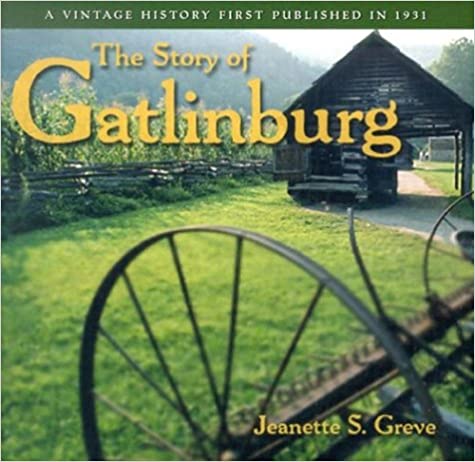
The Story of Gatlinburg by Jeanette S. Greve

A vintage history first published in 1931

What a treasure this book is to readers interested in the history of Gatlinburg and the Smoky Mountains!

I purchased this book on one of my family vacations to Gatlinburg. I knew the city’s popularity has exponentially grown in last fifty to sixty years and wondered about its humble beginnings.

This book demonstrates that growth while giving readers many details about how the first settlers lived. If you have roots or family ties to the area, you may discover more about your ancestors.

As a historical author of Civil War romances, I loved the information about the Battle of Gatlinburg. I learned the town was occupied during the war. The author provides officer’s names and specific regiments in the area—wonderful details for researchers.

Folks interested in the history of Gatlinburg as well as those who love learning America’s history will enjoy this book. A treasure!

-Sandra Merville Hart

Amazon

History of Pigeon Forge

by Sandra Merville Hart

Like other tourists to the Smoky Mountains, my family has spent many happy days in Pigeon Forge, Tennessee. My parents, who used to live nearby, told me that it was a small tourist town into the 1970s. A recent vacation showed that every square foot along the main road is covered with restaurants, shops, motels, and shows. When did it change? And what is the history of the town?

Mordecai Lewis left Virginia and received 151-acre land grant from Governor Blount. In 1790, he built the area’s first forge on it. His son-in-law, Isaac Love, who inherited his property, built an iron forge along what’s now known as the West Fork of the Little Pigeon River in 1817. Iron bars, farming tools, and building equipment produced by this forge were sold throughout the country.

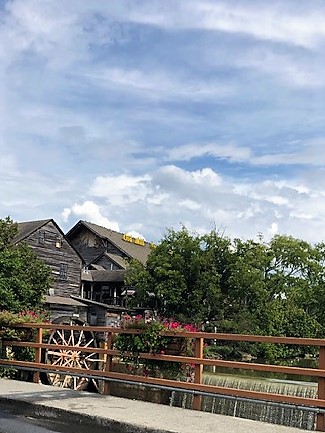
William Love and his brothers, sons of Isaac, built Lewis Mill (today’s Old Mill) near the forge in 1830. Farmers brought wheat, corn, and oats to make flour at the gristmill.

Beech trees lined the river, attracting huge flocks of passenger pigeons to nest in its trees and feast on beechnuts. Sadly, the once massive flocks of birds are now extinct.

When William Love was appointed postmaster with the post office inside the mill, Pigeon Forge received its name for his father’s forge and the passenger pigeons.

The mill was sold to John Trotter before the Civil War. He used his mill to support the Union. Clothing for Union soldiers in Gatlinburg were produced by secret looms on the second floor. Trotter used the third floor as a hospital.

The town’s population remained small—154 in 1907. Tourism increased in the mountains after the Great Smoky Mountains National Park was dedicated in 1940.

Rebel Railroad, Pigeon Forge’s first theme park opened in 1961. Klondike Katie, a coal-fired steam engine, was the main attraction. It changed ownership in 1970 and became Goldrush Junction. Another new owner in 1977 renamed it Silver Dollar City. Country singer Dolly Parton became a co-owner in 1982. Four years later, Dollywood opened.

Pigeon Forge became a city in 1961. Tourism boomed twenty-one years later. The city has grown rapidly to become a popular vacation location—a long way from a forge and a mill that was its claim to fame 190 years ago.

Sources:

“8 Huge Moments in Gatlinburg History and Pigeon Forge History,” Timber Tops Cabin Rentals, 2020/08/23 https://www.yourcabin.com/blog/moments-in-gatlinburg-and-pigeon-forge-history/.

Greve, Jeanette S. The Story of Gatlinburg, Premium Press America, 2003.

“History of Pigeon Forge, TN,” Smoky Mountain Navigator, 2020/03/23 https://www.smokymountainnavigator.com/explore-the-smokies/pigeon-forge/history-of-pigeon-forge-tn/.

“Our Old Mill: History in the Making,” The Old Mill, 2020/08/23 https://old-mill.com/our-history/.

“Smoky Mountain History: How Did Gatlinburg, Pigeon Forge and Sevierville Get Their Names?” Visit My Smokies, 2020/08/23 https://www.visitmysmokies.com/blog/gatlinburg/smoky-mountain-history-how-cities-got-their-names/.

“Step Back in Time at the Old Mill in Pigeon Forge,” Pigeon Forge.com, 2020/08/23 https://www.pigeonforge.com/old-mill/.

Early Exploration of the Grand Canyon

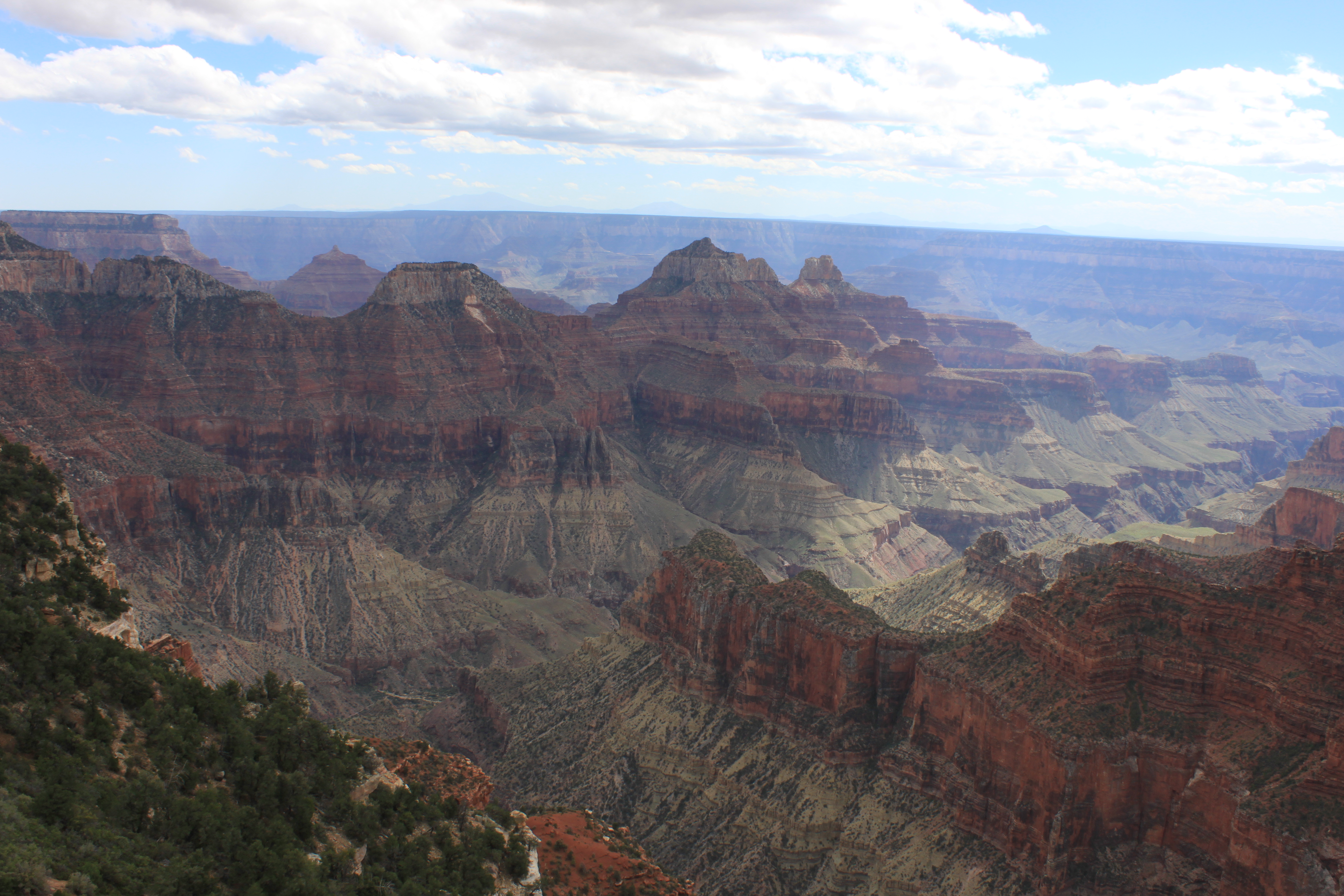
Rugged terrain hindered early exploration of the Grand Canyon.

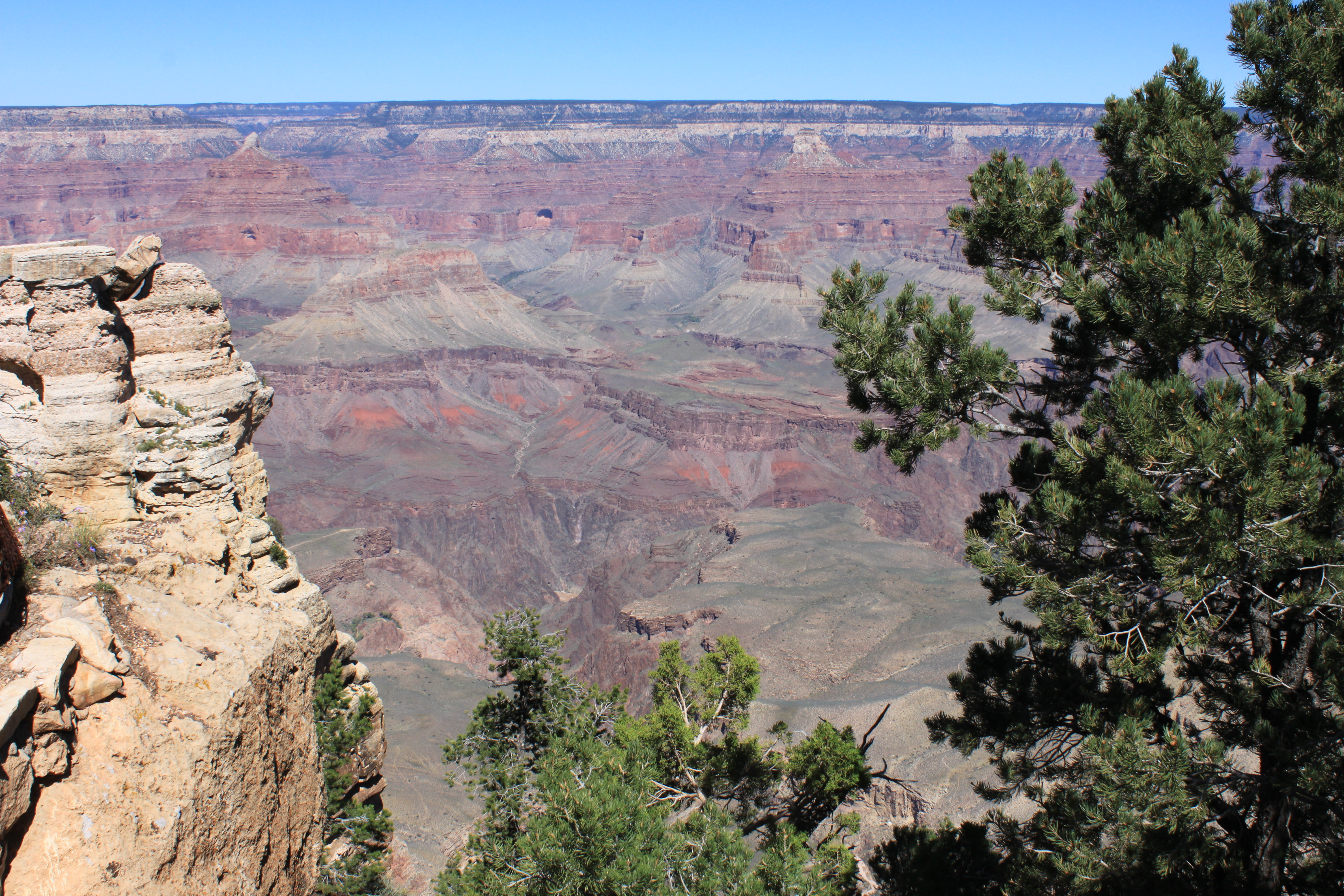
Francisco Vazquez de Coronado and his army weren’t searching for the Grand Canyon when they arrived at the Hopi Mesas in 1540. Their ultimate goal was to find the Seven Cities of Cibola. Hoping that a “great river” would provide water passage to the Gulf of California, Coronado sent about a dozen soldiers under the leadership of Garcia Lopez de Cardenas to find it.

Hopi guides, warned not to give useful tips about the area by their leaders, escorted them to the Grand Canyon—not the Seven Cities of Cibola, but one of the Seven Natural Wonders of the World.

Observing the canyon, possibly from the South Rim, Cardenas and his soldiers accurately estimated it to be 8 – 10 miles to the other side. The Colorado River a mile below appeared about 6 feet wide—it’s actually 300 feet wide and averages a depth of 40 feet within the Grand Canyon.

Though they had found a waterway to the Gulf of California (the Colorado River flows through the Grand Canyon and eventually reaches the gulf,) the wide river and whitewater rapids weren’t the easy route they’d envisioned. These early Spanish explorers never even made it to the canyon floor. Three soldiers made it about a third of the way down the canyon and then realized the river was much wider than it looked from the rim. They climbed back up the rugged terrain and reported that the river wasn’t navigable for their ships. Cardenas and his men returned to their army and reported an impassable barrier.

In 1857, United States War Department government wanted to explore an upriver route from the Gulf of California. Lt. Joseph Ives led an expedition from the Colorado River Delta near the gulf eastward along the Colorado River in the steamboat Explorer, which struck a rock in the rapids below Black Canyon before reaching the Grand Canyon. A skiff transported his party another 30 miles. Then they walked into the canyon at Diamond Creek.

Ives wasn’t impressed with the Grand Canyon, declaring it “altogether valueless.”

Geologist John Strong Newberry, also on expedition, didn’t agree. His talks with Geologist John Wesley Powell sparked that army man’s interest. In 1869, Major Powell, a Civil War veteran, began explorations later known as the Powell Expeditions. Mountain men, Civil War veterans, and ex-trappers accompanied him. Four boats left Wyoming on the Colorado River toward the Grand Canyon. Rapids in the Lodore Canyon cost them equipment and food when one boat sank.

Powell’s next expeditions was more successful and included scientists, a photographer, and an artist. Photographs, illustrations, and systematic notes detailed rock formations and archaeological locations. They generated public interest.

Geologist Clarence Dutton conducted a geological survey in 1880-81.

In 1882, Santa Fe Railroad reached Flagstaff, Arizona. A year later, tourists traveled by stage coach to the Grand Canyon next year.

Nearly 6 million tourists visited the Grand Canyon last year, though it’s a less arduous trip these days!

-Sandra Merville Hart

**Photos courtesy of Photographer Keith Adams.

Sources:

“Colorado River,” Wikipedia, 2020/04/09 https://en.wikipedia.org/wiki/Colorado_River.

“Grand Canyon: People,” National Park Service, 2020/04/06 https://www.nps.gov/grca/learn/historyculture/people.htm.

“Grand Canyon Trivia,” Grand Canyon Expeditions Company, 2020/04/09 https://www.gcex.com/grand-canyon-trivia/.

History.com editors. “Grand Canyon,” History, 2020/04/06 https://www.history.com/topics/landmarks/grand-canyon.

“History of the Grand Canyon,” Wikipedia, 2020/04/06 https://en.wikipedia.org/wiki/History_of_the_Grand_Canyon_area.

“Joseph Christmas Ives,” Wikipedia, 2020/04/09 https://en.wikipedia.org/wiki/Joseph_Christmas_Ives.


Transplanted Tree at the Alamo

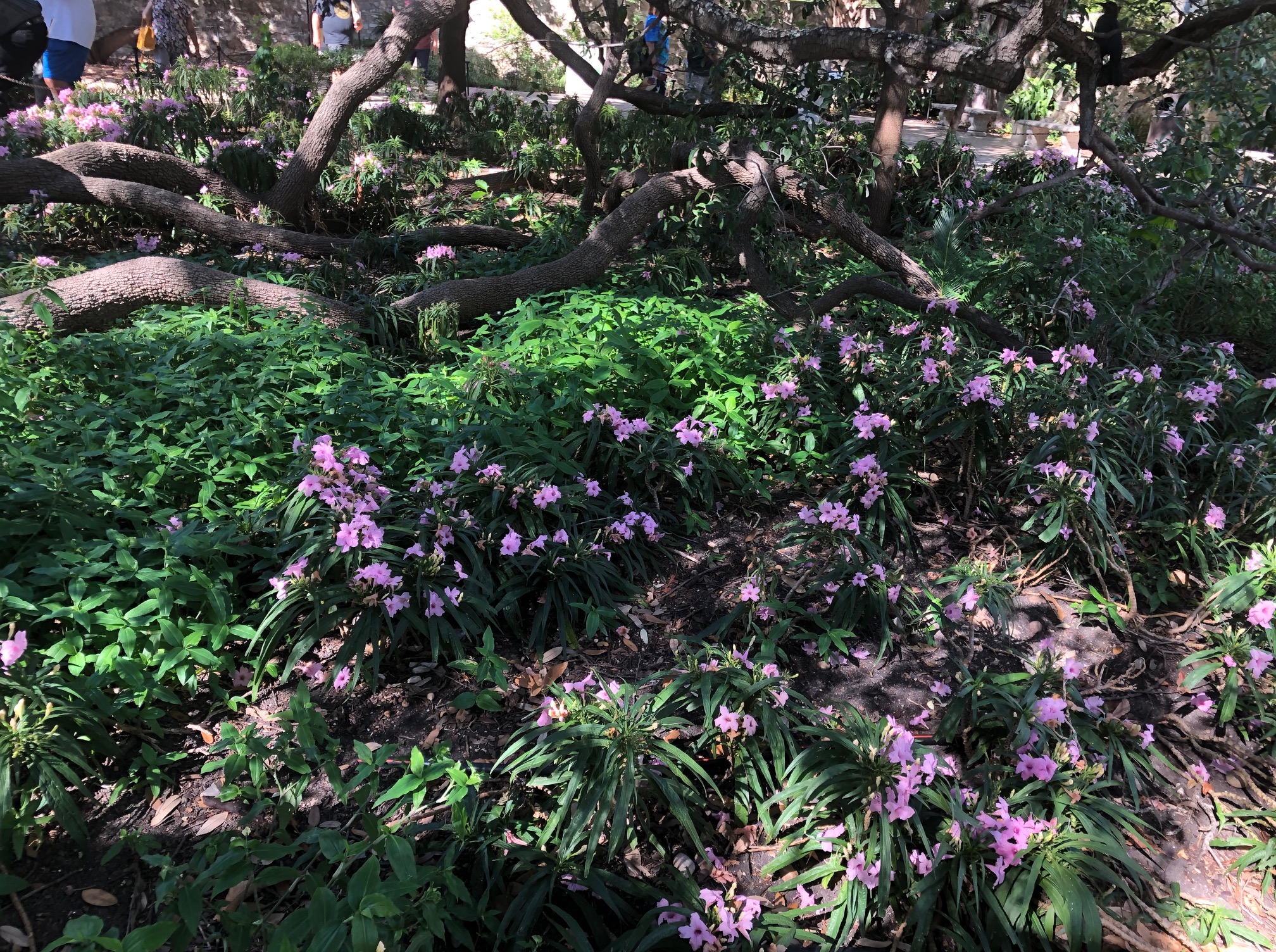
My husband and I traveled to San Antonio, Texas, last year. While there, we visited the Alamo. In addition to the historical significance of the battle fought there in 1836, we walked through its beautiful gardens.

One of the trees caught my eye. The oak tree had been transported in 1912. What makes that more significant is that the large tree was already forty-years-old at the time! The tree has been alive since 1872.

In 1912, Walter Whall accomplished a feat by moving a large tree. He carefully dug up the tree and removed dirt from the roots. It was loaded onto a cart. Four mules pulled the heavy tree through the streets. Avoiding knocking against telegraph and power lines were Whall’s greatest challenge with the transport.

The Alamo Live Oak has flourished in the Alamo’s courtyard for 108 years. Sitting beside an abandoned well, heavy limbs rest against the ground at points and then reach toward the sky again.

The tree’s circumference measures 12 feet, 9 inches and it stands at just over 39 feet. An impressive history for a tree that somehow demands notice.

May it thrive another 148 years.

-Sandra Merville Hart

Sources

Maeckle, Monika. “Heritage Tree: Live Oak at the Alamo,” Rivard Report, 2020/01/03

Heritage Tree: Live Oak at the Alamo


Rico, Sharon. “Remember the Alamo (and its gardens),” Daily Republic, 2020/01/03 https://www.dailyrepublic.com/all-dr-news/solano-news/local-features/local-lifestyle-columns/remember-the-alamo-a-visit-to-its-gardens-colorful-worthwhile/.


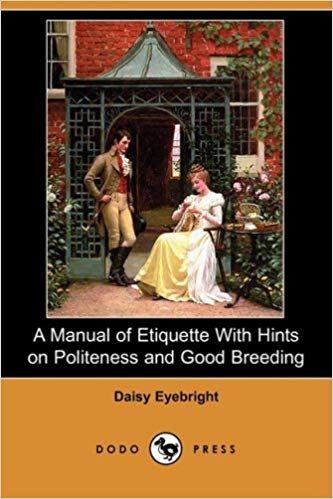
A Manual of Etiquette With Hints on Politeness and Good Breeding

Sophia Orne Johnson (1826-1899) wrote under the pen name of Daisy Eyebright. Her book, A Manual of Etiquette With Hints on Politeness and Good Breeding, originally published in 1868.

This book is a wonderful look at society in the United States shortly after the Civil War. It covers etiquette for the home with advice for children’s behavior and learning polite manners.

Social visits, behavior in traveling, table etiquette, dinner parties, letter-writing, the art of conversation, evening entertaining, and weddings are some of the topics covered.

Even marriage advice is given and, may I say, times have certainly changed!

I enjoyed reading this book as a lens into society and the way people lived 150 years ago. This is also the time period of my next Civil War series. This book offered many gems and even a few plot ideas for my research.

Lovers of history will enjoy this glimpse into the past.

-Sandra Merville Hart

Amazon

The Battle of the Alamo

The Alamo, originally Mission San Antonio de Valero, was built as a Spanish mission in the 1700s and later was used by the Spanish as a fort. They called it the “Alamo,” a word for a poplar tree, especially the cottonwood trees growing in the area.

In 1835, the area which is now Texas was under Mexican rule. American pioneers were allowed to own land there if they were Catholic. Some converted to purchase the land yet remained Protestant in practice.

Leading up to this time, Mexico had gained independence from Spain and then changed Presidents several times. President General Antonio Lopez de Santa Anna was the current leader. There was a lot of unrest and Texans wanted their freedom.

Two hundred Texas volunteers attacked Mexican troops in San Antonio de Bexar under General Martin Perfecto de Cos and at the Alamo a quarter mile away on December 5, 1835. Cos surrendered, signing documents that gave all the arms, public property, and money in San Antonio de Bexar to the Texans and left. Some of the Texas volunteers moved into the fort while others went home.

Santa Anna marched his army (historical accounts vary on whether he had 1,500 or 8,000 soldiers) toward the Alamo in retaliation.

Anticipating the coming attack, Lieutenant Colonel William B. Travis and Colonel James Bowie took command of the Alamo by February. Though there was friction between the two leaders, Bowie led the volunteers and Travis commanded the regular army.

Travis sent repeated letters requesting men and supplies. The well-known David Crockett and 14 Tennessee Mounted Volunteers were among the few men who arrived at the Alamo in advance of the battle. By the time  Santa Anna’s army began cannon and rifle fire on February 23, 1836, about 180 – 190 men protected the Alamo.

Texans bravely held their ground for 13 days. At dawn on March 6th, they held off the first two charges by Santa Anna’s army. On the third charge, they went over the walls. Santa Anna’s orders were to take no prisoners. It was hand-to-hand combat but the Texan soldiers, being outnumbered, were killed. There were only a few survivors—a few family members of the soldiers.

There were casualties in the Mexican army. Many historians estimate this number at about 600.

While this was a great tragedy, the battle bought time for Sam Houston’s 800 men to be ready to fight Santa Anna at San Jacinto on April 21, 1836, where they captured Santa Anna and defeated his army. That battle guaranteed the independence of Texas.

As they fought, Houston’s men shouted, “Remember the Alamo!”

-Sandra Merville Hart

Sources

“Battle of the Alamo,” Wikipedia, 2020/01/03 https://en.wikipedia.org/wiki/Battle_of_the_Alamo.

History.com Editors. “The Alamo,” A&E Television Networks, 2020/01/03 https://www.history.com/topics/Mexico/alamo.

Nelson, Ken. “US History: The Battle of the Alamo for Kids.” Ducksters, Technological Solutions, Inc. (TSI), http://www.ducksters.com/history/us_1800s/battle_of_the_alamo.php. Accessed 3 January 2020.

Paul, Lee. “The Alamo: 13 Days of Glory,” HistoryNet, 2020/01/03 https://www.historynet.com/battle-of-the-alamo.


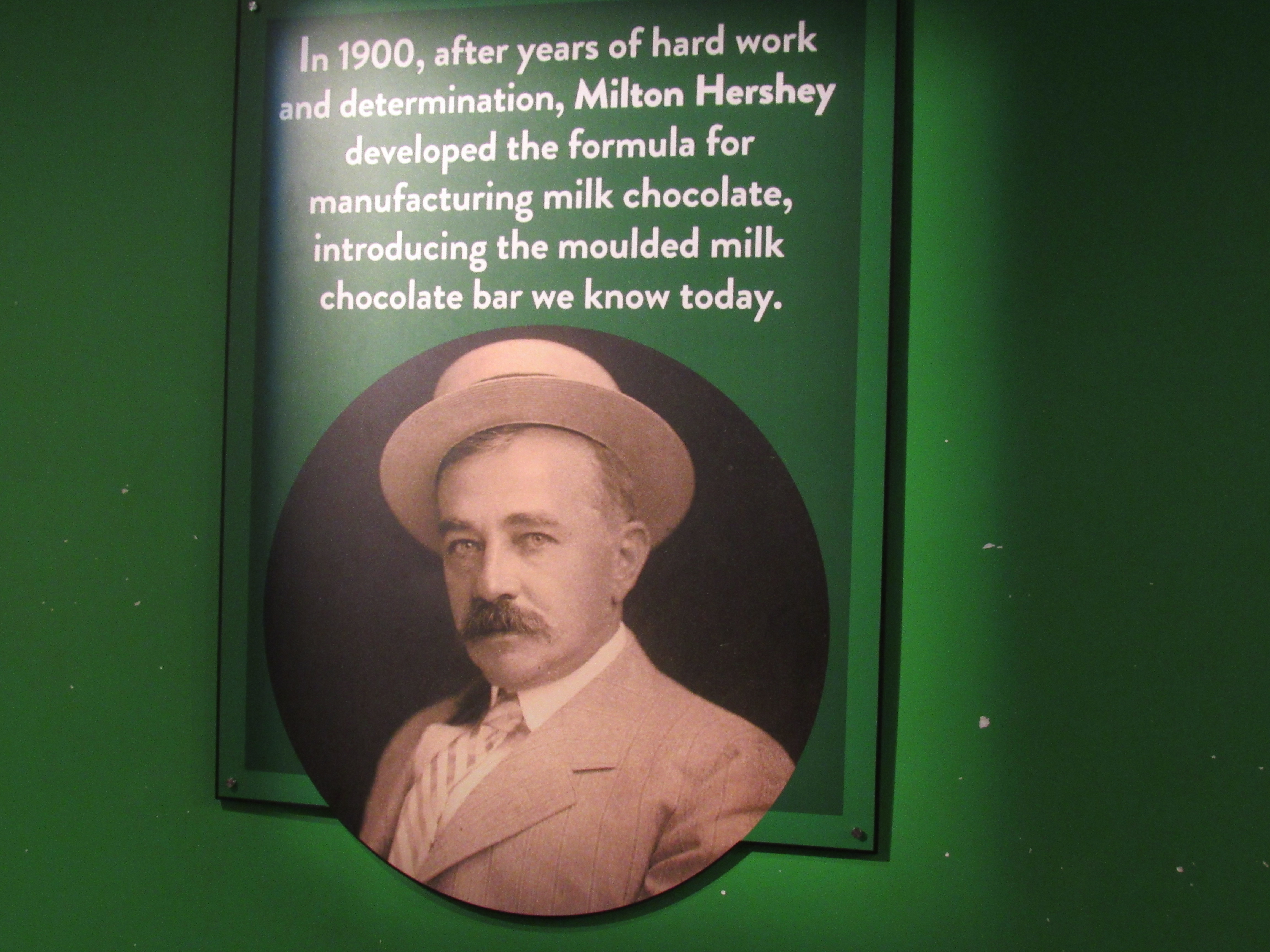
Milton Hershey

Milton Hershey was born in Derry Township, Pennsylvania, in 1857. A few years later, the Civil War started. He heard cannons from miles away at the Battle of Gettysburg.

His parents separated when he was ten. Five years later he became an apprentice for Joseph Royer, a candy maker in Lancaster. He learned to make fudge, peppermint, and caramels and loved being a confectioner.

At nineteen, he borrowed $150 from his aunt and opened a candy business. Though he worked hard, the business failed.

He moved to Denver where he worked for candy maker who used fresh milk to make caramel, furthering his skills. Milton then opened a business in Chicago. It failed. A new business he started in New York failed. He returned to Lancaster in 1883 and launched the Lancaster Caramel Company. This one was a success.

Ten years later, The World’s Columbian Exposition in Chicago educated him about making chocolate. He then established Hershey Chocolate Company and focused on a recipe for milk chocolate that was delicious and affordable. In 1900, he sold Lancaster Caramel Company for $1,000,000 to focus on the chocolate.

Hershey built a new candy factory in Derry Church, Pennsylvania, that opened in 1905. There were plenty of dairy farms in the area to supply milk for the chocolate. Yet his factory workers needed a place to live so he built houses, churches, schools, parks, and a post office to establish a new town—Hershey.

Learning from past failures, Hershey focused on one product—a milk chocolate candy bar. His factory made many of them and sold them at prices everyone could afford.

Unable to have children, Milton and his wife, Catherine, established the Hershey Industrial School for orphaned boys. Catherine died in 1915. Three years later, long before his death in 1945, Milton transferred his ownership in Hershey Chocolate Company to Hershey Trust, which funded the school.

When the Great Depression settled over the country, Hershey put his fellow townsmen to work by constructing new offices for his company, a hotel, and a community building. While the rest of the country struggled to make ends meet, the town of Hershey thrived.

World War II started a few years later. Hershey sent chocolate bars (Ration D Bars and Tropical Chocolate Bars) to our military.

Hershey’s giving spirit still lives on. Today Hershey Industrial School, now known as Milton Hershey School, also includes girls. Around 1,900 girls and boys attend annually.

Milton and Catherine Hershey left a lasting legacy in the town that bears their name. Had he given up after those many early failures, jobs for countless people wouldn’t have been available, a town wouldn’t exist, and a school for orphaned boys wouldn’t have opened.

What an inspiration to persevere in the face of difficulties … and perhaps help a neighbor along the way.

-Sandra Merville Hart

Sources

Biography.com Editors. “Milton Hershey Biography,” The Biography.com, 2020/01/02 https://www.biography.com/business-figure/milton-hershey.

Nelson, Ken. “Biography for Kids: Milton Hershey.” Ducksters, Technological Solutions, Inc. (TSI), www.ducksters.com/biography/entrepreneurs/milton_hershey.php. Accessed 2 January 2020.

“Who was Milton Hershey?” The Hershey Story, 2020/01/02 https://hersheystory.org/milton-hershey-history/


Ford’s Theatre

John T. Ford, a successful theatrical entrepreneur, leased the First Baptist Church on Tenth Street in 1861. He turned it into a music hall. The building burned in December of 1862. Ford raised money to rebuild and the first performance in the new Ford’s Theatre was August 27, 1863.

President Abraham Lincoln and Mrs. Mary Todd Lincoln arrived at Ford’s Theatre around 8:30 pm with their guests, Major Henry Reed Rathbone and Clara Harris, on April 14, 1865. Our American Cousin was playing and Lincoln enjoyed going to the theater.

This night was different.

John Wilkes Booth stepped into the Presidential Box around 10:15 pm and shot Lincoln. Booth stabbed Major Rathbone and then leaped onto the stage and escaped.

Dr. Charles Augustus Leale was the first person inside the box. He removed a blood clot from Lincoln’s head wound to release pressure and allow him to breathe. Dr. Leale knew it was a mortal wound.

Soldiers carried their President down the stairs and onto Tenth Street. William and Anna Petersen’s boarding house was across the street. They placed the dying President in Willie Clark’s room, who was out celebrating the war’s ending.

It was a dark, gloomy morning. It had started to rain earlier. Large groups of people gathered outside the Petersen house, praying for Lincoln to live … yet fearing the worst.

Throughout that long, tragic night, First Lady Mary Lincoln sometimes sat beside her dying husband with her oldest son nearby. Other times she went to the Front Parlor. Neither family member was in the crowded room when Lincoln died at 7:22 am.

The country that had seen so much death and dying for the past four years experienced a deep tragedy. Leaders turned their attention to apprehending John Wilkes Booth, the assassin, and his conspirators.

Ford’s Theatre was closed by the federal government for the investigation. The owner received permission to reopen after the trial. When threats were made if the theatre reopened, the War Department closed it. They leased the building, in August of 1865, to convert it to an office building and bought it a year later.

Three interior floors collapsed in 1893. Twenty-two clerks were killed and sixty-eight people injured. It was repaired and used again by the government for offices.

Today, about 650,000 visitors tour Lincoln’s Museum, Ford’s Theatre, the Petersen House, and Aftermath Exhibits each year.

Ford’s Theatre still has performances and tours are closed during rehearsals and matinees.

Lincoln has inspired many authors to write books about him. A 34-foot tower of these books stands beside a winding staircase at The Ford’s Theatre Center for Education and Leadership.

-Sandra Merville Hart

Sources

“Ford’s Theatre,” National Park Service, 2020/01/02 https://www.nps.gov/foth/index.htm.

“Ford’s Theatre Yesterday and Today,” Ford’s Theatre Pamphlet, Last Updated 2008.

“Lincoln’s Death,” Ford’s Theatre, 2020/01/01 https://www.fords.org/lincolns-assassination/lincolns-death/.

Lincoln Memorial

On a recent trip to Washington, DC, I visited the National Mall late on a rainy evening. The view of the Lincoln Memorial at night is spectacular.

Talk of building a memorial to President Abraham Lincoln began soon after his death. In 1867, a proposal for a commission to plan the monument didn’t get very far. The country, recovering from war, didn’t have the money to build it. The early design was for 31 pedestrian and 6 equestrian statues with a statue of Lincoln in the center.

Construction on the memorial began years later in 1914, and took about 4 years to build. Styled after a Greek Temple, the memorial was designed by Henry Bacon. It has 36 fluted Doric columns to represent the states in the Union during the Civil War.

The memorial is 188 feet long and nearly 80 feet tall. There are 58 steps on the memorial. There are 87 steps from the reflecting pool to the memorial.

Lincoln’s second inaugural speech is on the North Wall. His famous Gettysburg Address is etched on the South Wall.

Construction was finally completed in 1922. On May 30, 1922, Civil War veterans were among the 50,000 people attending the dedication service.

Robert Todd Lincoln, our 16th president’s only surviving son, attended the dedication. He was 78.

Forty-one years later, a March on Washington, led by Martin Luther King, Jr., ended at the Lincoln Memorial. On August 28, 1963, he spoke to a large crowd from the steps of the memorial. His “I have a Dream” speech spoke of his dreams for America, resonating with his listeners and the nation.

Trolley Tours and Big Bus Tours are an easy way to visit the monument. We took the Metro and walked the National Mall. Whatever way you decide to tour the monument, it is well worth the effort.

-Sandra Merville Hart

Sources

“Lincoln Memorial,” Lincoln Memorial, 2020/01/02 http://lincoln-memorial.org/.

“Lincoln Memorial,” National Park Service, 2020/01/02 https://www.nps.gov/nr/travel/wash/dc71.htm.

“Lincoln Memorial,” Wikipedia, 2020/01/01 https://en.wikipedia.org/wiki/Lincoln_Memorial.

“The Abraham Lincoln Memorial,” American History For Kids, 2020/01/02 https://www.americanhistoryforkids.com/abraham-lincoln-memorial/.

Civil War Women: Clara Judd, Confederate Spy

Clara Judd, a Northerner, had moved to Winchester, Tennessee, in 1859 with her husband and eight children. He and one of their children was killed in an accident two years later. The widow found jobs at a government factory for her older sons.

Union armies controlled Winchester five times during the first two years of the Civil War (1861-1862) and Clara hosted them. A Union officer warned her that they’d been ordered to destroy her crops “except enough to last six weeks” and that she should leave.

Losing her possessions probably embittered her toward the Union soldiers.

She eventually ended up leaving her children with her sister in Louisville. Obtaining Union passes to travel to Atlanta to visit her son and Louisville to visit her youngest children enabled Clara to learn troop movements and other military information for the Confederacy.

Confederate Brig. Gen. John Hunt Morgan, while planning his famous raid, contacted Clara in December of 1862. He asked her to discover Union troop locations and strength of those controlling the railroad. She agreed.

While traveling north, she was stopped in Murfreesboro and had to wait three days for a pass to Nashville. Unable to find transportation, she walked.

Delos Thurman Blythe, a Northern counterespionage agent posing as Southern paroled prisoner, offered her a ride in his buggy. Blythe’s pass into Nashville was accepted but not Clara’s. He overheard a Confederate soldier giving her information about getting through Union lines and became suspicious.

Clara received a pass to visit her children and then told Blythe everything. He promised to help her.

His pretense of loyalty to the South had worked. He reported her to Union authorities yet advised them to give her the passes she requested.

They traveled north by train. Clara, from her window, asked folks at each station about troops in the area. In Louisville, Blythe escorted her in all her errands and took her to dinner. She fell in love with him. Meanwhile, Blythe asked the authorities to arrest him and Clara in Mitchelsville, Tennessee.

On their return trip, military police arrested them in Mitchelsville. Goods and drugs for the Confederate army were found in her bags—quinine, nitrate of silver, and morphine.

Placed under guard in a Nashville hotel shortly before Christmas, Clara told her captors that Blythe was innocent. She didn’t know that he had already been released or that loving her had been an act.

Charged with espionage, she went to prison in Alton, Illinois for about eight months before being paroled due to poor health.

-Sandra Merville Hart


Sources

McCurry, Stephanie. “Clara Judd and the Laws of War,” HistoryNet, 2019/08/16 https://www.historynet.com/clara-judd-laws-war.htm.

Winkler, H. Donald. Stealing Secrets, Cumberland House, 2010.