Attitudes Toward Women Civil War Soldiers

Approximately four hundred known cases of women serving as Civil War soldiers on either side–and an unknown number of ladies who slipped away or died without detection– subjected themselves to possible criticism from the general public and their comrades.

Society and the military were critical of women soldiers who didn’t accompany a male relative such as a husband or brother. The general public was not ready for unmarried women on the front lines.

A Southern journalist categorized women in Confederate military camps in three ways: families of officers, laundresses and cooks, and prostitutes. So how did he classify female soldiers, scouts, and nurses?

The wives of officers living in army camps generally maintained the military’s respect. Union General Ulysses S. Grant sometimes had his family in camp.

The motivation of other women’s presence in army camps puzzled the public. There was a tendency to doubt the female soldier’s conduct. Some endured unjust accusations of misbehavior.

There were also female visitors in camp who came to see loved ones. Most parents refused to allow their young, unmarried daughters to visit army camps. They sometimes sneaked in anyway.

Many women simply wanted to be near their men.

Prostitutes followed the camps. Government records show that camp followers numbered in the thousands around army camps. Some bootlegged liquor and acted as spies.

Hundreds of women, including female soldiers, became pregnant in army camps.

The military and the public knew all this. Unfortunately, those experiences affected how men viewed women soldiers.

The women who served as Civil War soldiers endured many obstacles. Public opinion during and after the war was one of them.

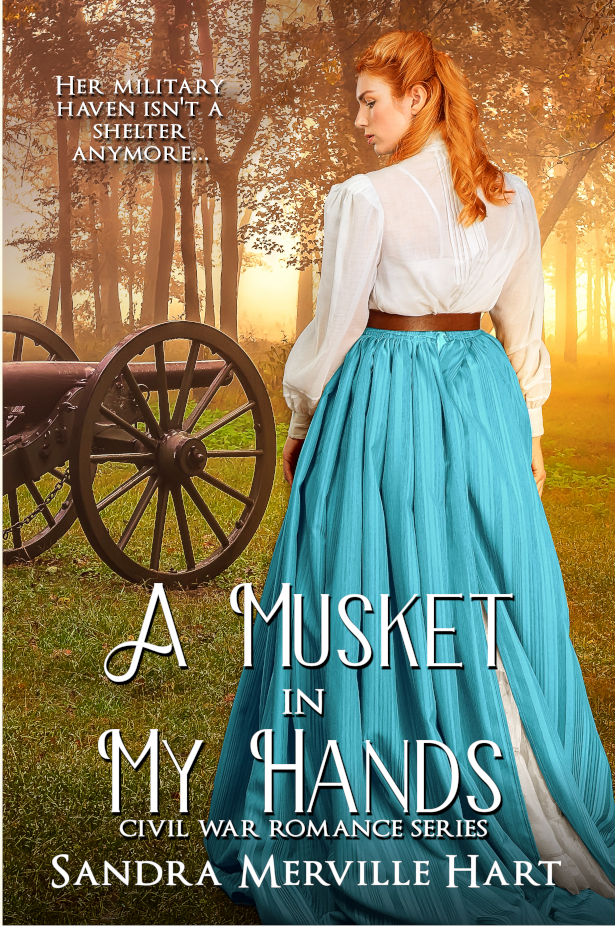
In my Civil War novel, A Musket in My Hands, two sisters have no choice but to disguise themselves as men to muster into the Confederate army in the fall of 1864—just in time for events and long marches to lead them to the tragic Battle of Franklin.

-Sandra Merville Hart


Sources

Abbott, Karen. Liar, Temptress, Soldier, Spy: Four Women Undercover in the Civil War, Harper, 2014.

Blanton, DeAnne and Cook, Lauren M. They Fought Like Demons, Louisiana State University Press, 2002.

Massey, Mary Elizabeth. Women in the Civil War, University of Nebraska Press, 1966.

Silvey, Anita. I’ll Pass for Your Comrade: Women Soldiers in the Civil War, Clarion Books, 2008.

Velazquez, Loreta Janeta. The Woman in Battle: The Civil War Narrative of Loreta Velazquez, Cuban Woman & Confederate Soldier, The University of Wisconsin Press, 2003. (Previously published 1876)


Consequences of Discovery for Women Civil War Soldiers

There are about four hundred known cases of women serving as Civil War soldiers on either side. They enlisted for varying reasons. They faced challenges  at every turn. They were discovered in a variety of ways.

The consequences for the women varied. They could be dismissed or imprisoned, depending on the officer’s decision.

Newspaper reporters wrote of Southern women who were arrested while in uniform. Federals captured two female soldiers and imprisoned them.

A female Union soldier was captured after being wounded in battle. She was sent back to Union lines with a note, “As Confederates do not use women in war, this woman, wounded in battle, is returned to you.”

After being imprisoned on Johnson Island, a Confederate officer delivered a baby boy in December of 1864.

A Union major ordered her men in battle. They later discovered her identity and imprisoned her for violating the “regulations of war.”

Loreta Janeta Velazquez disguised herself as Confederate soldier Lieutenant Harry T. Buford. She was arrested when the apparatus of her disguise slipped. She was charged with acting as a spy and then released, but she returned to her soldier disguise. She was later arrested when comrades suspected her of being a woman. Loreta confessed. The mayor fined her $10 and ordered ten days imprisonment. After her release, she reenlisted in a different company, this one in the 21st Louisiana.

Confederate women who were imprisoned as POWs usually were kept there even after their identity became known.

Female soldiers facing a provost marshal received varying degrees of punishment.

Women were sometimes sent to civilian authorities who could order them to serve time in the city jail or the Guard House. Some women were sent to the workhouse while others were released.

One woman was court-martialed.

In my Civil War novel, A Musket in My Hands, two sisters have no choice but to disguise themselves as men to muster into the Confederate army in the fall of 1864—just in time for events and long marches to lead them to the tragic Battle of Franklin.

-Sandra Merville Hart

Sources

Abbott, Karen. Liar, Temptress, Soldier, Spy: Four Women Undercover in the Civil War, Harper, 2014.

Blanton, DeAnne and Cook, Lauren M. They Fought Like Demons, Louisiana State University Press, 2002.

Massey, Mary Elizabeth. Women in the Civil War, University of Nebraska Press, 1966.

Silvey, Anita. I’ll Pass for Your Comrade: Women Soldiers in the Civil War, Clarion Books, 2008.

Velazquez, Loreta Janeta. The Woman in Battle: The Civil War Narrative of Loreta Velazquez, Cuban Woman & Confederate Soldier, The University of Wisconsin Press, 2003. (Previously published 1876)


Ways that Women Civil War Soldiers were Discovered

Women fighting as Civil War soldiers—whatever their reasons—kept their guard up constantly. There are about four hundred known cases of female soldiers fighting on either side. Many others likely joined for a short time and then donned a dress to quit without detection. Still, it was challenging for the women to remember their pretense twenty-four hours a day. Some were discovered.

A Wisconsin woman, Sarah Collins, donned her stockings and shoes the way a woman did and, before her regiment left town, was sent home.

It’s unclear what Mary Burns did, but she was probably recognized even wearing a uniform. She was arrested in Detroit—her company hadn’t left town yet.

“Charles Norton,” a female private in the 141st Pennsylvania Infantry, stole an officer’s boots. When her identity was discovered, she was quickly mustered out.

Two women soldiers got drunk on apple jack while on a foraging expedition. In their drunken state, they fell into a river. Comrades saved them from drowning. Their rescuers were shocked to discover they were women.

Comrades tossed apples to two female soldiers in the 95th Illinois. The women reached for their nonexistent aprons to catch the apples and were immediately discharged.

A female soldier from Rochester, New York, tried to don pants by pulling them over her head.

A pregnant corporal in a New Jersey regiment was promoted to sergeant for her bravery at the Battle of Fredericksburg in December of 1862. She hid her pregnancy by wearing an over-sized coat. On January 19, 1863, she went into labor on picket duty and complained of feeling unwell. Her complaints were ignored until her pain increased. Comrades carried her to a farmhouse where her healthy baby was born. Everyone learned the news but protected her by not mentioning her real name or her alias. Her name is still unknown today.

The most common way of discovery happened when women were wounded.

A girl from Brooklyn wanted to be the second Joan of Arc. Her family, desiring to save her, sent “Emily” to an aunt in Michigan. She ran away and joined the Army of the Cumberland as a drummer. Her identity was discovered when she was mortally wounded on Lookout Mountain.

Mary Owens enlisted with a man she secretly wed during their eighteen months in the army. She was wounded in the battle that took his life.

Malinda Pritchard Blalock, an excellent shooter, enlisted when her husband, Keith, was forced to muster into the 26th North Carolina Infantry. She pretended to be Keith’s brother, Sam. Her identity was discovered when she was wounded.

In my Civil War novel, A Musket in My Hands, two sisters have no choice but to disguise themselves as men to muster into the Confederate army in the fall of 1864—just in time for events and long marches to lead them to the tragic Battle of Franklin.

-Sandra Merville Hart

Sources

Abbott, Karen. Liar, Temptress, Soldier, Spy: Four Women Undercover in the Civil War, Harper, 2014.

Blanton, DeAnne and Cook, Lauren M. They Fought Like Demons, Louisiana State University Press, 2002.

Massey, Mary Elizabeth. Women in the Civil War, University of Nebraska Press, 1966.

Silvey, Anita. I’ll Pass for Your Comrade: Women Soldiers in the Civil War, Clarion Books, 2008.


The Army of Tennessee by Stanley F. Horn

A Military History

This nonfiction resource book traces the history of the Confederate Army of Tennessee from the beginning of the Civil War in 1861 to its ending in 1865.

When Tennessee voted to secede from the Union on June 1, 1861, volunteer military organizations were already in training. Drums and fifes played in the streets. Bands played Dixie and Bonnie Blue Flag.

This excellent book, published in 1941, provided many fascinating details not easily found in later publications.

For instance, I loved learning more about Sherman’s takeover of Atlanta. When he expelled the citizens from the city, the Army of Tennessee assisted the exiles as much as possible.

Excellent book for Civil War research and history lovers.

-Sandra Merville Hart

Challenges Faced by Women Civil War Soldiers

Loreta Janeta Velazquez as Civil War soldier Lieutenant Harry T. Buford

The Civil War kindled patriotic feelings in men and women on both sides of the conflict. Women who desired to serve their country as soldiers had to disguise themselves as men. They also faced challenges in camp life and in marching with men.

The first thing a woman had to do was sew or buy men’s clothing. She’d need trousers, a coat, shoes, and men’s blouses. Padding strategically sewn on undergarments helped mask female curves. Loreta Velazquez, who disguised herself as Confederate Lieutenant Harry T. Buford, used wire net shields to hide her shape.

The women also had to cut their long hair. Short hair and men’s clothing enabled her to pass as a soldier.

As the war progressed, requirements for physical examinations relaxed. The army needed soldiers and didn’t want to find reasons not to accept them. They had to have teeth so they could tear cartridges open. They needed a trigger finger to fire muskets and rifles.

Life in army camps were challenging. Women used the privacy of the woods for nature calls instead of latrines.

Poor nutrition, long marches, intense physical activities, and weight loss might have caused the women’s menstruation to cease, especially during tough campaigns.

Soldiers slept fully clothed, wearing coat and shoes, so this helped the women’s disguise. Bathing was infrequent yet there were men who also preferred privacy when the opportunity for bathing arose.

Women claimed to be younger than they were to explain the lack of whiskers. They kept their coats buttoned all the way to hide the missing Adam’s apple.

They had to remember to talk like a man.

They carried at least thirty pounds of equipment in addition to their haversack (which held their food) and a knapsack (which held clothing and personal belongings.)

And then there were the challenges of battle. The fear. The chaos. Officers shouting orders. When the noise of battle was too loud for soldiers to hear their officers shout orders, buglers and drummers played them. Soldiers had to know what the tunes meant.

No matter the reason for joining, women who served as Civil War soldiers were courageous.

In my Civil War novel, A Musket in My Hands, two sisters have no choice but to disguise themselves as men to muster into the Confederate army in the fall of 1864—just in time for events and long marches to lead them to the tragic Battle of Franklin.

-Sandra Merville Hart

Sources

Blanton, DeAnne. “Women Soldiers of the Civil War,” National Archives, 2018/09/29 https://www.archives.gov/publications/prologue/1993/spring/women-in-the-civil-war-1.html.

Blanton, DeAnne and Cook, Lauren M. They Fought Like Demons, Louisiana State University Press, 2002.

Massey, Mary Elizabeth. Women in the Civil War, University of Nebraska Press, 1966.

Silvey, Anita. I’ll Pass for Your Comrade: Women Soldiers in the Civil War, Clarion Books, 2008.

Velazquez, Loreta Janeta. The Woman in Battle: The Civil War Narrative of Loreta Velazquez, Cuban Woman & Confederate Soldier, The University of Wisconsin Press, 2003. (Previously published 1876)

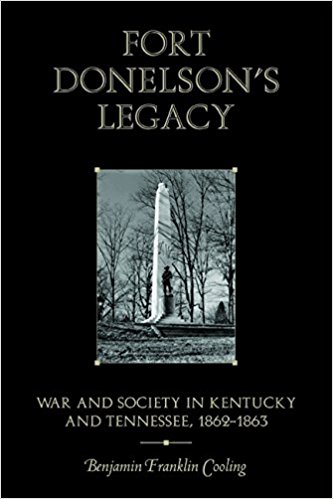
Fort Donelson’s Legacy by Benjamin Franklin Cooling

War and Society in Kentucky and Tennessee, 1862-1863

This nonfiction resource book begins with the Confederate surrenders of Fort Henry and Fort Donelson in February, 1862. A few days later, the Confederates moved from Nashville to Murfreesboro.

Citizens in the middle section of Tennessee learned of this with sinking hearts. They knew tough times lay ahead. They could not have foreseen just how difficult those bad times would become.

After the Battle of Shiloh (April 6-7, 1862) Union General Grant stopped ordering his troops to protect private property regardless of owner loyalty.

This book shows what Tennessee citizens endured in 1862-1863, and how their circumstances grew progressively worse.

Excellent book for Civil War research and history lovers.

-Sandra Merville Hart

Amazon

Reasons Women Fought as Civil War Soldiers

The Civil War brought tough times for civilians as well as soldiers. Neither the Union nor the Confederate armies allowed women to fight as soldiers, leading some women to disguise themselves as men to muster into the army.

There are about four hundred women known to have served as soldiers on either side. Mary Livermore of the U.S. Sanitary Commission wrote in 1888 that she was convinced the number was much higher. Since most were discovered after being a soldier two years or more, Mrs. Livermore believed that some were never detected.

Why did women join the army?

Newspapers printed stories about soldiers involved in gambling, drinking, and other immoral behavior. Some women mustered in to keep an eye on husbands and beaus.

There were women who chose the army as an escape over unbearable family situations. Some women living in poverty joined for the pay. Some sought adventure, love, or excitement. Others wanted to be near a brother, husband, or fiancé.

As the war continued, bonuses offered to new recruits as well as soldier’s pay enticed some women to enlist.

A myriad of reasons, as individual as the women themselves, drove them to don a soldier’s garb and march into danger.

In my Civil War novel,  A Musket in My Hands, two sisters have no choice but to disguise themselves as men to muster into the Confederate army in the fall of 1864—just in time for events and long marches to lead them to the tragic Battle of Franklin.

-Sandra Merville Hart

Sources

Blanton, DeAnne. “Women Soldiers of the Civil War,” National Archives, 2018/09/29 https://www.archives.gov/publications/prologue/1993/spring/women-in-the-civil-war-1.html.

Blanton, DeAnne and Cook, Lauren M. They Fought Like Demons, Louisiana State University Press, 2002.

Massey, Mary Elizabeth. Women in the Civil War, University of Nebraska Press, 1966.

Silvey, Anita. I’ll Pass for Your Comrade: Women Soldiers in the Civil War, Clarion Books, 2008.


Women Wanted to Enlist as Civil War Soldiers?

It’s 1861. Before Abraham Lincoln can be sworn in as the new president of the United States of America, Southern states begin leaving the Union.

Everyone is on edge. What will happen next? Then the first shots are fired at Fort Sumter by the Confederates on April 12, 1861.

The Civil War had begun.

Early on, there were women on both sides who wanted to fight in the war as soldiers. Girls who tried to muster into the army by going to recruiting stations were praised by war journalists for their courage.

The Confederate Secretary of War received a letter from a group of over twenty women who offered to organize a volunteer regiment. These ladies from the Shenandoah Valley wanted to join the fight. Their offer was rejected.

Black women—residents of Northern cities like New York and Philadelphia—offered to serve their country as warriors if needed. Their request was refused by local officials.

Soldiers wrote home upon discovering women soldiers in their regiments during the war. Folks were aware of female soldiers fighting in both sides of the conflict.

In 1862, when a Southern woman was found in a Confederate training camp, a Georgia newspaper labeled her a “gallant heroine.”

Reporters and editors praised the patriotism of women soldiers throughout the war. Newspaper articles were reprinted in other cities, spreading the news.

In my Civil War novel, A Musket in My Hands, two sisters have no choice but to disguise themselves as men to muster into the Confederate army in the fall of 1864—just in time for events and long marches to lead them to the tragic Battle of Franklin.

-Sandra Merville Hart

Sources

“Battle of Fort Sumter,” Wikipedia, 2018/09/18 https://en.wikipedia.org/wiki/Battle_of_Fort_Sumter.

Blanton, DeAnne and Cook, Lauren M. They Fought Like Demons, Louisiana State University Press, 2002.

Massey, Mary Elizabeth. Women in the Civil War, University of Nebraska Press, 1966.

Silvey, Anita. I’ll Pass for Your Comrade: Women Soldiers in the Civil War, Clarion Books, 2008.


Battle of Gettysburg: Lee’s Long Line of Ambulances

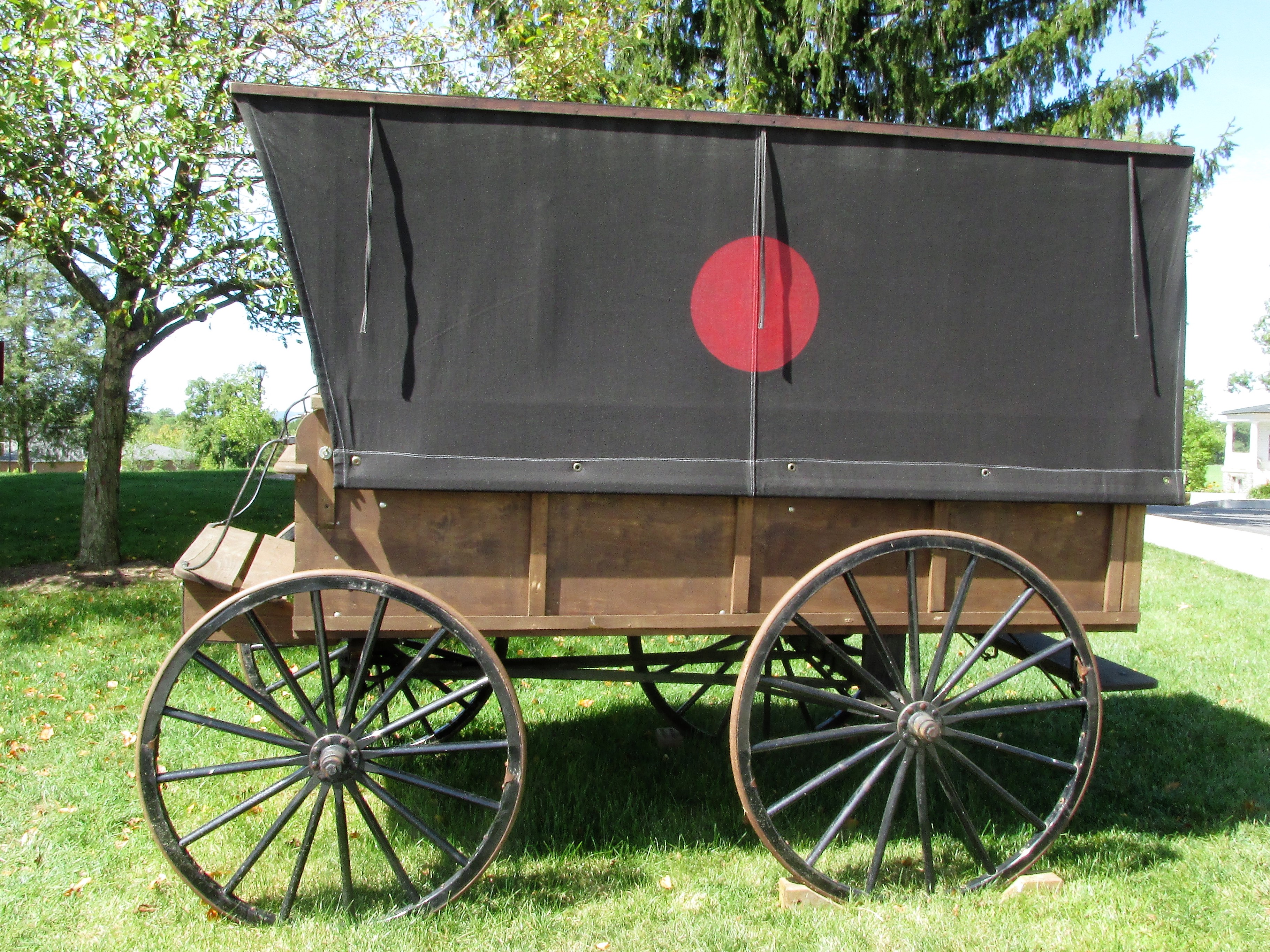
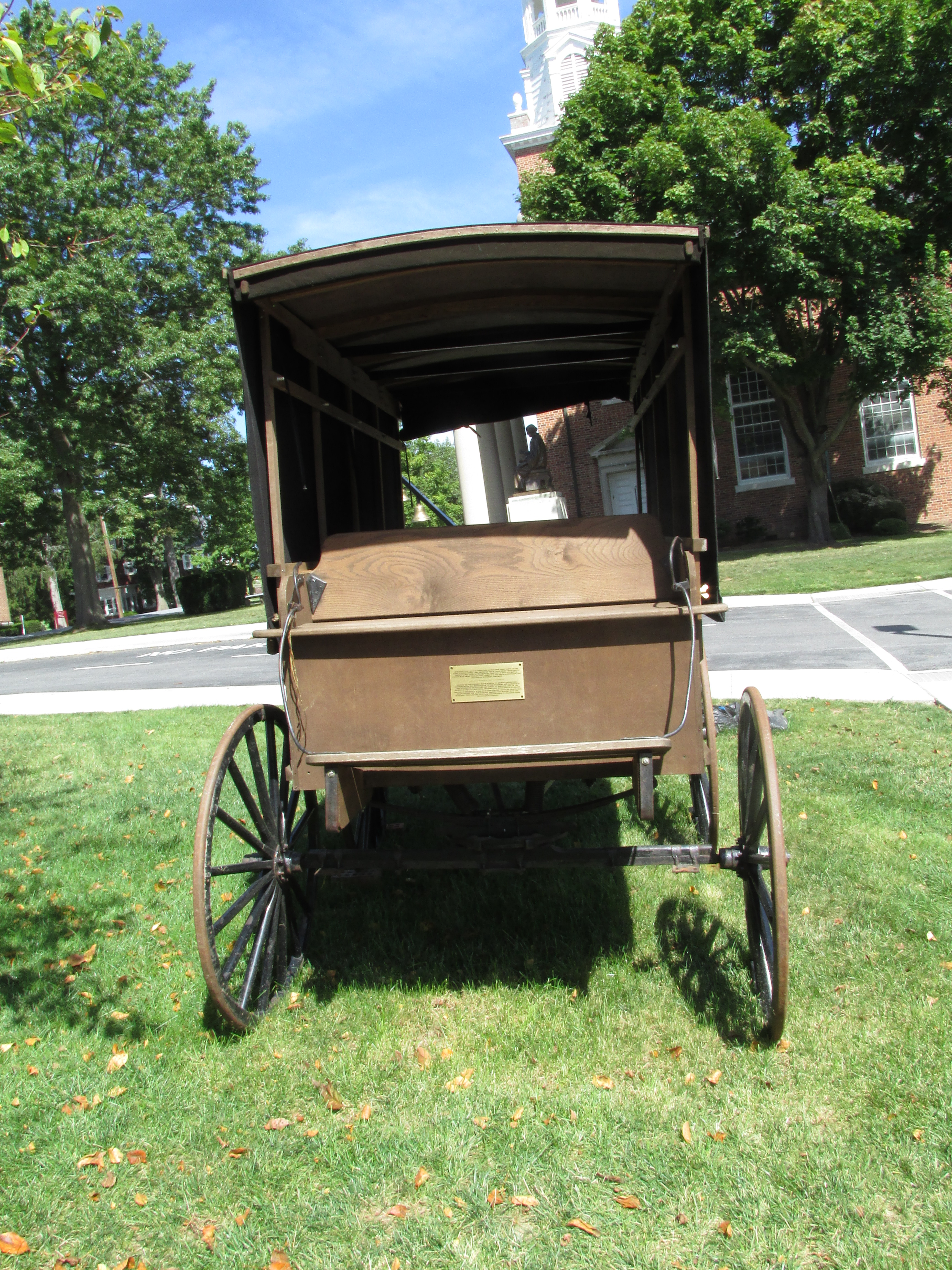
Ambulance outside Lutheran Seminary, Gettysburg.

Confederate General Robert E. Lee’s plan to transport thousands of wounded soldiers after the Battle of Gettysburg was a daunting task. He ordered General John Imboden to lead them to Cashtown before heading south to Williamsport, Maryland. When they reached Williamsport, they paused for a break. Once men and horses rested, they resumed their journey back to Virginia.

The ambulance wagon train stretched for 27 miles.

Tragic.

And 7,000 Confederate soldiers, wounded too severely to travel, were left behind in Gettysburg. Characters in my novel set during the Battle of Gettysburg, A Rebel in My House, had to deal with this issue.

Conservative estimates for Confederate wounded number around 13,000. Other sources report over 18,000. Either way, 27 miles of ambulances means a distressing number of injured soldiers traveled south, groaning in agony as rickety wheels jostled them over rutted dirt roads.

I wondered how many ambulance wagons might have been required and thought it might be fun to try to figure it out.

Ambulance outside of Lutheran Seminary, Gettysburg.

Many models in use at the time were 10 feet long or 10 feet, four inches. The heavier wagons required 4 horses to pull them while lighter ones needed only 2.

Some carried 10 patients—4 prone and 6 seated. The driver and 2 patients sat on a closed chest holding medical supplies.

A lighter model carried 5—15 wounded, depending on how many needed to lie prone for the journey.

It seems almost certain—with the number of wounded requiring transportation to Southern hospitals—that folks squeezed onto wagons meant to hold fewer men.

I confess that I got lost trying to figure the length of an average horse—it seems the larger horses are about 6 feet long. An ambulance 10 feet in length with a two-horse team might require about 20 feet. A four-horse team and wagon might need 30 feet.

Allowing 30 feet for each wagon to estimate how many ambulances might have been in this ambulance train … a staggering 4,752 wagons. The actual count was probably less because some patients with minor injuries walked.

Some ambulances held only 5 patients. If folks had to travel in a laying down, less patients could ride with them.

7,000 were left in Gettysburg. Going with the highest estimate of 18,000+, some 11,000 wounded traveled south. That means 2-3 folks traveled in each wagon.

If we allow 50 feet of space for each wagon, there are about 2,851 or 3-4 patients per wagon. If this is true, then lots of soldiers were in bad shape along the way. Possibly greater numbers of slightly injured weren’t included in the total count.

Has anyone run across this in their research?

-Sandra Merville Hart

Sources

“Battle of Gettysburg,” Encyclopeadia Britannica, 2018/06/15 https://www.britannica.com/event/Battle-of-Gettysburg.

“Battle of Gettysburg,” HistoryNet, 2018/06/15 http://www.historynet.com/battle-of-gettysburg.

“Battle of Gettysburg Facts,” Stone Sentinels, 2018/06/15 http://gettysburg.stonesentinels.com/battle-of-gettysburg-facts/.

“Civil War Ambulance Wagons,” Civil War Home, 2018/06/17 http://www.civilwarhome.com/ambulancewagons.html.

Compiled by Editors of Combined Books. The Civil War Book of Lists, Da Capo Press, 1994.

Edited by Kennedy, Frances H. The Civil War Battlefield Guide, Houghton Mifflin Company, 1990.

“Gallery: Field Medicine,” Trans-Mississippi Theater Virtual Museum, 2018/06/17, http://www.civilwarvirtualmuseum.org/medicine/field-medicine/ambulance.php.

Long, E.B and Long, Barbara. The Civil War Day by Day: An Almanac 1861-1865, A Da Capo Paperback, 1971.

Sheldon, George. When the Smoke Cleared at Gettysburg: The Tragic Aftermath of the Bloodiest Battle of the Civil War, Cumberland House, 2003.


Civil War Battle of Gettyburg’s Numbers

Post and rider fence common around Gettysburg in 1863 — at Gettysburg Battlefield


 With the July 1st—3rd anniversary of the Battle of Gettysburg approaching, I thought it would be fun to dig into some “number” facts pertaining to the battle.

How many soldiers fought in the famous Pennsylvania battle?

Sources disagree on this number due to inaccurate, incomplete, and missing records.

HistoryNet

 82,289 Union soldiers

75,000 Confederate soldiers

157,289 Total

Stone Sentinels

93,700 Union

 70,100 Confederate

163,800  Total

Book of Lists

93,693 Union (Corps Strength)

 70,136 Confederate (Corps Strength)

163,829 Total

Some sources reported round numbers:

Encylopaedia Britannica

94,000 Union

 71,000 Confederate

165,000 Total

The Civil War Battlefield Guide    

170,000+ soldiers fought

When the Smoke Cleared At Gettysburg

172,000+ soldiers fought

As you can see, some of these numbers are very close. The difference between the lowest and highest estimates is 14,711.

How many casualties did both sides suffer?

We first have to understand that casualties were broken down as follows: Killed, Wounded, and Missing. Sources also disagree on this number for the same reasons as above.

HistoryNet

3,155  Union killed

14,529 Union wounded

  5,365 Union missing

23,049 Total Union casualties


3,903  Confederate killed

18,735  Confederate wounded

  5,425  Confederate missing

28,063  Total Confederate casualties


23,049 Union (all casualties)

28,063 Confederate (all casualties)

51,112 Total casualties

Stone Sentinels*

3,150  Union killed

14,500 Union wounded

  5,165  Union missing

22,815  Total Union casualties


4,400  Confederate killed

12,950 Confederate wounded

  5,350  Confederate missing

22,700  Total Confederate casualties


22,815 Union (all casualties)

22,700 Confederate (all casualties)

45,515 Total casualties

*Stone Sentinel acknowledges their estimates are conservative, with actual casualties possibly as high as 51,000.

Book of Lists

22,807 Union (Corps)

22,557 Confederate (Corps)

45,364  Total casualties

When the Smoke Cleared At Gettysburg

3,155  Union killed

14,530 Union wounded

  5,365  Union missing

23,050  Total Union casualties


4,500  Confederate killed

18,750 Confederate wounded

   5,250 Confederate missing

28,500  Total Confederate casualties


23,050 Union (all casualties)

28,500 Confederate (all casualties)

51,550 Total casualties


Some sources reported round numbers:

Encylopaedia Britannica

23,000 Union casualties

28,000 Confederate casualties

51,000 Total casualties

The Civil War Battlefield Guide    

50,000+ Total casualties

Again, some numbers are close. The difference between the lowest and highest estimates is 6,186. It’s been surprising to find so many discrepancies in these numbers. As an author of a Civil War romance set during the Battle of Gettysburg, A Rebel in My HouseI’m often asked these numbers. It’s not an easy answer.

-Sandra Merville Hart

Sources

“Battle of Gettysburg,” Encyclopeadia Britannica, 2018/06/15 https://www.britannica.com/event/Battle-of-Gettysburg.

“Battle of Gettysburg,” HistoryNet, 2018/06/15 http://www.historynet.com/battle-of-gettysburg.

“Battle of Gettysburg Facts,” Stone Sentinels, 2018/06/15 http://gettysburg.stonesentinels.com/battle-of-gettysburg-facts/.

Compiled by Editors of Combined Books. The Civil War Book of Lists, Da Capo Press, 1994.

Edited by Kennedy, Frances H. The Civil War Battlefield Guide, Houghton Mifflin Company, 1990.

Long, E.B and Long, Barbara. The Civil War Day by Day: An Almanac 1861-1865, A Da Capo Paperback, 1971.

Sheldon, George. When the Smoke Cleared at Gettysburg: The Tragic Aftermath of the Bloodiest Battle of the Civil War, Cumberland House, 2003.