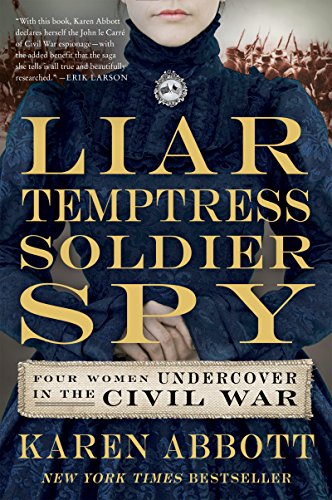
Liar, Temptress, Soldier, Spy by Karen Abbott

Four Women Undercover in the Civil War

This book is classified as a biography.

Belle Boyd was a rebel who shot a Union soldier. She became a spy for the Confederate army.

Emma Edmondson enlisted as “Frank Thompson” to become a Union soldier. She fell in love with Jerome Robbins while acting as a soldier. He knew her secret and returned her love, though she seemed a bit too fond of her tentmate, James Reid.

Widow Rose O’Neal Greenhow was a Confederate spy living in Washington D.C. She passed on information she learned from political connections and eventually was arrested.

Elizabeth Van Lew lived in Richmond but was an abolitionist. She acted as a Union spy.

The book is written more as a novel and is an easy read. Filled with surprises from the Civil War, this book is a page turner.

-Sandra Merville Hart

Amazon

Cherokee General Watie Surrenders First Indian Brigade

Degataga, Cherokee for “stand firm,” was the name given to Stand Watie at his birth. He was baptized as Isaac Watie so Stand Watie is a blend of his Cherokee and English names.

Watie supported the relocation of the Cherokee Nation to Indian Territory (modern-day Oklahoma.) Even though Chief John Ross and the majority of the Cherokee opposed the removal, Watie and a few other tribal members negotiated and signed the Treaty of New Echota. The treaty with the United States forced the Cherokee to leave their lands, traveling what was later called the Trail of Tears.

The treaty signers weren’t popular. A friend’s timely warning allowed Watie to escape being killed with other signers in 1839.

He joined the Southern cause in 1861. As colonel, he raised a Cherokee regiment, the Cherokee Regiment of Mounted Rifles. He and his troops helped drive pro-Union Native Americans from Indian Territory to Kansas.

Watie and his men excelled as scouts and skirmishers. His courage was noticed and he became Brigadier General Watie on May 6, 1864—the only Native American to receive this rank in the Civil War. He commanded the First Indian Brigade, made up of Cherokee, Seminole, Osage, and Creek soldiers.

After General Kirby Smith surrendered the Army of the Trans-Mississippi, Watie knew his turn was coming.

On June 23, he surrendered at Doaksville in Indian Territory.

The last Confederate general to surrender was Cherokee chief Stand Watie.

-Sandra Merville Hart

Sources

“Conclusion of the American Civil War,” Wikipedia.com, 2018/03/21 https://en.wikipedia.org/wiki/Conclusion_of_the_American_Civil_War.

“Conclusion of the American Civil War,” Wikiwand.com, 2018/03/22 http://www.wikiwand.com/en/Conclusion_of_the_American_Civil_War.

Long, E.B. and Long, Barbara. The Civil War Day by Day: An Almanac 1861-1865, A Da Capo Paperback, 1971.

Plante, Trevor K. “Ending the Bloodshed,” National Archives, 2018/03/21

https://www.archives.gov/publications/prologue/2015/spring/cw-surrenders.html.

“Stand Watie,” Civil War Home, 2018/04/22 http://www.civilwarhome.com/watiebio.html.

“Stand Watie,” Civil War Trust, 2018/04/22 https://www.civilwar.org/learn/biographies/stand-watie.

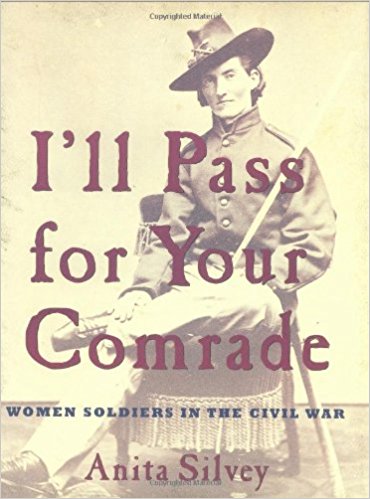
I’ll Pass for Your Comrade by Anita Silvey

Women Soldiers in the Civil War

This nonfiction resource book talks about the many women who wanted to be soldiers or became soldiers.

A group of over twenty Virginia women wanted to organize a volunteer regiment. They wrote to the Confederate Secretary of War and he rejected their offer.

Black women in Northern cities offered to be “nurses, seamstresses, and warriors if need be.” Local officials refused.

But some women did muster into the army. Fanny Wilson and Nellie Graves wanted to be near their boyfriends.

Malinda Pritchard Blalock served both the Union and the Confederacy as a soldier.

Women cut their hair short and dressed in soldier’s uniforms, often escaping detection simply because no one expected it.

Great book for Civil War research and history lovers.

-Sandra Merville Hart

Amazon

Battle at Fort Michilimackinac

Today’s post was written by talented editor and author, Pegg Thomas. The location of her book is a place I’ve longed to visit. Reading and loving one of her stories,  Embattled Hearts, has made me look forward to reading this newest novella.  Welcome to Historical Nibbles, Pegg!

 First, let me help you pronounce that fort, it’s mish-ee-lee-mack-in-aw. Right. Exactly how it’s spelled.

This fort sits at the top of Michigan’s Lower Peninsula, at the point where the two peninsulas are the closest. It’s called the Straits of Mackinac and today is spanned by the very impressive 5-mile-long Mackinac Bridge. The fort has been rebuilt on its original foundation and is the longest ongoing archeological dig in the United States. It’s open for tourists and staffed with a good crew of reenactors to make the experience memorable.

My May release, Her Redcoat, which is part of The Backcountry Brides collection, takes place here in 1763 during the Indian uprising, Pontiac’s Rebellion. While Pontiac organized multiple tribes and led the uprising against Fort Detroit, other Indians who supported him also attacked Fort Pitt and Fort Niagara. Those major forts stood against the attacks, while eight smaller forts were overrun. Including Fort Michilimackinac.

Pontiac and his followers had been used to the level-handed relationship they’d built with the French fur traders. When the British ousted the French and moved into their forts, the Indians rebelled against the arrogant and heavy-handed methods of the British.

In the background of my story is the history of Fort Michilimackinac. The British commander with his forty-some troops was vastly outnumbered by upwards of five hundred warriors. But in his full British arrogance, the commander could not see the danger all around him. He could not believe that savages—as he thought of them—could best the mightiest military in the world.

They did.

The results were devastating. Most of the regular soldiers were slaughtered. The officers were captured and held for ransom. There was one man, a British fur trader, who escaped the attack. He wrote his first-hand account of the story which has been made into the book Attack at Michilimackinac 1763. If you’re interested in this time period and the unrest in the backcountry of Britain’s American colonies, you’ll enjoy this book.

-Pegg Thomas

Bio:

Pegg Thomas lives on a hobby farm in Northern Michigan with Michael, her husband of *mumble* years. A life-long history geek, she writes “History with a Touch of Humor.” When not working or writing, Pegg can be found in her barn, her garden, her kitchen, or sitting at her spinning wheel creating yarn to turn into her signature wool shawls.

Her Redcoat teaser:

Laurette Pettigrew grew up in the northern frontier. Henry Bedlow arrived against his will. Their chance meeting changes everything. Will a deadly clash of cultures keep them from finding happiness?

Buy her book on Amazon or Christianbook.com.

Subscribe to Pegg’s Newsletter.

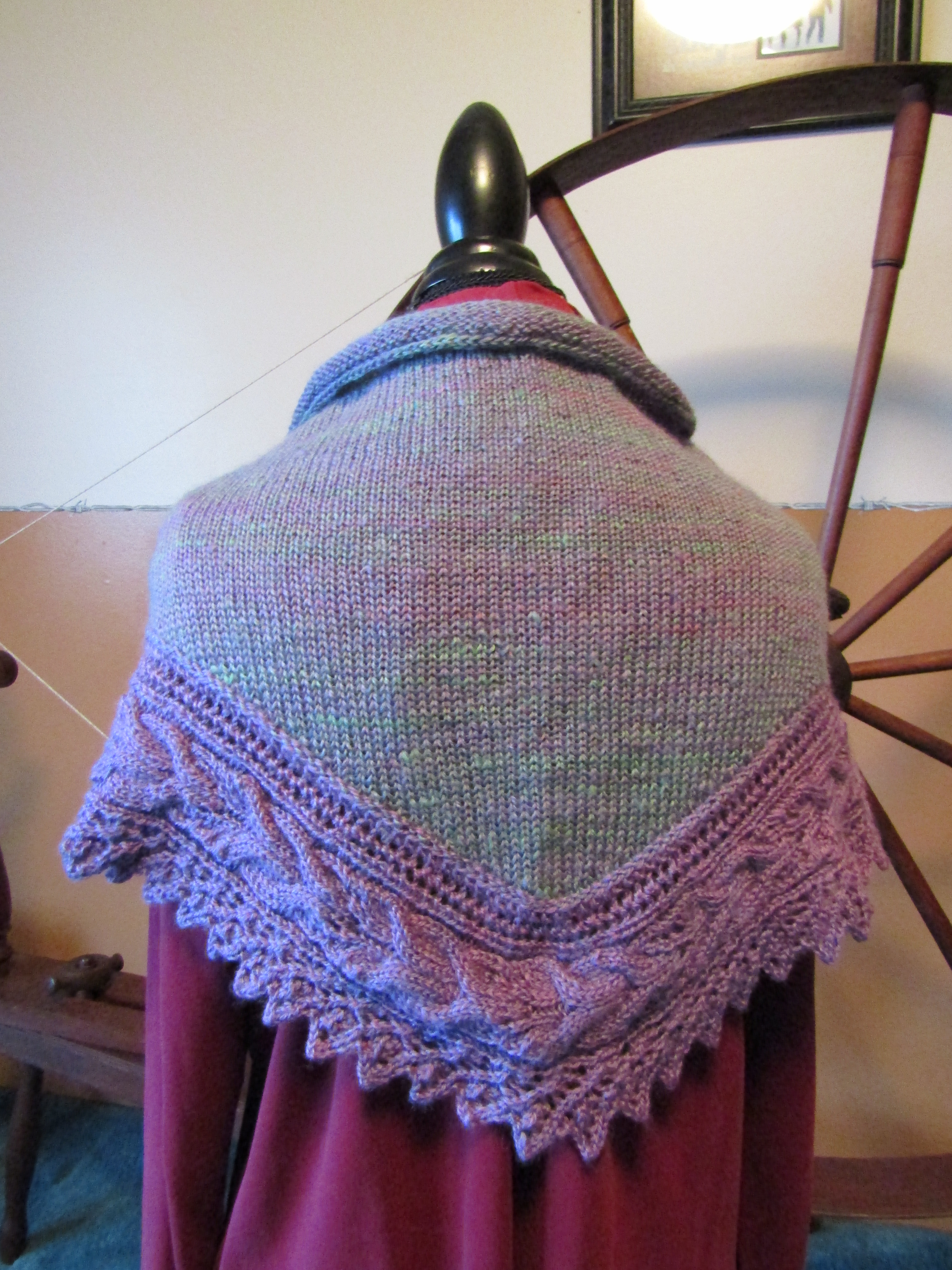
Enter Pegg’s Giveaway for this beautiful shawl by subscribing to her newsletter!

Pegg gives away one of her signature handspun, handknit, wool shawls with the release of each new story. To celebrate the release of Her Redcoat, Pegg is giving away the shawl Northern Lilacs. The Straits of Mackinac are known for their abundance of lilacs each spring and this shawl showcases their varied and gorgeous colors. Everyone who subscribes to Pegg’s newsletter is automatically entered in the drawing.


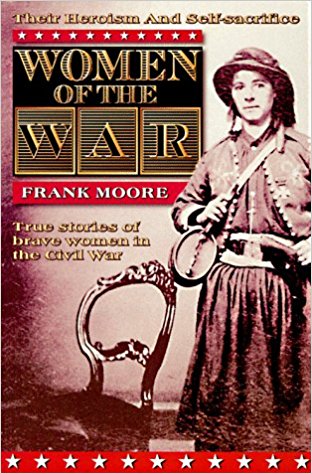
Women of the War by Frank Moore

Their Heroism and Self-sacrifice

True Stories of brave women in the Civil War

This nonfiction resource book shows the many different ways that women served in the Civil War effort.

There are examples of women as soldiers, such Anna Etheridge and Kady Brownell.

Women worked in the Sanitary and Christian Commissions, serving the soldiers.

The women of Philadelphia volunteered at The Cooper’s Shop Saloon, preparing food for Union soldiers passing through the city. There was also a hospital where they received medical care.

Women also traveled to Gettysburg to help with thousands of wounded.

Originally published in 1866, the book includes many examples of women going above and beyond to help soldiers.

Great book for Civil War research and history lovers.

I read this book to learn more about women who served in the Civil War as soldiers as part of my research for my upcoming November release, A Musket in My Hands.

-Sandra Merville Hart

Amazon

Women in the Civil War by Mary Elizabeth Massey

This nonfiction resource book is about the effects of the Civil War on women of the North and South.

Massey studied diaries and letters from over a hundred people who lived during the war. She begins by exploring education and employment opportunities available to women thirty years before the war.

During the war, some women stayed in or near army camps. Officers’ wives and families sometimes stayed in camps. Laundresses, cooks, and prostitutes were also there, as well as soldiers, nurses, and spies.

Massey gives examples of a few of the women who disguised themselves as soldiers on both sides.

Great book for Civil War research and history lovers.

-Sandra Merville Hart

Amazon

Confederate Surrender at Appomattox Court House

Food supplies awaited Confederate General Robert E. Lee’s Army of Northern Virginia at Appomattox Station. He needed them—his men were hungry.

On April 8, 1865, Lee arrived in Appomattox County. Union cavalry reached the supplies first and then burned 3 supply trains. Union General Ulysses Grant wrote to Lee, requesting his surrender. Lee refused, hoping for supplies in Lynchburg.

The next morning, the Confederates, under Major General John Gordon attacked Union cavalry troops. He stopped the attack when he realized that two Union army corps supported the cavalry.

They were cut off from provisions. Lee is famously quoted as saying that he’d “rather die a thousand deaths” than go talk to General Grant about surrendering.

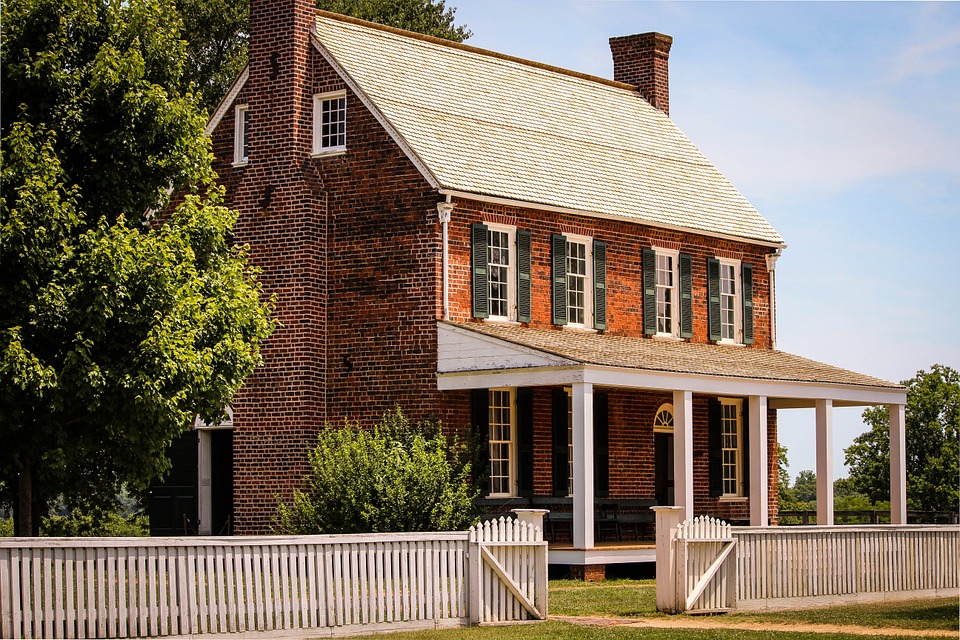
Grant arrived for the meeting in a muddy uniform. Lee came in full dress attire. They met in Wilmer McLean’s parlor at 1 pm on April 9th.

The generals awkwardly greeted one another, then Lee asked for surrender terms.

All officers and men would be pardoned—they’d go home with their personal property. The officers were to keep their side homes. Lee’s hungry soldiers were to receive food rations.

Lee signed the surrender.

Lee’s Army of Northern Virginia disbanded after being paroled. The war in Virginia had ended. Lee’s surrender was the first of several Confederate surrenders over the coming weeks.

-Sandra Merville Hart

Sources

“Appomattox Court House: Lee’s Surrender,” Civil War Trust, 2018/03/19 https://www.civilwar.org/learn/civil-war/battles/appomattox-court-house.

History.com Staff. “Appomattox Court House,” History.com, 2018/03/19 https://www.history.com/topics/american-civil-war/appomattox-court-house.

Revolutionary War: Washington Battles Supply Shortage at Valley Forge

The winter of 1777-78 at Valley Forge was rainy and moderate rather than snowy and cold, yet General George Washington’s colonial soldiers still suffered.

They were hungry. Provision shortages prompted Washington to write to the President of Congress, Henry Laurens, three days after their arrival at Valley Forge. His letter, dated December 22, 1777, reported alarming deficiencies in food supplies that, unless solved, must dissolve the army.

Incompetence in the Commissary and Quartermaster Department were partly to blame, though the practice of Purchase Commissaries working on percentages encouraged dishonesty.

William Buchanan served as Commissary General that winter. Washington asked Buchanan to rise to the challenge in a December 28th letter. He asked that at least a 30-day supply be stored near camp. Buchanan’s response wasn’t effective.

Nearby farmers, knowing the army’s great need, charged high prices. Local government passed legislation to fix prices to control this problem.

To supplement the food supply, Washington sent soldiers out to forage.

Members of the Continental Congress visited Valley Forge in mid-January. Washington reported the serious shortage.

In early February, Washington appealed to state governments for aid, who responded by sending droves of cattle to Valley Forge in March. One drove was captured by British soldiers.

The March 2nd appointment of Major General Nathanael Greene to Quartermaster General greatly improved the whole supply system along with the help of a new Commissary General, Colonel Jeremiah Wadsworth.

Greene and Wadsworth worked well together. Their previous commissary experience was a refreshing change and helped turn a bad situation around at Valley Forge.

-Sandra Merville Hart


Sources

“Provision Shortages at Valley Forge,” UShistory.org, 2018/03/20 http://www.ushistory.org/valleyforge/history/provisions.html.


“Ten Facts about Washington and the Revolutionary War,” George Washington’s Mount Vernon, 2018/03/11 http://www.mountvernon.org/george-washington/the-revolutionary-war/ten-facts-about-the-revolutionary-war/.

Revolutionary War: The Fate of Unborn Millions

When the Continental Army drove British troops out of Boston, the English soldiers headed to New York City.

General George Washington knew the importance of the city. He told his troops that “the fate of unborn millions” depended on their courage and on God.

Over the next few weeks, more British troops arrived in New York as the colonial soldiers prepared for battle. The British, under the command of Lieutenant General William Howe, attacked on August 27, 1776. The Continental soldiers fought bravely but were losing the fight.

A heavy storm halted the fighting the next day. It continued until the afternoon of August 29th. Howe decided to postpone the attack for the next day. Washington decided to evacuate while he could. The storm had left behind a thick fog.

Washington, at noon, ordered the quartermaster to impress boats with sails or oars. He needed them by dark.

Oars were wrapped with cloths to muffle the sound. Soldiers loaded horses, supplies, cannons, and ammunition as silently as possible for the first river crossing. Soldiers from a Massachusetts regiment—peacetime fishermen and sailors—served as boat crews.

In the misty fog, the wounded soldiers were transported next and then the rest of the Continental soldiers began to fill the rowboats, canoes, and barges.

Under General Washington’s orders, rearguard kept fires burning to keep the British army from detecting their retreat.

The last troops crossed safely at 6 am.

They had done it. Washington’s plan saved around 9,000 soldiers and most of their horses and supplies. They had slipped away without the enemy’s knowledge.

Even in defeat, Washington proved to be skillful leader.

-Sandra Merville Hart

Sources

Goldstein, Norman. “Escape from New York,” HistoryNet, 2018/03/11 http://www.historynet.com/escape-new-york.htm.

“Ten Facts about Washington and the Revolutionary War,” George Washington’s Mount Vernon, 2018/03/11 http://www.mountvernon.org/george-washington/the-revolutionary-war/ten-facts-about-the-revolutionary-war/.


Revolutionary War: Washington Fights a Smallpox Epidemic

General George Washington had a problem—besides his British enemy. This time it was a silent killer—a disease known as smallpox.

Washington was no stranger to the disease. While in Barbados in November, 1751, he’d suffered through a bout with the disease. After he recovered, he was immune to smallpox.

Variola—the smallpox virus—was brought in by British and German soldiers. The virus caused about 17% of deaths in the Continental Army. The disease also scared off potential recruits.

The practice of inoculations was widespread in Europe. Fearing contamination from the inoculation process, the Continental Congress prohibited army surgeons from doing them. Besides, soldiers would be too ill to fight for about a month after receiving a less-potent form of smallpox.

Yet soldiers were dying. Washington had to do something.

On January 6, 1777, General Washington ordered Dr. William Shippen, Jr. to inoculate all soldiers that came through Philadelphia. He wrote that he feared the disease more than “the Sword of the Enemy.”

Washington then ordered a mass inoculation on February 5, 1777. Though he did this in secret so the enemy wouldn’t know that his soldiers were incapacitated for a time, he did inform Congress of his decision.

Some reports state that deaths from smallpox dropped to 1% in the Continental Army. Isolated infections occurred in the southern campaign but were not the overwhelming problem as had occurred early in the war.

Washington’s decisive actions had saved the army.

-Sandra Merville Hart

Sources

“George Washington and the First Mass Military Inoculation,” The Library of Congress, 2018/03/11 https://www.loc.gov/rr/scitech/GW&smallpoxinoculation.html.

“Ten Facts about Washington and the Revolutionary War,” George Washington’s Mount Vernon, 2018/03/11 http://www.mountvernon.org/george-washington/the-revolutionary-war/ten-facts-about-the-revolutionary-war/.

Thompson, Mary V. “Smallpox,” George Washington’s Mount Vernon, 2018/03/11 http://www.mountvernon.org/digital-encyclopedia/article/smallpox/.