1841 Cider Vinegar Recipe

Sarah Josepha Hale, the author of an 1841 cookbook, wrote that vinegar was “perpetually wanted” by families yet was expensive to purchase. Frugal housekeepers prepared their own vinegar.

There were several varieties of vinegars used by early cooks including celery vinegar, horseradish vinegar, and cucumber vinegar.

They also used cider vinegar, as we do today. It is surprisingly easy to prepare.

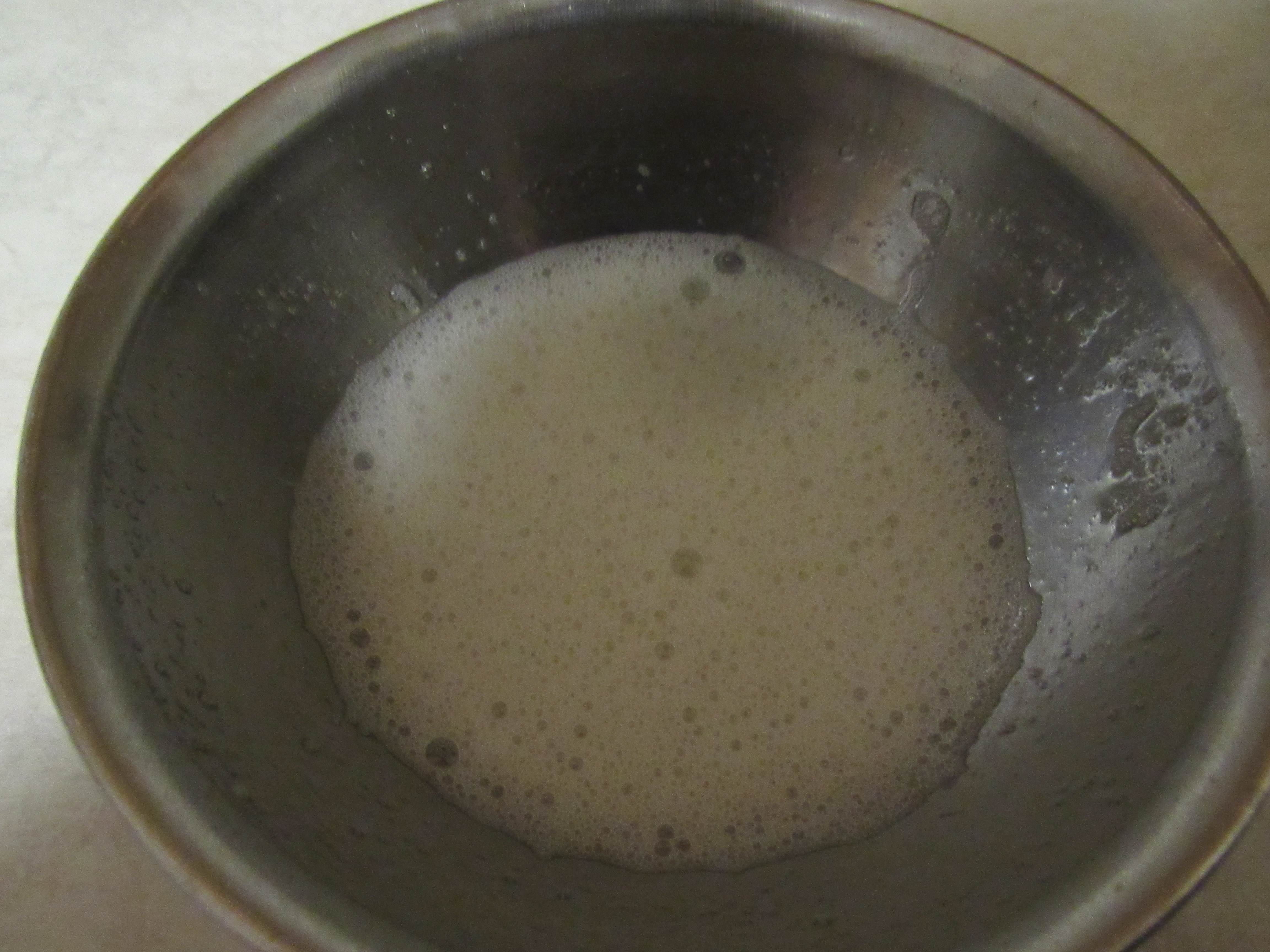
Add a cup of white sugar into a half gallon of apple cider. Stir well.

This liquid needs to ferment for 4 months. I am storing mine in the original plastic container.

I will update this post at the end of that time. I’m uncertain whether buying refrigerated cider affects the fermentation process, but I’ll let you know if I have cider vinegar in 4 months.

Stay tuned!

-Sandra Merville Hart

Sources

Hale, Sarah Josepha. Early American Cookery: “The Good Housekeeper” 1841, Dover Publications, Inc., 1996.


Focus on Love by Candee Fick

I enjoyed this novel!

Liz had desperately wanted to be a photographer in her family’s business, but the rift between her and her dad is too wide. She pursues her second love, drama, as an actor in a dinner theater.

Ryan has temporarily stepped away from his lucrative and award-winning photography career to support his sister while her husband is deployed. He proposes a photography package deal to Liz’s boss. Liz is drawn back into the hobby she loves when Ryan needs help.

After a couple of bad relationships, Liz is wary of starting another. She misses her mother, for the rift between her and her dad cut ties with her mom, too. It also affects her faith. She longs for reconciliation.

This sweet romance is a page-turner. It snagged my interest immediately. Readers get to spend a little more time with characters they fell in love with in a previous novel, Dance Over Me. I kept reaching for the novel to find out what happened next even when I needed to be doing other things. The characters are realistic and believable.

Recommend!

-Sandra Merville Hart

Lighthouse Publishing of the Carolinas – Use coupon code SandraMHart for a 20% discount on Lighthouse Publishing books!

1841 Mustard Recipe

Sarah Josepha Hale, the author of an 1841 cookbook, wrote that mustard is best when freshly made. I occasionally like mustard on my sandwiches so this seemed like a fun experiment.

As is so often the case with old recipes, no ingredient amounts were supplied.

Hale suggests using the best ground mustard. I used 2 tablespoons of ground mustard. A “little salt” became 1/8 teaspoon of salt.

Mix this together. Add 2 teaspoons of warm water and stir. You will probably need a little more water (I used 3 teaspoons) until it is spreadable consistency.

I tried this mustard on a ham sandwich. It has VERY STRONG taste, similar to horseradish mustard. I did not like it.

Hale included a recipe for Mild Mustard, where milk is substituted for the water. This made a creamier consistency, but the taste was even stronger.

Having grown accustomed to the popular mustard brands available today, this old recipe was too spicy for me. I don’t believe that greatly watering down the mustard would have improved the taste.

Did our ancestors use mustard more sparingly in their cooking than modern cooks? Or did strong spices improve the taste of poor quality meats?

I’d love to hear if you try it.

-Sandra Merville Hart

Sources

Hale, Sarah Josepha. Early American Cookery: “The Good Housekeeper” 1841, Dover Publications, Inc., 1996.


Rumors and Promises by Kathleen Rouser

I had a hard time putting down this novel.

Sophie Biddle is a young mother with a secret. Her two-year-old daughter refers to her as Sophie instead of Mama to mask their identity from strangers in the small town of Stone Creek, Michigan.

Reverend Ian McCormick is instantly drawn to Sophie and her little sister, but he fights his feelings for her. He also has a secret that haunts him. Can God use a man who has failed?

This historical romance is a beautiful story of the redemptive healing power of love. I found myself immersed into the troubles of the believable, likable characters.

This is my second time reading this novel and I enjoyed it just a much as the first. This novel touched my heart.

-Sandra Merville Hart

Lighthouse Publishing of the Carolinas   Use coupon code SandraMHart for a 20% discount on Lighthouse Publishing books!


1841 Powder of Fine Herbs for Soups and Sauces

I found a Mixed Spices and Seasonings, used for soups and sauces, in an 1841 cookbook and decided to make it.

This recipe calls for summer savory, a new spice for me. It has a pungent, peppery flavor.

The 1841 cook used lemon-thyme, which smells and tastes like lemon. I was unable to find this seasoning so I substituted thyme for it.

I adjusted the amounts yet maintained the proportions in the 1841 recipe because it made too large a batch. For instance, the cook used 2 ounces of dried parsley and an ounce each of the other seasonings. This is way more than I need to store for the next few months.

Select a small mixing bowl.

2 tablespoons dried parsley

1 tablespoon lemon-thyme (I used thyme)

1 tablespoon summer savory

1 tablespoon sweet marjoram (also called marjoram)

1 tablespoon dried basil

1 tablespoon dried lemon peel

1 tablespoon celery seeds (optional)

Mix ingredients together. Though the celery seeds are optional, I added them.

Store in closed container until needed for soups or sauces.

To try out the seasoning blend, I made vegetable soup. At first, I added 2 teaspoons of the seasoning mixture to the soup as it cooked. Then I added another teaspoon because I made a large stockpot of soup.

Yum! I loved the flavors this seasoning blend added to vegetable soup. Winter is the perfect time for soup and this addition made the dish even more comforting. I will make this again.

I’d love to hear if you try it.

-Sandra Merville Hart

Sources

Hale, Sarah Josepha. Early American Cookery: “The Good Housekeeper” 1841, Dover Publications, Inc., 1996.

“Marjoram Leaf,” Spices, Inc., 2018/01/21 https://www.spicesinc.com/p-95-marjoram-leaf.aspx.

“Summer Savory,” Spice Islands, 2018/01/21 http://spiceislands.com/products/summer-savory.


The Troy Flood of 1913

Troy citizens couldn’t foresee the terrible flood coming their way as they traveled to church on the stormy Easter morning of March 23, 1913.

The day before had a been an unseasonably beautiful day. The small Ohio city, set on the banks of the Great Miami River with the Miami and Erie Canal running through it, manufactured transportation equipment, food machines, and distilled beverages.

While the river rose, the canal overflowed on Sunday night. Men, carrying lanterns, walked between the two waterways to monitor water levels.

Water often seeped into cellars during hard rains and citizens weren’t too concerned at first. When ankle-deep water became waist high in twenty minutes, folks became alarmed.

Relentless rain flooded houses, driving people from their homes. Some were trapped. Sheriff Louis Paul directed rescues made by boats. Men with boats rowed to their neighbors’ aid. Folks outside of Troy came to help.

Some men were released from prison in order to help. “Sailor Jack” and Otto “Slim” Sedan became heroes during the flood.

Houses came loose from their foundations. One man rode down the river on his roof.

Animals weren’t safe either. Three chickens perched on a chicken house as it floated down Race Street.

Temporary hospitals and public shelters were set up for those displaced by the flood.

The Flood of 1913 is Ohio’s greatest natural disaster. The worst flooding occurred along the Great Miami River. Statewide, at least 428 people lost their lives.

Troy and nearby Dayton received 9.7 inches of rain in five days.

-Sandra Merville Hart


Sources

“1913 Ohio Statewide Flood,” Ohio History Central, 2018/02/22 http://www.ohiohistorycentral.org/w/1913_Ohio_Statewide_Flood.

Troy Historical Society. Images of America: Troy and the Great Flood of 1913, Arcadia Publishing, 2012.

Such a Hope by Sondra Kraak

Paths of Grace Series

Anna Warren returns to Seattle after the death of her father, a successful freighter. She misses her father and wants to return to the home where she grew up and make a living as a freighter like her pa.

Tristan Porter is in her cabin when she returns. Why is the farmer staying on her land? And what is the rumor about her pa leaving her land to someone else?

She tries to find the truth as she fights her feelings for Tristan. He cares only about his crops.

Anna prayers for a man near death are miraculously answered. Folks have mixed feelings about the healing and tend to leave Anna alone—until they need her.

This historical romance tugged at my heart—and this is the second time I’ve read the novel. Believable characters and lots of emotion make this book hard to put down. I will look for more novels by this author.

-Sandra Merville Hart


Spiced Peach Pie, Anyone?

Photo © Catherine Castle

Today’s post is written by fellow author and dear friend, Catherine Castle. I’m looking forward to making this peach pie and reading her newest novel. Welcome, Catherine!

I’m going say upfront that although I like pie, it’s not a dish I serve at our house much due to dietary constraints. But when I was first married, pie was a regular addition to the dinner table. My husband loved lemon meringue pie, and I learned to make a pretty good one, if I do say so myself. Today any pie I bake, or eat, leans toward fruit pies that are lightly sweetened, if at all. (Remember those dietary constraints I spoke about.)

So, imagine my surprise when Chip Vandermere, the hero of my newest book, Bidding on the Bouquet, decided he loved pie—any kind of pie. Having just done some research about pies and their role in Early American weddings (they were the original wedding dessert of choice back then), Chip’s pie fetish became a recurring motif in the new book.

Suddenly, I found myself writing about this sweet dessert, and craving it. To help alleviate that craving, and provide a valid reason for baking, I decided to include Chip’s love of pies in the book’s promotions. The first result of that decision is an original recipe I named Emelia’s Spiced Peach Pie.

Chip’s housekeeper, Emelia, is a pie baker extraordinaire and the one person in his home to whom he can spill his heart. For Chip, a slice of Emelia’s pie is a comfort, a reward, and a little piece of heaven. When Emilia begins to play matchmaker between Chip and a pie-loving young lady Chip suspects of being a gold digger, their shared love of pie becomes an irritation. Face it, what other reason would a down-and-out-on-her-luck girl want to bid for a bridesmaid spot in his sister’s wedding, if not to worm her way into the life of the rich and famous Vandermeres?

Emelia’s Spiced Peach Pie

© 2018 Catherine Castle

Ingredients:

  • One, 2-crust pie pastry, homemade or store bought
  • 7 cups sliced peaches, fresh or frozen, thawed
  • ¼ sugar
  • ½ tsp. ground cinnamon
  • ¼ tsp ground nutmeg
  • 1 Tbs. cornstarch
  • 1 Tbs. finely minced orange peel. Remove the white membrane from the peel before mincing.

Directions:

  • In a large bowl, sprinkle ¼ cup sugar over peaches and mix well.
  • Combine cinnamon, nutmeg, cornstarch and orange peel in a small bowl and add to peaches, mixing well.
  • Place bottom crust in a glass pie pan and pat against the sides and bottom of the pan.
  • Pour peaches onto crust and arrange evenly in the pan.
  • Trim bottom crust leaving pastry about ½ inch from the edge of the pie pan.
  • Top with second crust, turning top crust under bottom crust. Crimp or flute crust edge as desired, making sure you have sealed the two crusts together to prevent leakage.
  • Cut several slits in top crust to allow steam to escape.
  • Cover the edges of the pie crust with aluminum foil to prevent burning.
  • Bake 10 minutes at 450 degrees.
  • Turn oven down to 350 degrees and bake pie for 70 minutes longer or until crust has browned and filling is bubbly.
  • Remove pie from oven, take off aluminum foil strips, and let pie cool completely before slicing. This pie will cut better after is has been refrigerated.

Note: If you prefer a juicer pie, let the peaches sit after sugaring them, stirring several times, until juice has formed in the bottom of the bowl. If you do this you may want to protect the bottom of your stove from filling leakage.

-Catherine Castle

About the Author:

Multi-award-winning author Catherine Castle loves writing, reading, traveling, singing, theatre, and quilting. She’s a passionate gardener whose garden won a “Best Hillside Garden” award from the local gardening club. She writes sweet and inspirational romances. You can find her books The Nun and the Narc, A Groom for Mama, Bidding on the Bouquet  and Trying Out for Love boxed set on Amazon. Connect with Catherine on her website: websiteFacebook, and Twitter  @AuthorCCastle.

Buy link for Bidding on the Bouquet on  Amazon.


How Fun to Receive a Silver Medal During the Olympics!


I love watching the Olympics and hearing the stories behind the athletes’ struggles to make it there.

What a joy it was to receive my Silver Medal from Illumination Book Awards during the Olympic season! My novel, A Rebel in My House, was awarded 2018 Silver Medal for Inspirational/Romance Fiction.

If you enjoy reading historical romances, I invite you to read this novel set during one of our nation’s most famous Civil War battles, the Battle of Gettysburg.


The Great Peshtigo Fire

The summer of 1871 had been a dry season. Loggers in the sawmill town of Peshtigo,  were careful about fires, mindful of the vast forest surrounding them.

One of the largest factories of wood products in the country was in Peshtigo, Wisconsin. Most of the town’s buildings were made of wood.

New settlers to the area cleared farmland by the “slash and burn” method, increasing chances of a forest fire.

The Chicago and Northwestern Railway was being extended. Workers cut down trees and burned them to clear the land. Sometimes the brush was left by the tracks. Steam engine sparks sometimes ignited the dried stacks of wood.

Small fires had broken out recently, causing folks in Peshtigo to stockpile a large water supply.

No one knows what sparked the fire in the dense forest on October 7th. The flames spread to the nearby village of Sugar Bush where it killed everyone.

High winds whipped the blaze, now 200-feet high, toward Peshtigo, which it reached on October 8th. The citizens had no warning.

Folks jumped in the nearby river where several drowned. Two hundred people died in a tavern. A mass grave held close to 350 bodies so badly burned that they couldn’t be identified.

The mile-high flames were five miles wide. Fire spread through the forest at 90 to 100 mph, hot enough to turn sand into glass.

Called the most devastating fire in our history, it destroyed 1,500,000 acres of timber. When the flames were finally extinguished, an estimated 2,200 people lay dead. The blaze destroyed 12 pioneer towns.

Newspapers barely covered this story because the Great Chicago Fire happened around the same time.

-Sandra Merville Hart

Sources

Biondich, Sarah. “The Great Peshtigo Fire,” Shepherd Express, 2018/01/08 https://shepherdexpress.com/aroun-milwaukee/great-peshtigo-fire.

“Great Peshtigo Fire,” United States History, 2018/01/08 http://www.u-s-history.com/pages/h2113.html.

History.com Staff. “Massive Fire Burns in Wisconsin,” History.com, 2018/01/08 http://www.history.com/this-day-in-history/massive-fire-burns-in-wisconsin.