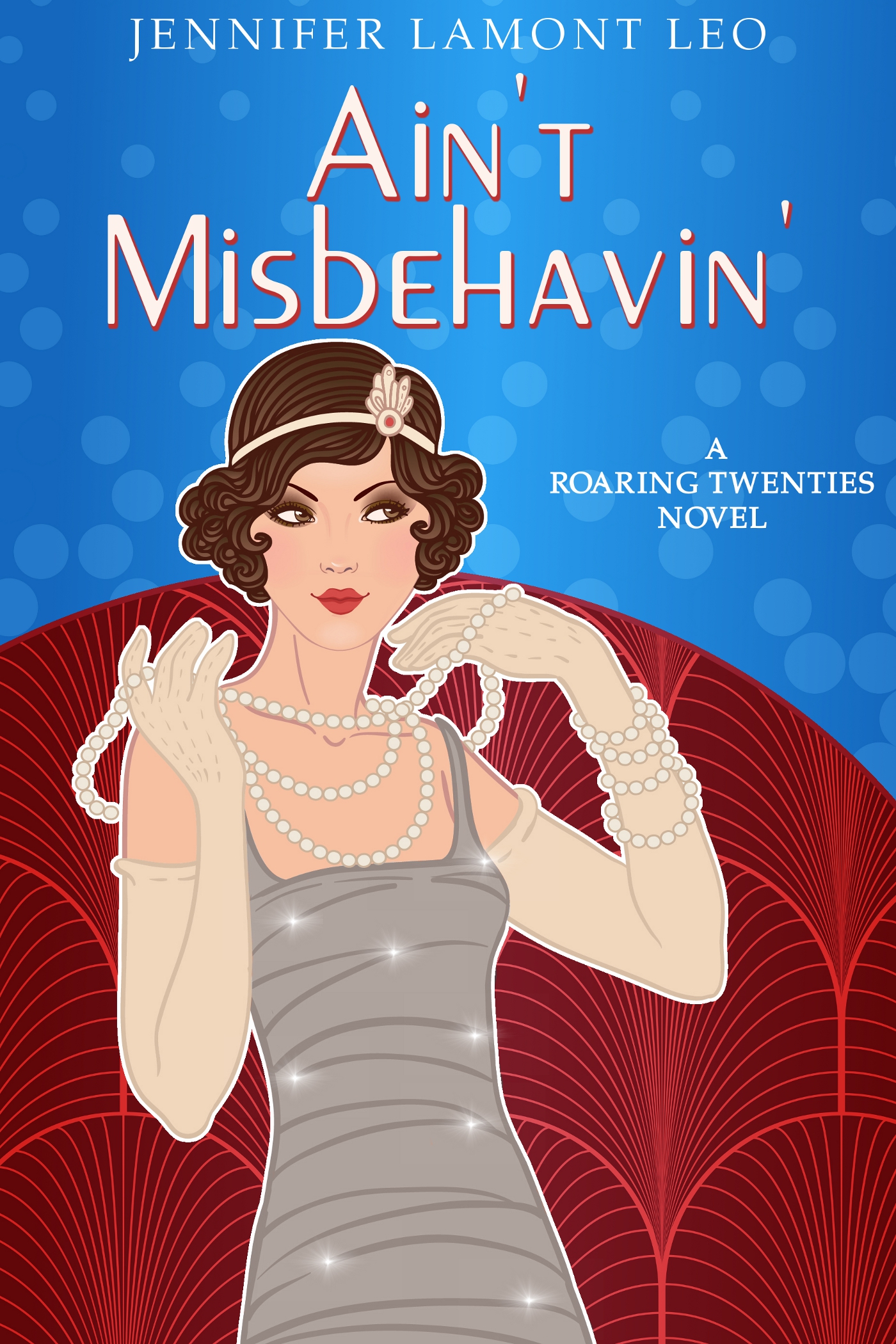
Valentine’s Day Special List – Top Romance Novels I Read Last Year

As an author, I read a variety of research books and novels. Valentine’s Day seemed a good day to highlight my favorite romances that I’ve read (or reread) the past year:


  1. Mattie’s Pledge by Jan Drexler


  1. Last Stop, Cordelia by Lisa Carter


  1. A Groom for Mama by Catherine Castle


  1. Gift from the Heart by Irene Hannon


  1. Blind Dates Can Be Murder by Mindy Starns Clark


  1. Swept Away by Mary Connealy


  1. The Caretaker’s Son by Yvonne Lehman


  1. Dance Over Me by Candee Fick


  1. Colorado by Rosey Dow


  1. A Royal Christmas Wedding by Rachel Hauck

Click on the link to read my reviews. Yes, I write reviews for books I enjoy–it’s such a gift to authors! Consider writing and posting a short review on Amazon, Goodreads, etc., for books you read.

What’s on your list? Happy Reading!

-Sandra Merville Hart

1841 Seasoning and Spice Blend for Gravies and Forcemeats

I found a Mixed Spices and Seasonings, used for gravies and forcemeats, in an 1841 cookbook and decided to make it.

Forcemeat is lean, ground meat mixed with fat. The most common of these are sausage and deli meats. This type of food has been around for centuries and were found in a collection of Roman recipes from the 4th or 5th century.

I adjusted the amounts yet maintained the proportions in the 1841 recipe because it made too large a batch. For instance, an ounce of black pepper was used by the cook to prepare a jar of the seasonings for months ahead, whereas I used far less–2 tablespoons.

Select a small mixing bowl.

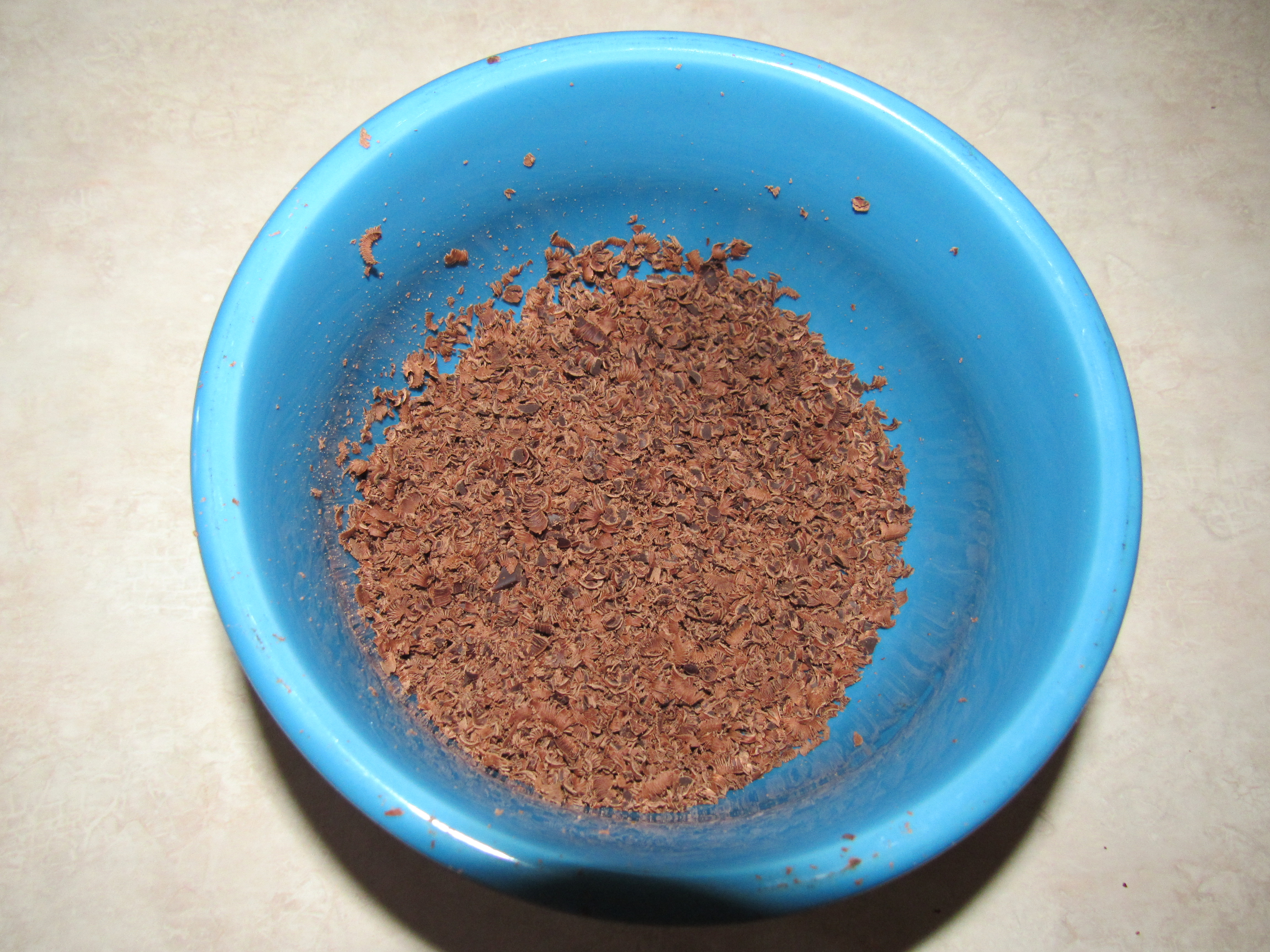
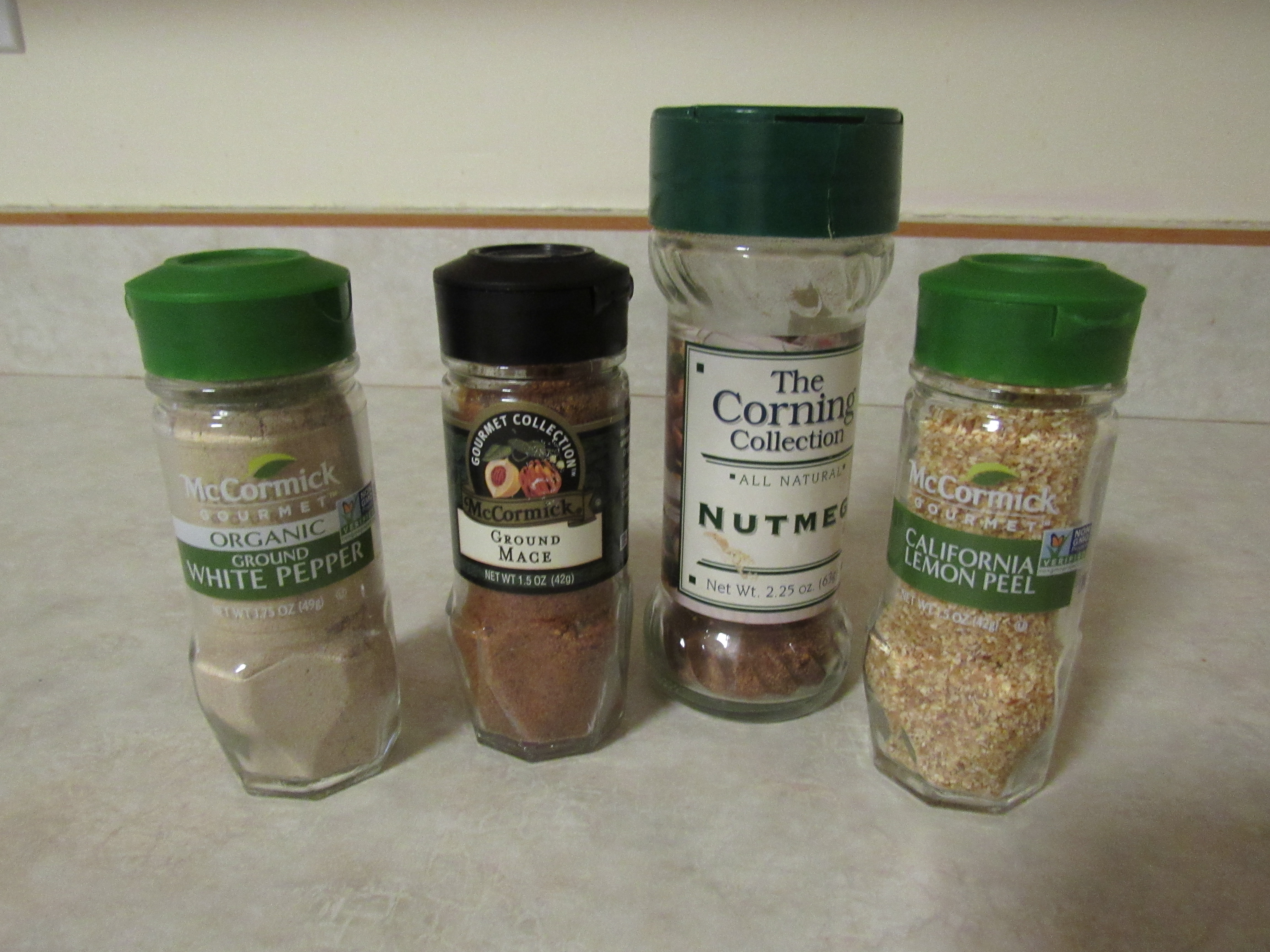
2 tablespoons black pepper

1 tablespoon nutmeg

1 tablespoon ginger

1 tablespoon cinnamon

1/8 teaspoon ground cloves

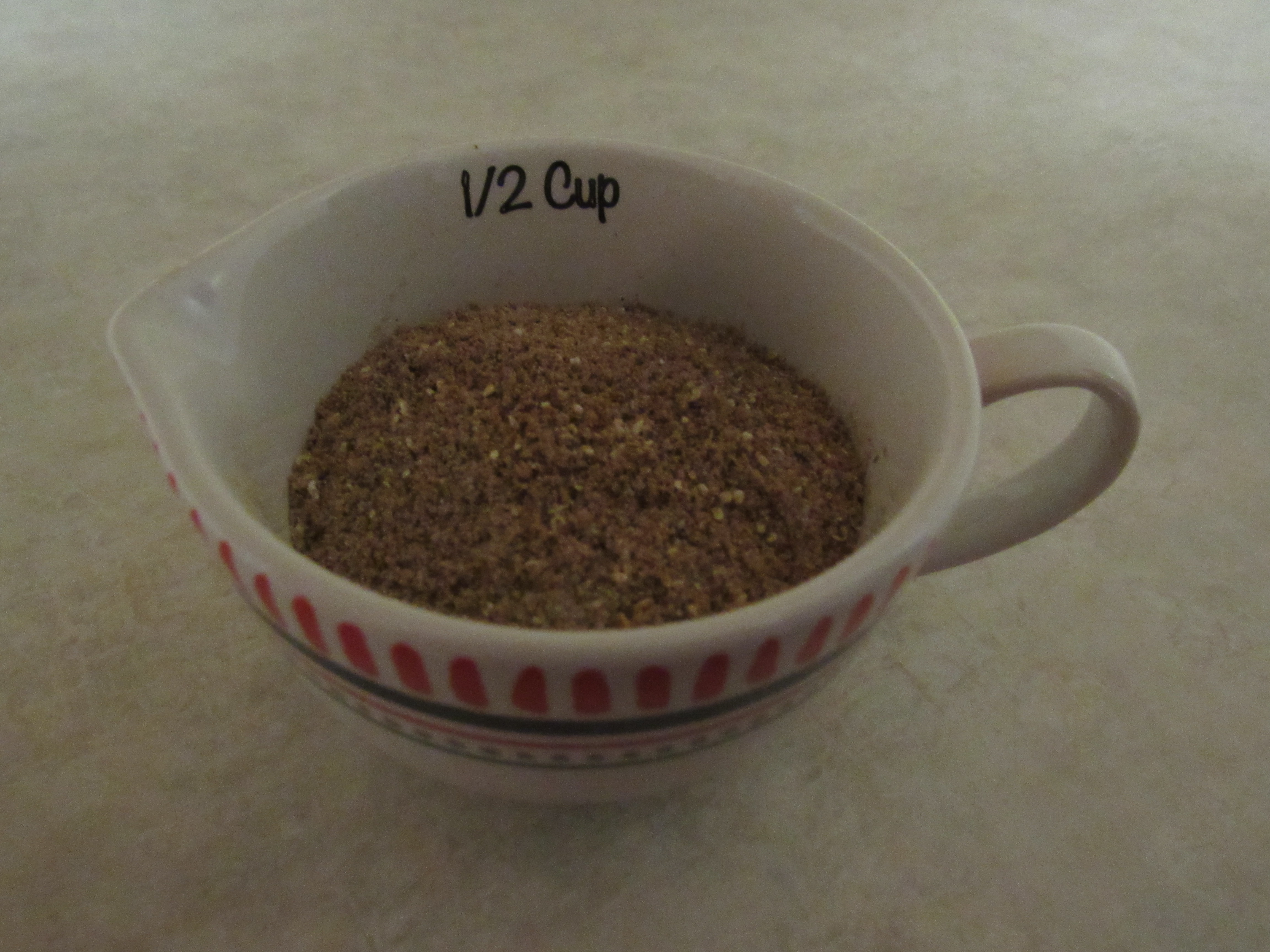
Mix ingredients together. This made less than ½ cup.

Store in closed container until needed for gravies or forcemeats.

To try out the seasoning blend, I mixed a small amount (1/8 teaspoon) with mayonnaise and ate it on a ham sandwich. Because so many spices that I associate with pies are included in the blend, it was an odd flavor to me.

No doubt our tastes have altered over the years, but that doesn’t mean it’s not worth a try.

The next time I make beef or turkey gravy, I will try to remember to set aside a half-cup and add this seasoning. I’d love to hear if you try it.

-Sandra Merville Hart

Sources

“Forcemeat,” Wikipedia.com, 2018/01/21 https://en.wikipedia.org/wiki/Forcemeat.

“Forcemeat Preparation & Equipment,” The Culinary Cook, 2018/01/21 https://sandramervillehart.wordpress.com/.

Hale, Sarah Josepha. Early American Cookery: “The Good Housekeeper” 1841, Dover Publications, Inc., 1996.


Black Sunday Dust Storm: April 14, 1935

Severe drought conditions struck the Southern Great Plains starting in 1930. Overfarmed and overgrazed land in several states began to blow away in the drought. Nineteen states became part of the dust bowl. Worst hit were Kansas, Texas, Oklahoma, New Mexico, Arkansas, and Nevada.

Winds whipped dust over the plains, darkening the sky for days. Thick dust covered everything and even got inside well-sealed homes. Many residents suffered chest pains and difficult breathing from “dust pneumonia.”

Folks called the dreaded dust storms “black blizzards.” These storms reached Washington DC and the East Coast, blotting out the sun and the Statue of Liberty. It even coated ships on the Atlantic Ocean with a fine layer of dust.

The worst storm came on April 14, 1935. The Sunday morning started off with clear skies. Winds died down. Folks ventured to church, hoping for rain to replenish the baked earth.

Instead, a Canadian cold front clashed with warm air in the Dakotas. The temperature fell 30 degrees. Frenzied winds created a dust cloud hundreds of miles wide and thousands of feet high. The dust storm headed to Colorado, Kansas, Oklahoma, and Texas.

Skies turned black. Folks sheltered in homes, barns, and fire stations. People caught out driving hid in their cars. “You couldn’t see your hand before your face,” recalled folksinger, Woody Guthrie.

Scary conditions convinced some the end of the world was at hand. The worst conditions were in the Texas and Oklahoma panhandles where a massive dust wall resembled a tsunami on land. Winds reached 60 MPH.

Reporters who wrote about the storm on Black Sunday referred to the southwest as a Dust Bowl for the first time.

For many residents, this storm was the last straw. They packed up and headed to California.

The drought lasted until 1939 when the rains finally returned, but not before 400,000 folks moved from the Great Plains.

-Sandra Merville Hart


Sources

“Dust Bowl,” Library of Congress, 2018/01/08 http://www.loc.gov/teachers/classroommaterials/presentationsandactivities/presentations/timeline/depwwii/dustbowl/.

History.com Staff. “Dust Bowl,” History.com, 2018/01/08 http://www.history.com/topics/dust-bowl.

History.com Staff. “Remembering Black Sunday, 80 Years Later,” History.com, 2018/01/08 http://www.history.com/news/remembering-black-sunday-80-years-later.

“The Black Sunday Dust Storm of April 14, 1935,” National Weather Service, 2018/01/08 https://www.weather.gov/oun/events-19350414.


Alice’s Notions by Tamera Lynn Kraft

This historical suspense novel is set shortly after the end of World War II. Alice Brighton, widowed by the war, returns to her small home town of Burning Bush, West Virginia to start over. She opens a new fabric shop, Alice’s Notions, hoping to support herself and bring business to her town.

But nothing is the same. Her new landlord, Rick Morrison, is often away. He’s nice-looking but bossy. Her employee is a German immigrant. Old neighbors have changed.

Alice organizes a barn quilt tour to bring customers to the town. Why are so many up in arms about it? Who can Alice trust in the fearful environment following the war?

This novel is an eye-opener about the troubled environment and real danger to everyday folks after the war.

Once the story snagged my interest, it didn’t let go. The suspenseful quality drew me in as I tried to figure out who to trust along with Alice. Many aspects of 1940s life included in the story make this an enjoyable read.

-Review by Sandra Merville Hart

Christianbook.com

Civil War Tin Cups

Sharpshooter demonstration camp

I’ve been interested in history since my high school history teacher taught me that history was more about people than dates and events.

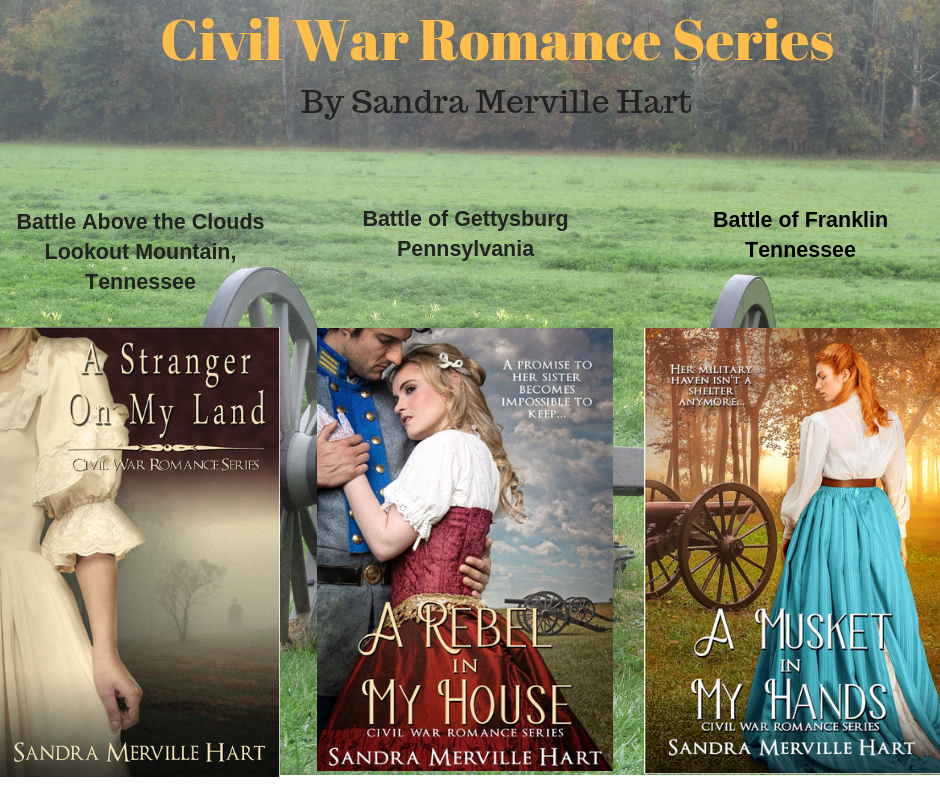
A love of history, particularly American History, stayed with me throughout my life. I’ve learned surprising tidbits while researching for my Civil War romance novels. A Stranger On My Land is set on Lookout Mountain in Tennessee following the Battle Above the Clouds. A Rebel in My House is set during the famous Battle of Gettysburg.

While researching my last Civil War novel, I found that tin cups used by Civil War soldiers varied in size.

Soldiers tied cups to their knapsacks (held clothing and personal items) or haversacks (held food rations) or belts.

They cooked soups and stews in cups. They steeped coffee in them. So how big were they?

The 1860s regulation issue Union Army tin cup held a quart or 32 ounces. That’s larger than I’d guessed.

A small civilian cup was 3 ½ inches high and held 12 ounces.

Early Army cups used until 1851 held one pint or 16 ounces.

Regulation Army cups of 1851 held 24 ounces.

In looking at old photos of Civil War soldiers dining, a variety of cups might be used. Soldiers lost personal items while on march or in battle. Sutlers sold food and other provisions to army personnel. One source stated that two different cups were available from one sutler at a cost of 10 cents or 15 cents.

-Sandra Merville Hart

Sources

“A Note About Tin Cups,” Campsite Artifacts, 2018/01/17 http://www.campsiteartifacts.com/tincupinformation.html.

Billings, John D. Hardtack and Coffee, University of Nebraska Press, 1993.

“Civil War Antiques Catalog,” Dave Taylor’s Civil War Antiques, 2018/01/17 http://www.angelfire.com/oh3/civilwarantiques/1312webcat.html.

“The Tin Shop,” C & D Jarnagin Company, 2018/01/17 http://www.jarnaginco.com/CWCupscookwareplates.html.


The Johnstown Flood of 1889

In late May of 1889, days of heavy rain struck the river valley in central Pennsylvania. Residents in Johnstown, a thriving city on the Little Conemaugh River, were no strangers to flooding. When riders shouted desperate warnings of a flood’s approach, most citizens in the Pennsylvania simply moved their family and valuables to the second floor.

Yet this was no normal flood.

South Fork Dam at Lake Conemaugh, 14 miles upstream, was maintained by South Fork Fishing and Hunting Club. The eight-year-old dam needed repairs that heavy rains only worsened. Repair efforts in late May failed to halt the disintegration.

On May 31st, swollen late waters overflowed the dam’s walls around 1:00 pm. Riders rode furiously downriver to warn residents. The dam washed away at 3:10 pm, drowning workers who struggled to fix it.

Twenty million tons of water deluged small communities near the dam, picking up trees, houses, railroad cars, and people—some still alive—on its rush toward Johnston.

The flood reached the city in ten minutes, crushing or drowning 2,000 citizens. Survivors washed downstream with the dead. Some survivors held onto debris entangled 40 feet high at the city’s Stone Bridge that caught fire. The flames killed about 80 people.

A horrified telegraph worker counted 63 bodies float past his office in 20 minutes.

The tragedy claimed 2,209 lives. A waterspout was originally blamed for the dam’s collapse, but the South Fork Fishing Club President later admitted that the problem was in the dam’s weakness.

Volunteers pitched tents in the city to help survivors and bury the dead. Clara Barton and the American Red Cross were among the volunteers. A week after the catastrophe, 13 or 14 people were found living in a single room of a house. Many survivors kept their windows tightly closed against the odor of decaying bodies.

Johnstown residents rebuilt their city. They celebrated their citizens’ resilience on the flood’s 100th anniversary.

-Sandra Merville Hart

Sources

History.com Staff. “May 31, 1889: The Johnstown Flood,” History.com, 2018/01/08 http://www.history.com/this-day-in-history/the-johnstown-flood-2.


“Hundreds of Lives Lost: A Waterspout’s Dreadful Work in Pennsylvania,” Johnstownpa.com, 2018/01/08 https://www.johnstownpa.com/History/hist30.html.


The Blue Lotus Society by Michelle L. Levigne

(Guardians of the Time Stream Series)

This is Book One of the series.

This steampunk historical novel is not my usual genre. When I read that the United States was in the third term of Lincoln’s presidency and the main character was on a flying ship, it took a couple of chapters to grasp the alternate history.

Ess is a rarity—a female Pinkerton agent in the late 1860s. Her current task to guard Egyptian artifacts lands her in more danger than she realizes.

Ess longs to find her missing grandparents and her brother. She meets friends of her missing relatives yet hesitates to trust them. What is the Blue Lotus Society?

Has she been wrong to trust her fellow Pinkerton agents?

The well-written story drew me in. I had no idea how the story would turn out. I enjoyed reading a new-to-me genre for a change.

The ending leaves you curious about what happens in the next novel. The author did a great job piquing my interest for Book Two!

-Review by Sandra Merville Hart

Christianbook.com

Banana Bread

Today’s post is written by fellow author, Lindsey Brackett. Her debut novel, Still Waters, released in 2017. Looking forward to reading this book, Lindsey!

Her granddaughter lifted the wicker tray with its bounty of porcelain and banana bread.

“Found yourself a snack, did you?” Annie followed her over to the glass doors that welcomed sunlight and ocean views into her home at every meal.

Cora Anne bent her head over the tray as she inhaled. “Banana bread might be my only weakness, Nan.”

“Oh, sweetheart, if only we all had but one.” –Still Waters, Lindsey P. Brackett

Growing up in a household full of kids (I’m the oldest of seven) run by a southern cook (my mom has every issue of Southern Living Best Recipes from the ’80s), I learned my way around the kitchen. My mom needed to feed a large family economically and efficiently. No wonder so many of her recipes were recreations of what her mother cooked in the post-WW II days when my grandparents were scraping out a living on the Colleton County, South Carolina tobacco farm.

Banana bread has long been a staple of southern households, dating back to the Depression era days when no scrap of food would be wasted. Creative cooks discovered the mashed banana improved the flavor, texture, and quality of a quick bread—and it could feed a family.

Nan’s Banana Bread (adapted from Land of Cotton)

1 stick unsalted butter

1 ½ cups sugar

2 eggs

1 cup ripe bananas, mashed (usually 2 bananas)

2 cups flour

½ tsp baking powder

¼ tsp baking soda

½ tsp salt

¼ cup buttermilk

1 tsp vanilla

1/2-1 cup nuts (optional)

Preheat oven to 300 degrees. Cream butter and sugar, add eggs one at a time, mixing well each time. Add bananas. Sift dry ingredients together (yes, sifting is worth it.) Add flour mixture alternately with buttermilk. Stir in vanilla and nuts if desired. (My mother favored pecans or walnuts.) Bake in a greased 5×9 inch loaf pan (or two smaller pans) for 75 minutes. Check for doneness in the middle with toothpick or knife. If wrapped in plastic, this will keep for several days. Make it a dessert by topping with cream cheese frosting.

This is a very forgiving recipe. I’ve used all sorts of flours, plain milk, half and half, and twice the bananas. So far it’s been impossible to mess up except for one key—don’t over bake.

–Lindsey P. Brackett

Bio:

Award-winning writer, Lindsey P. Brackett “just writes life” in the midst of motherhood. Her debut novel, Still Waters, a Lowcountry story about the power of family and forgiveness, released in 2017. Called “a brilliant debut” with “exquisite writing,” Still Waters also received 4-stars from Romantic Times.

Lover of all things literary and Southern, Lindsey makes her home—full of wet towels, lost library books, and strong coffee—at the foothills of Appalachia with her patient husband and their four rowdy children.

Connect with her at her blog or on Facebook: Lindsey P. Brackett, Instagram: @lindseypbrackett, or Twitter: @lindsbrac.


The Great Natchez Tornado of 1840

May 7th began as a sultry, overcast day with a dusty haze. A continual rumble of thunder started at nine in the morning and lasted until one in the afternoon along the Mississippi River between Natchez and Vidalia.

The river teemed with activity. Boatmen on steamboats and 120 flatboats—large rafts that floated goods down to New Orleans—were at work that fateful Thursday in 1840.

The townspeople went about their business as black clouds, some swirling, caused “no particular alarm.” The sky grew so dark as they ate lunch that residents lit candles.

Driving rain fell. The tornado followed the river, uprooting massive trees. People heard the devastation for miles.

Homes, stores, and businesses on either side of the river in Vidalia and Natchez were destroyed. Crews and passengers on the river endured the worst of the storm.

The tornado whipped the river into massive waves that tossed boats and men into the air. Reports were that the water rose 10 to 15 feet. Even experienced swimmers couldn’t swim the raging waters.

An estimated 200 people from the flatboats drowned. One hundred sixteen flatboats sank. The steamboat Prairie sank while another steamboat, Hinds, floated to Baton Rouge with 51 dead aboard.

Twelve Natchez city blocks were completely destroyed, a loss that included two churches, a theater, hotels, and the town square.

Killing 317 people and injuring 109, the Great Natchez Tornado of 1840 is recognized as the second worst in the history of the United States.

-Sandra Merville Hart

Sources

Hyde, James. “The Natchez, Mississippi Tornado of 1840,” U.S. Tornadoes, 2018/01/07 http://www.ustornadoes.com/2017/05/07/natchez-ms-tornado-1840/.

Nelson, Stanley. “The Great Natchez Tornado of 1840,” Natchez.ms.us, 2018/01/07 http://www.natchez.ms.us/ArchiveCenter/ViewFile/Item/128.


My Bible Animals Storybook by Dandi Daley Mackall

This book is filled with fun animal facts that will amaze your children!

The author shares about familiar Bible stories such as Noah’s Ark, Creation, Adam naming the animals, Jonah and the big fish, plus many others.

Then we read about Amazing Animal Facts such as the size of a blue whale’s heart, the smallest fish in the world, and how dogs sweat.

Included with every story is a section about “What It Means to Me,” a Bible verse, and “Talking to God.”

This wonderful book will appeal to young children from toddlers to mid-elementary grades or any child fascinated by animal facts.

-Sandra Merville Hart

Christianbook.com