Christmas During World War II

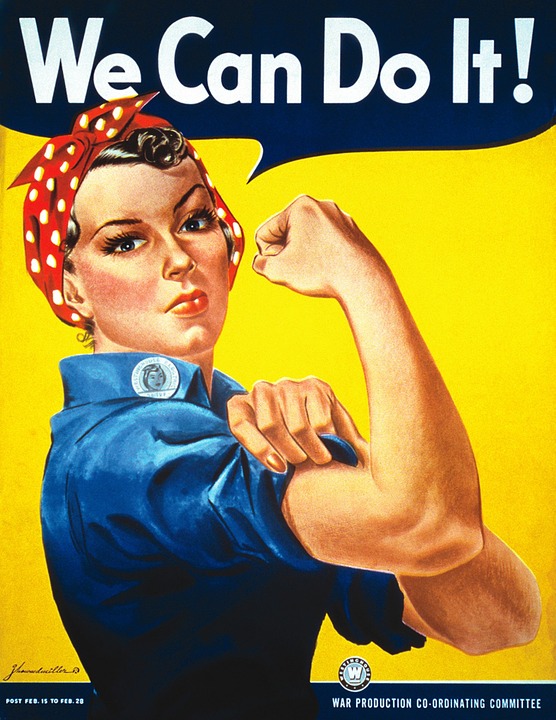
The United States was in a war-time economy during World War II. With many of our men serving our country in Europe and the South Pacific, our women went to work.

There were many items families did without in a wartime economy. Buying the special gift at Christmas was especially difficult.

Rubber was in demand so tires for cars were scarce. Common gifts for children like basketballs, volleyballs, and tennis shoes were unlikely to be under the tree.

Most Americans were limited to four gallons of gas a week, so they didn’t make unnecessary trips. If grandparents and other relatives did not live nearby, you might not see them often.

The local ration board had to issue a written certificate to buy a bicycle.

Metal was needed for tanks, airplanes, and battleships. Citizens couldn’t buy cars, pots and pans, strollers, toy trains, and alarm clocks.

Long distance phone calls were another limitation for Americans, who were encouraged to keep the phone lines open for the soldiers.

A common practice before the war was to purchase goods on account—charging them. During the war, bills were required to be paid within two months. If the bill wasn’t paid on time, the account was frozen.

Popular gifts during the war were ration stamps, which enabled folks to buy particular items. Hats, socks, mittens, and household goods were much-appreciated gifts. Book sales soared. Board games, perfume, and radios were other common presents at Christmas.

Of course, families missed their husbands, fathers, brothers, and uncles serving across the sea. All other hardships dimmed in comparison.

-Sandra Merville Hart

Sources

Waggoner, Susan. It’s A Wonderful Christmas, Stewart, Tabori & Chang, 2004.


Christmas Lights

by Sandra Merville Hart

Before Christmas lights adorned Christmas trees, candles were lit on the branches to signify the light of Jesus. The family gathered in the parlor while fathers lit the candles. Because of the fire hazard, these were quickly extinguished.

After Thomas Edison invented the light bulb, Edward Hibberd Johnson had an idea. In 1882, Johnson displayed his Christmas tree by his New York City parlor window where it was plainly visible from the street. He strung 80 light bulbs together (red, blue, and white) and arranged them around the tree which stood on a revolving pedestal. The power for the lights and pedestal came from a generator.

To ensure his lights received the public’s notice, Johnson contacted reporters. The brilliance of the lights stunned them. Folks on the street stopped to gaze in wonder. However fascinated people were, decorating with lights wasn’t feasible for most.

President Grover Cleveland helped popularize Christmas lights when he had the White House tree decorated with them in 1895.

Electricity wasn’t widely available for many years—and the lights were expensive. In 1903, a set (20 plain, 4 red, and 4 frosted bulbs) cost $12 when the average hourly wage was 22 cents!

The price dropped to $1.75 for a sixteen-foot string by 1914.

Today, Christmas lights adorn our trees and our homes. Many of us still take our families out to see special light displays during the holidays.

And we have Edward Hibbert Johnson to thank for this beautiful idea.

Sources

Chan, Melissa. “Here’s How Christmas Lights Came to Be,” Time for Kids, 2019/08/15 https://time.com/4152307/christmas-tree-lights-history/.

Malanowski, Jamie. “Untangling the History of Christmas Lights,” Smithsonian.com, 2019/08/15 https://www.smithsonianmag.com/history/untangling-history-christmas-lights-180961140/.

Waggoner, Susan. It’s A Wonderful Christmas, Stewart, Tabori & Chang, 2004.


The Christmas Tree

by Sandra Merville Hart

The tradition of Christmas trees began centuries ago. Citizens of Alsace, France, bought trees to set up, unornamented, in their homes in 1510.

In Germany and Austria, traditions in the 1700s were to hang evergreen tips upside down. Often decorated with apples and nuts, these Christmas trees also earned the name ‘sugartrees.’

German settlers in Pennsylvania had community Christmas trees by 1747, yet most Americans still considered them pagan symbols in the 1840s.

The White House’s first Christmas tree was with President Franklin Pierce in 1853, around the time Christmas trees began to be sold in the United States.

Even so, only twenty percent of American families had Christmas trees in 1900. Twenty years later, it was a tradition in most American homes. The popularity of the trees brought shortages, leading to Christmas tree farms.

Artificial trees, available from the 1880s, were often used by poorer families.

After World War II, the demand for Christmas trees by nostalgic British soldiers exceeded the supply of evergreens. The Addis Brush Company of America, who had manufactured artificial brush trees since the 1930s, sold thousands of trees in Great Britain.

Addis then manufactured a Silver Pine tree, made of aluminum, in the 1950s. It was sold with a Christmas tree color wheel that illuminated the tree in different colors as it revolved.

Another fad began in the 1960s—flocked Christmas trees, where spray is added to resemble snowy branches.

Whether your preference is for real or artificial trees, Christmas trees remain a beautiful holiday tradition.

Sources

History.com Editors. “History of Christmas Trees,” History.com, 2019/08/15  https://www.history.com/topics/christmas/history-of-christmas-trees.

“History of Christmas Trees,” National Christmas Tree Association, 2019/08/15 https://www.realchristmastrees.org/dnn/Education/History-of-Christmas-Trees.

Waggoner, Susan. It’s A Wonderful Christmas, Stewart, Tabori & Chang, 2004.

Boar’s Head Festival

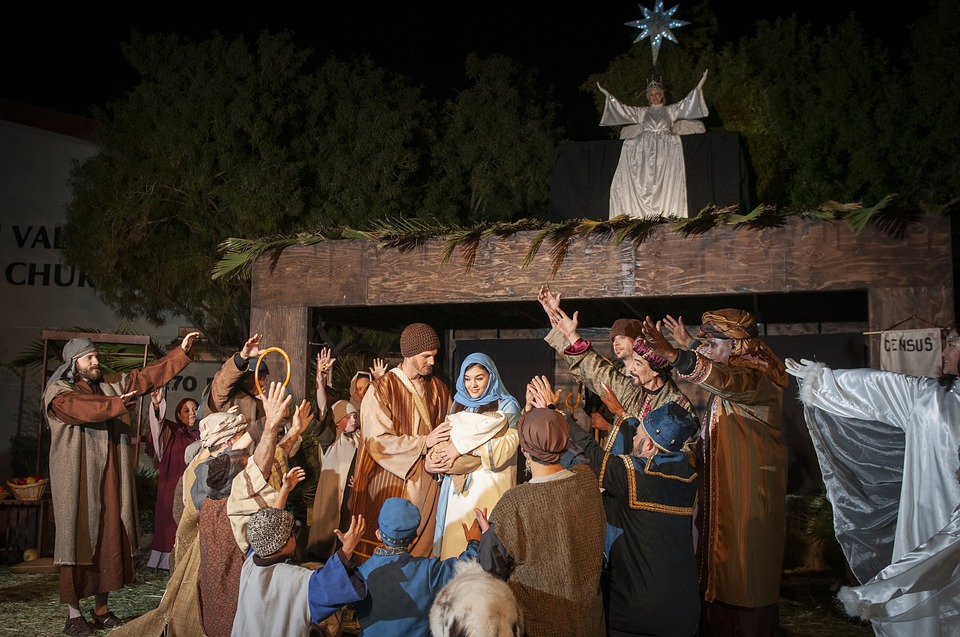
In 1340, according to legend, a student at Queen’s College in Oxford, England, read a metal-bound book of Aristotle as he strolled through the forest to Christmas Mass. Wild boars, a menace to society, roamed the woods and one attacked the young man. With no weapons, he rammed his book into boar’s mouth, choking the animal to death. Roasted boar was often served at medieval banquets. A procession carried in the boar’s garnished head into the dining hall that night while carolers sang. This presentation at Christmas became a symbol of Jesus’s triumph over sin.

St. John’s College in Cambridge celebrated the Boar’s Head Festival by 1607. An expanded cast of historical characters, lords, ladies, knights, hunters, and others told of the birth of Jesus. Magi and shepherds were added later.

Mince pie and plum pudding were served at the festival and the Yule Log was lit.

The medieval festival is still celebrated in Europe and the United States. The formal program at Christ Church Cathedral in Cincinnati includes: Orchestral Prelude, Procession of the Beefeaters, The Yule Sprite Comes, The Boar’s Head Procession, The Yule Log, The Waits, The Angel, The Shepherds, The Magi, The World joins the Kings and Shepherds, Recessional, Orchestral Postlude and The Yule Sprite Returns.

During the Boar’s Head Procession, a boar’s head is carried in by knights and others.

There is symbolic meaning to the parts of the medieval service that occurs between Christmas and New Year’s Day. The costumes and processions transport guests back in time and is worth experiencing.

-Sandra Merville Hart

Sources

Berten, Jinny Powers. Cincinnati Christmas, Orange Frazer Press, 2011.

“The Boar’s Head and Yule Log Festival Tradition,” Christ Church Cathedral, 2019/07/29 ttps://cincinnaticathedral.com/boars-head-tradition/.

Civil War Women: Bettie Duvall, Confederate Spy

Washington D.C. resident Rose O’Neal Greenhow had been asked to discover troop movements and battle plans. She had information that Union troops had been ordered to attack Manassas. As a Confederate spy, she had a network of folks to deliver the coded message to Confederate General Beauregard. She gave the information to sixteen-year-old Bettie Duvall. (One source spelled her name “Betty.”)

On July 9, 1861, Bettie, a beautiful Southerner, disguised herself by selling buttermilk and sweet cream at the city market. She left the city, alone, on a farm cart. She rode past the 1st Massachusetts Infantry headquarters. A dirt lane led her to a friend’s plantation near Langley where she stayed for the night.

The next morning, she relinquished the farm cart. Dressed in a stylish riding habit, Bettie rode horseback to her intended destination—the village of Fairfax Court House. Manassas was ten miles from the village.

She met Confederate soldiers at an outpost near Vienna. At her request to speak with Brig. Gen. Milledge Bonham, they took her to his headquarters in Fairfax Court House. Beauregard had just taken over command, but Bonham was his top aide.

At first, Bonham refused to meet her. Upon learning that the beautiful woman was prepared to take the message to General Beauregard herself, he agreed to talk with her.

He recognized her “sparkling blue eyes, perfect features, glossy black hair” as a Southern lady from the spectator gallery at Congress. He agreed to forward on her message.

To his astonishment, she removed the combs from her hair knot. Shaking her beautiful hair loose, she untied a small silk package about the size of a silver dollar from the long strands and gave it to him.

Beauregard learned from the message that an attack was ordered within a week.

The advance warning led to a Confederate victory at the First Battle of Bull Run.

-Sandra Merville Hart

Sources

Monson, Marianne. Women of the Blue & Gray, Thorndike Press, 2018.

Winkler, H. Donald. Stealing Secrets, Cumberland House, 2010.

Zeinert, Karen. Those Courageous Women of the Civil War, The Millbrook Press, 1998.


Civil War Women: Kate Cumming, Confederate Nurse and Diarist

In the 1840s, Kate Cumming’s family emigrated from Scotland when she was a child, eventually settling in Mobile, Alabama.

Her mother and two sisters went to England when the Civil War started. Kate stayed in Mobile with her father. Her younger brother enlisted in the 21st Alabama Infantry as part of Ketchum’s Battery. Kate gathered hospital supplies to support wounded soldiers.

In 1862, Reverend Benjamin M. Miller’s speech encouraging women to serve in the hospitals stirred Kate. Inspired by this speech and Florence Nightingale’s example, Kate joined forty other women in Corinth, Mississippi, to nurse Battle of Shiloh wounded—despite her family’s objections.

She briefly returned home that summer yet yearned to continue nursing the soldiers. She traveled to Chattanooga with two other women to volunteer at Newsome Hospital. Her nursing help was eventually accepted.

In September of 1862, the Confederate government began allowing nurses to be paid. Kate enlisted in the Confederate Army Medical Department. Despite her personal sadness at watching soldiers die and battling poor hospital conditions, she worked as matron with Dr. Samuel Stout, medical director for Army of Tennessee, in various locations in Alabama, Tennessee, and Georgia.

As a matron, Kate managed hospital departments, nursed soldiers, foraged for supplies, cooked, sewed, wrote letters, and supervised other workers.

She also maintained a detailed diary. This honest account of day-to-day nursing tasks and the men she served also shows tragedies Southerners faced in increasing measure as the war progressed.

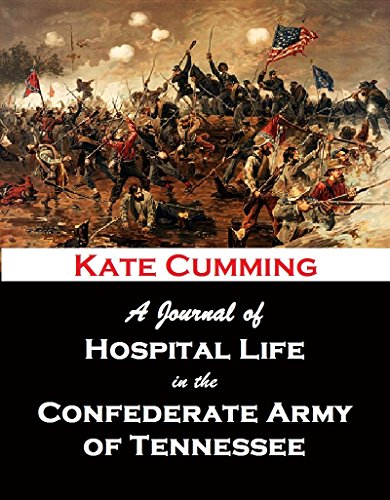
After the war, Kate published her diary, A Journal of Hospital Life in the Confederate Army of Tennessee from the Battle of Shiloh to the End of the War: With Sketches of Life and Character, and Brief Notices of Current Events During that Period.

The author’s introduction was written in 1865—before publication. Kate is bitter about treatment from the North after the war’s end and urges all to unite. Her hope in publishing her diaries is to show Northerners how all have suffered. She wants reconciliation.

-Sandra Merville Hart

Sources

Cumming, Kate. Edited by Harwell, Richard Barksdale. Kate: The Journal of a Confederate Nurse, Louisiana State University Press, 1959.

Hilde, Libra. “Kate Cumming,” Encyclopedia of Alabama, 2019/04/11 http://www.encyclopediaofalabama.org/article/h-1101.

“Kate Cumming,” National Park Service, 2019/04/11 ttps://www.nps.gov/people/kate-cumming.htm.

“Kate Cumming,” Wikipedia, 2019/04/11 ttps://en.wikipedia.org/wiki/Kate_Cumming.

Rohrer, Katherine E. “Kate Cumming (ca. 1830-1909).” New Georgia Encyclopedia. 08 June 2017. Web. 11 April 2019.


Civil War Women: Sarah Morgan Dawson, Confederate Diarist

Sarah Morgan Dawson was twenty when she began writing in her diary on March 9, 1862. The Civil War raged near her family’s home in Baton Rouge, Louisiana. Her family had already known hard times. In 1861, illness claimed her father’s life and a duel claimed a brother’s life.

War threatened to divide her family. Three brothers fought for the Confederacy and another, though he sided with the Union, refused to fight against his brothers.

Baton Rouge fell into Union hands. Most citizens ran for their lives, including Sarah’s family. She returned a few times to gather possessions from her home, but found that the Union soldiers who occupied the city had ransacked it. The home was unrecognizable on her last trip—the soldiers had plundered valuables and destroyed what they left behind. Sarah didn’t return to her childhood home until after the war.

Made homeless by the war, her family wandered from Baton Rouge, staying with friends and strangers.

Food supplies dwindled. Sarah had money to purchase food yet some places had none for sale.

They stayed near the Confederate army, making friends with many soldiers. Sarah did all she could to help them. Her family had escaped with few clothes … and everyone else was in the same predicament.

A serious buggy accident injured Sarah’s back. The injury prevented her from walking more than a few steps. She clung to her faith throughout the difficulties that mounted almost daily.

Her Union-sympathizer brother urged them to stay with him in New Orleans, which was now under Union control. They had little choice. A hard train ride and then a schooner took them to New Orleans.

Upon their arrival, they had to take an oath of allegiance to the Union. A Southerner at heart, taking the oath broke Sarah’s spirit. Even worse, Sarah’s mother complained so passionately to the Union soldiers of all she’d suffered at their hands that she was almost arrested. Sarah’s brother smoothed things over and took them into his home.

At the beginning of 1864, Sarah’s heart broke to discover that two of her brothers died. They’d lost so much to the war that she hated the Union.

General Lee surrendered on April 9, 1865. Sarah’s diary entries stopped on June 15, 1865.

It was published and inscribed: “To those who endured and forgave”.

Sarah read her diary many years later and wanted people to know that through it all, God never failed her. “Whatever the anguish, whatever the extremity, in His own good time He ever delivered me. So that I bless Him to-day for all of life’s joys and sorrows—for all He gave—for all He has taken—and I bear witness that it was all Very Good.” –Sarah Morgan Dawson, July 23rd, 1896, Charleston, South Carolina.

-Sandra Merville Hart

Sources

Dawson, Sarah Morgan. A Confederate Girl’s Diary: Civil War Centennial Series, Indiana University Press, 1960.


WWII Gave Job Opportunities to Women

Today’s post was written by fellow author, Linda Shenton Matchett. Welcome to Historical Nibbles, Linda!

When I was growing up, my folks didn’t believe in “girl jobs” and “boy jobs.” Hence, my brothers learned how to cook, wash dishes, and do laundry, and my sister and I learned how to mow the yard and shovel the driveway among other chores. That philosophy is decidedly different from the cultural norms prior to WWII.

Then war came, and men began to leave the workforce in droves. Support for women to seek volunteer and employment opportunities began at the highest level. In one of his fireside chats, President Roosevelt said, “There need no longer be any debate as to the place of women in the business life of this nation. The enlarging war effort calls for the services of every qualified and able-bodied person, man or woman.”

Unfortunately, for the first eighteen months of the war, organizations and employers struggled to go against deep-seated traditions and concepts making them reluctant to hire women. As a result, there were “boy jobs” and “girl jobs.” One of the organizations where a young lady could work or volunteer without recrimination was the United Service Organization (USO). Founded in 1941 by combining the Salvation Army, YMCA, YWCA, National Catholic Community Services, National Travelers Aid Association, and the National Jewish Welfare Board, the USO had over 3,000 clubs worldwide at its height (there are only 160 day).

Despite ties to the military, the USO is not part of the government, but rather a private nonprofit organization. Therefore, fundraising was necessary to finance its operation. Thomas Dewey (FDR’s opponent in the 1944 election) and Prescott Bush (Grandfather of former President George W. Bush) spearheaded the campaign, and more than thirty-three million dollars was raised. Activities were countless: from billiards and boxing to dancing and darts. Services ranged from sewing on insignias to writing letters on behalf of the men. Candy, gum, newspapers, and other items were available for purchase.

Strict rules ensured the clubs were safe places for the junior hostesses-unmarried women typically in their mid-twenties. Senior hostesses acted as chaperones, and the younger hostesses couldn’t dance with the same man more than twice. Soldiers, sailors, and airmen could smoke at the club, but no was liquor served. In addition, formal attire was required of the girls, and the wearing of slacks was forbidden.

For more information about this worthwhile organization, visit http://www.uso.org.

-Linda Shenton Matchett


Blurb: Murder of Convenience

May 1942: Geneva Alexander flees Philadelphia and joins the USO to escape the engagement her parents have arranged for her, only to wind up as the number one suspect in her betrothed’s murder investigation. Diagnosed with Retinitis Pigmentosa, she must find the real killer before she loses her sight…or is convicted for a crime she didn’t commit.

Set in the early days of America’s entry into WWII and featuring cameo appearances from Hollywood stars, Murder of Convenience is a tribute to the individuals who served on the home front, especially those who did so in spite of personal difficulties, reminding us that service always comes as a result of sacrifice. Betrayal, blackmail, and a barrage of unanswered questions… Murder of Convenience is the first in the exciting new “Women of Courage” series.


Linda’s Bio:

Linda Shenton Matchett is an author, speaker, and history geek. Born in Baltimore, Maryland a stone’s throw from Fort McHenry, Linda has lived in historical places most of her life. A member of ACFW, RWA, and Sisters in Crime, she is also a volunteer docent at the Wright Museum of WWII and a Trustee for the Wolfeboro Public Library. Connect with Linda on her blog. 

Sign up for her newsletter newsletter and receive a free short story, Love’s Bloom!

Amazon


Civil War Battle of Gettyburg’s Numbers

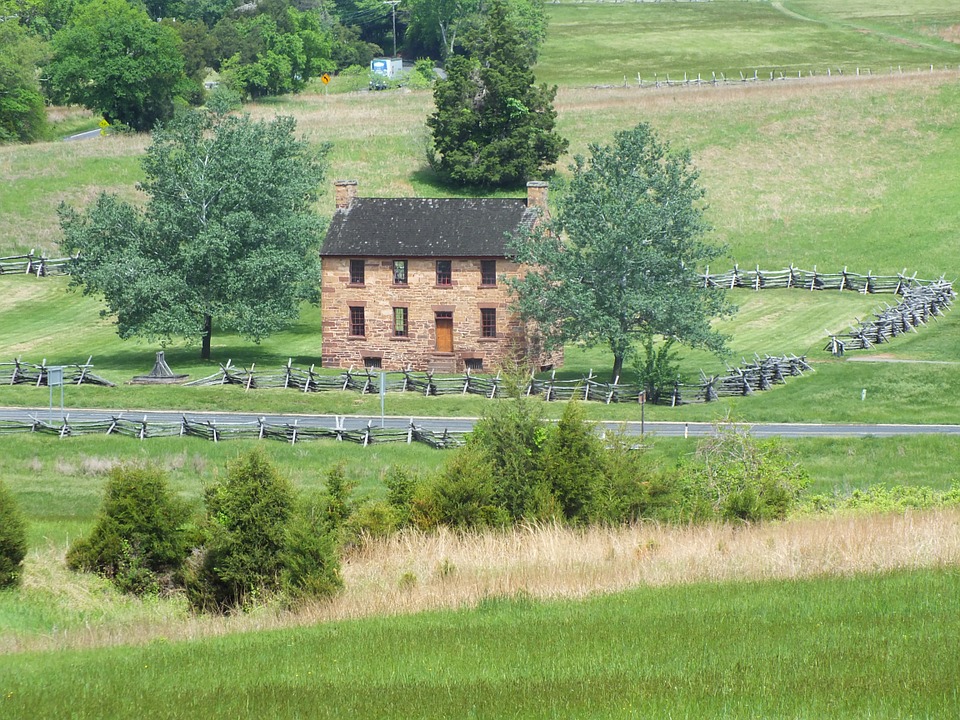
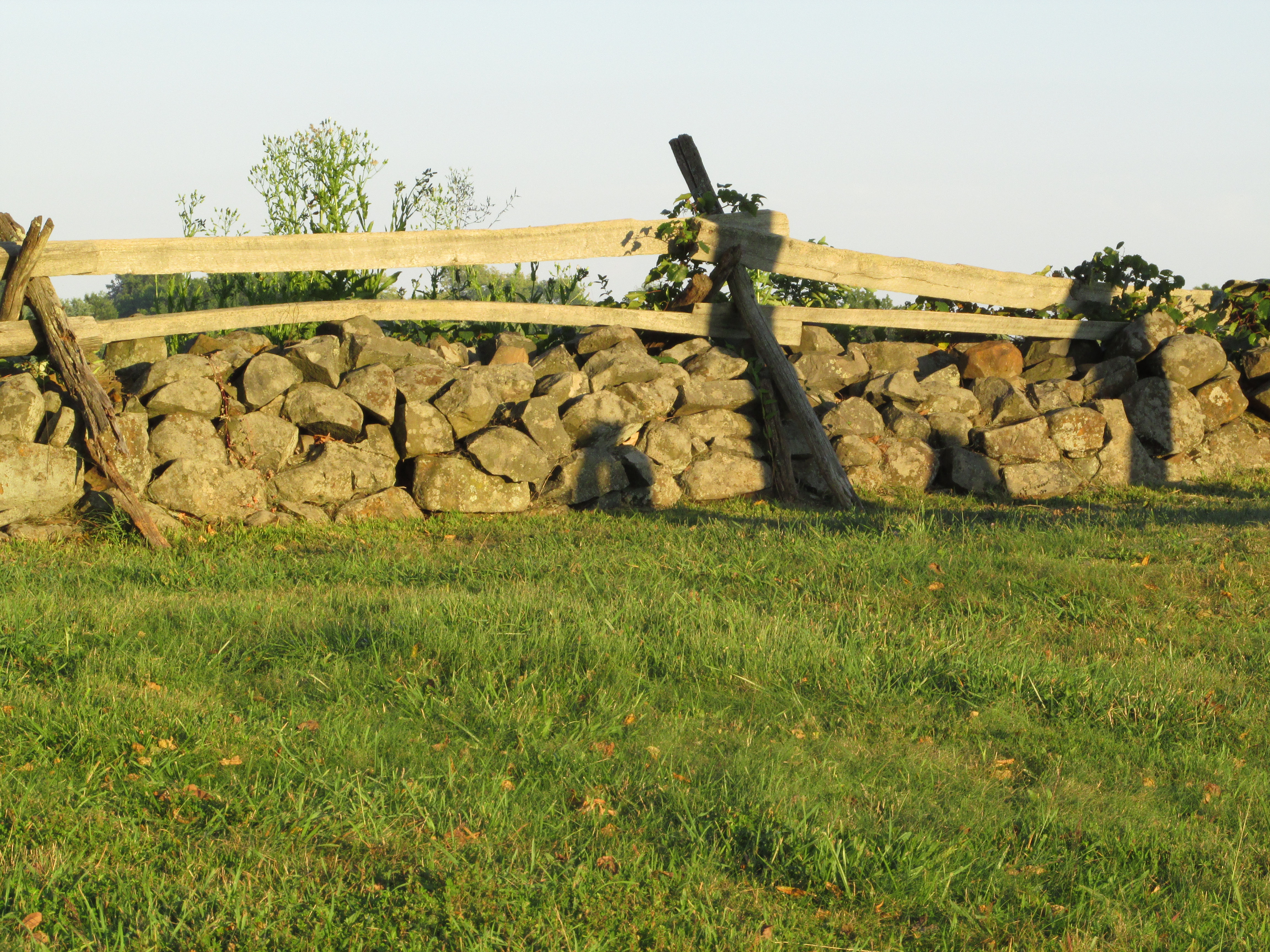
Post and rider fence common around Gettysburg in 1863 — at Gettysburg Battlefield


 With the July 1st—3rd anniversary of the Battle of Gettysburg approaching, I thought it would be fun to dig into some “number” facts pertaining to the battle.

How many soldiers fought in the famous Pennsylvania battle?

Sources disagree on this number due to inaccurate, incomplete, and missing records.

HistoryNet

 82,289 Union soldiers

75,000 Confederate soldiers

157,289 Total

Stone Sentinels

93,700 Union

 70,100 Confederate

163,800  Total

Book of Lists

93,693 Union (Corps Strength)

 70,136 Confederate (Corps Strength)

163,829 Total

Some sources reported round numbers:

Encylopaedia Britannica

94,000 Union

 71,000 Confederate

165,000 Total

The Civil War Battlefield Guide    

170,000+ soldiers fought

When the Smoke Cleared At Gettysburg

172,000+ soldiers fought

As you can see, some of these numbers are very close. The difference between the lowest and highest estimates is 14,711.

How many casualties did both sides suffer?

We first have to understand that casualties were broken down as follows: Killed, Wounded, and Missing. Sources also disagree on this number for the same reasons as above.

HistoryNet

3,155  Union killed

14,529 Union wounded

  5,365 Union missing

23,049 Total Union casualties


3,903  Confederate killed

18,735  Confederate wounded

  5,425  Confederate missing

28,063  Total Confederate casualties


23,049 Union (all casualties)

28,063 Confederate (all casualties)

51,112 Total casualties

Stone Sentinels*

3,150  Union killed

14,500 Union wounded

  5,165  Union missing

22,815  Total Union casualties


4,400  Confederate killed

12,950 Confederate wounded

  5,350  Confederate missing

22,700  Total Confederate casualties


22,815 Union (all casualties)

22,700 Confederate (all casualties)

45,515 Total casualties

*Stone Sentinel acknowledges their estimates are conservative, with actual casualties possibly as high as 51,000.

Book of Lists

22,807 Union (Corps)

22,557 Confederate (Corps)

45,364  Total casualties

When the Smoke Cleared At Gettysburg

3,155  Union killed

14,530 Union wounded

  5,365  Union missing

23,050  Total Union casualties


4,500  Confederate killed

18,750 Confederate wounded

   5,250 Confederate missing

28,500  Total Confederate casualties


23,050 Union (all casualties)

28,500 Confederate (all casualties)

51,550 Total casualties


Some sources reported round numbers:

Encylopaedia Britannica

23,000 Union casualties

28,000 Confederate casualties

51,000 Total casualties

The Civil War Battlefield Guide    

50,000+ Total casualties
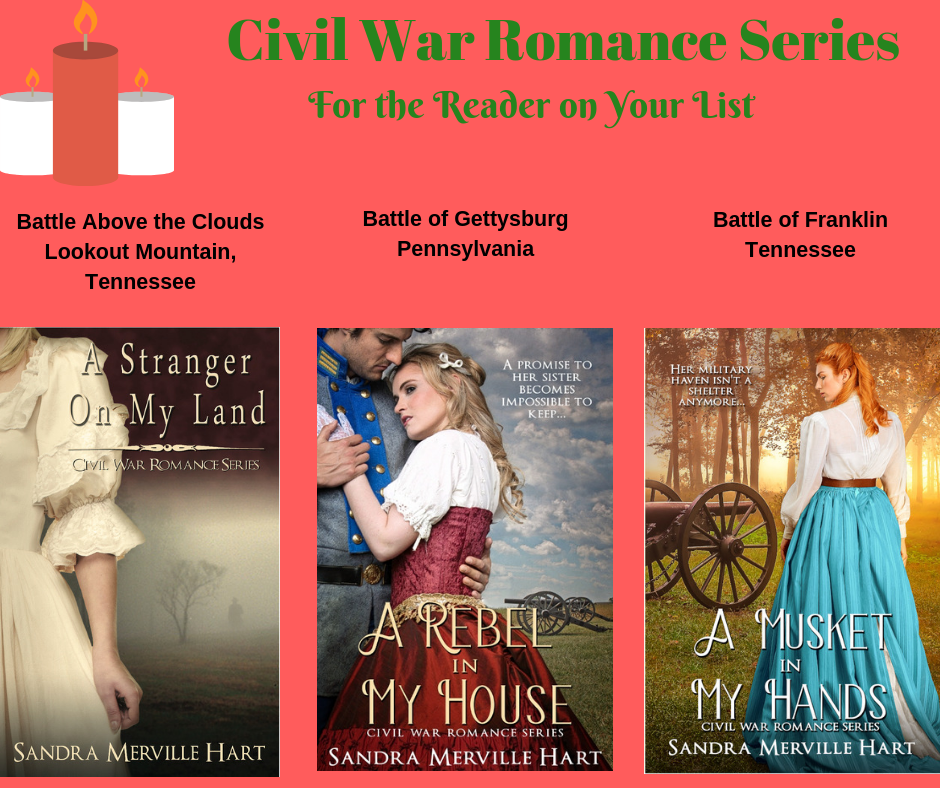
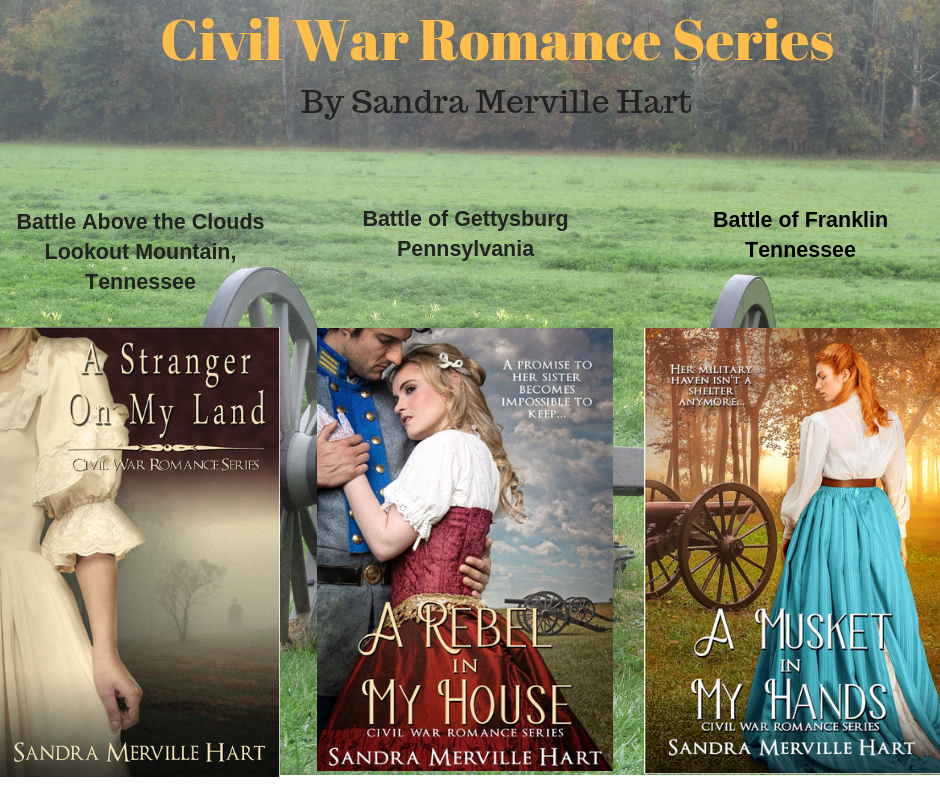
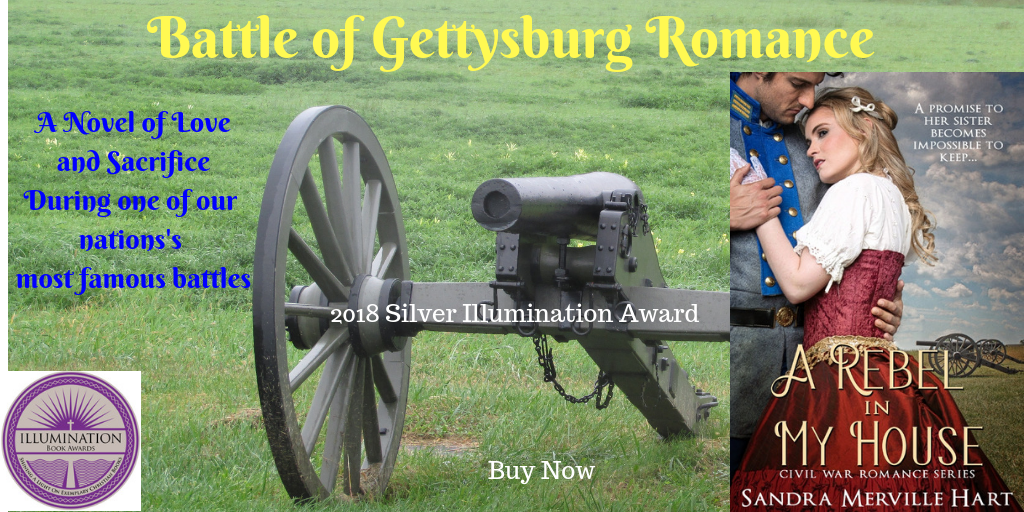
Again, some numbers are close. The difference between the lowest and highest estimates is 6,186. It’s been surprising to find so many discrepancies in these numbers. As an author of a Civil War romance set during the Battle of Gettysburg, A Rebel in My HouseI’m often asked these numbers. It’s not an easy answer.

-Sandra Merville Hart

Sources

“Battle of Gettysburg,” Encyclopeadia Britannica, 2018/06/15 https://www.britannica.com/event/Battle-of-Gettysburg.

“Battle of Gettysburg,” HistoryNet, 2018/06/15 http://www.historynet.com/battle-of-gettysburg.

“Battle of Gettysburg Facts,” Stone Sentinels, 2018/06/15 http://gettysburg.stonesentinels.com/battle-of-gettysburg-facts/.

Compiled by Editors of Combined Books. The Civil War Book of Lists, Da Capo Press, 1994.

Edited by Kennedy, Frances H. The Civil War Battlefield Guide, Houghton Mifflin Company, 1990.

Long, E.B and Long, Barbara. The Civil War Day by Day: An Almanac 1861-1865, A Da Capo Paperback, 1971.

Sheldon, George. When the Smoke Cleared at Gettysburg: The Tragic Aftermath of the Bloodiest Battle of the Civil War, Cumberland House, 2003.
Battle at Fort Michilimackinac

Today’s post was written by talented editor and author, Pegg Thomas. The location of her book is a place I’ve longed to visit. Reading and loving one of her stories,  Embattled Hearts, has made me look forward to reading this newest novella.  Welcome to Historical Nibbles, Pegg!

 First, let me help you pronounce that fort, it’s mish-ee-lee-mack-in-aw. Right. Exactly how it’s spelled.

This fort sits at the top of Michigan’s Lower Peninsula, at the point where the two peninsulas are the closest. It’s called the Straits of Mackinac and today is spanned by the very impressive 5-mile-long Mackinac Bridge. The fort has been rebuilt on its original foundation and is the longest ongoing archeological dig in the United States. It’s open for tourists and staffed with a good crew of reenactors to make the experience memorable.

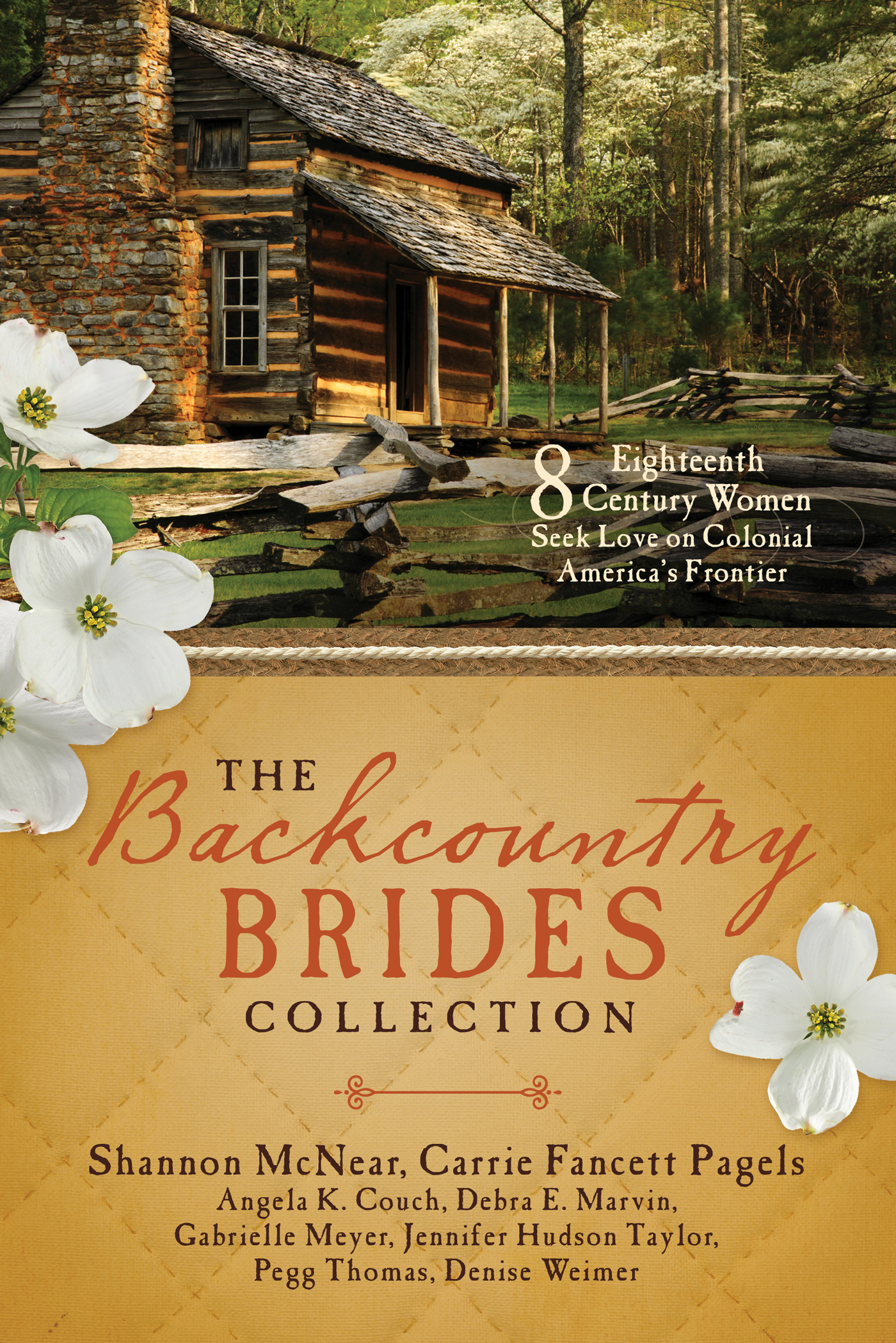
My May release, Her Redcoat, which is part of The Backcountry Brides collection, takes place here in 1763 during the Indian uprising, Pontiac’s Rebellion. While Pontiac organized multiple tribes and led the uprising against Fort Detroit, other Indians who supported him also attacked Fort Pitt and Fort Niagara. Those major forts stood against the attacks, while eight smaller forts were overrun. Including Fort Michilimackinac.

Pontiac and his followers had been used to the level-handed relationship they’d built with the French fur traders. When the British ousted the French and moved into their forts, the Indians rebelled against the arrogant and heavy-handed methods of the British.

In the background of my story is the history of Fort Michilimackinac. The British commander with his forty-some troops was vastly outnumbered by upwards of five hundred warriors. But in his full British arrogance, the commander could not see the danger all around him. He could not believe that savages—as he thought of them—could best the mightiest military in the world.

They did.

The results were devastating. Most of the regular soldiers were slaughtered. The officers were captured and held for ransom. There was one man, a British fur trader, who escaped the attack. He wrote his first-hand account of the story which has been made into the book Attack at Michilimackinac 1763. If you’re interested in this time period and the unrest in the backcountry of Britain’s American colonies, you’ll enjoy this book.

-Pegg Thomas

Bio:

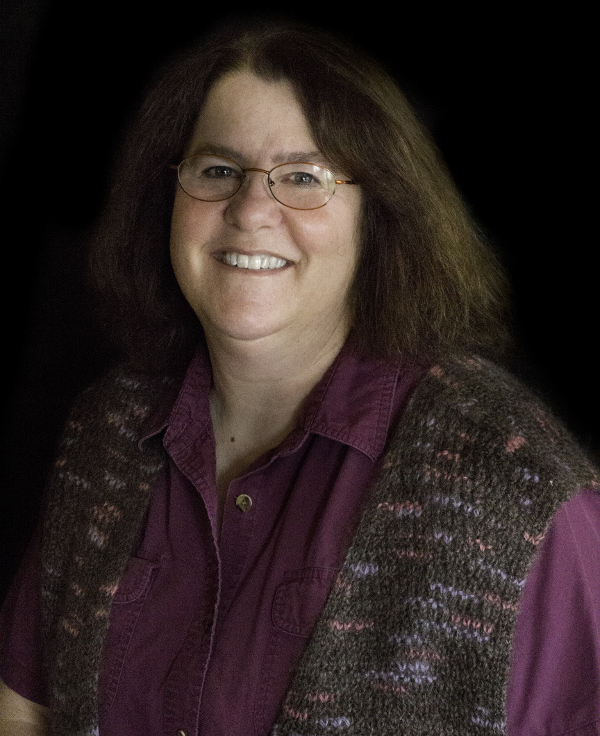
Pegg Thomas lives on a hobby farm in Northern Michigan with Michael, her husband of *mumble* years. A life-long history geek, she writes “History with a Touch of Humor.” When not working or writing, Pegg can be found in her barn, her garden, her kitchen, or sitting at her spinning wheel creating yarn to turn into her signature wool shawls.

Her Redcoat teaser:

Laurette Pettigrew grew up in the northern frontier. Henry Bedlow arrived against his will. Their chance meeting changes everything. Will a deadly clash of cultures keep them from finding happiness?

Buy her book on Amazon or Christianbook.com.

Subscribe to Pegg’s Newsletter.

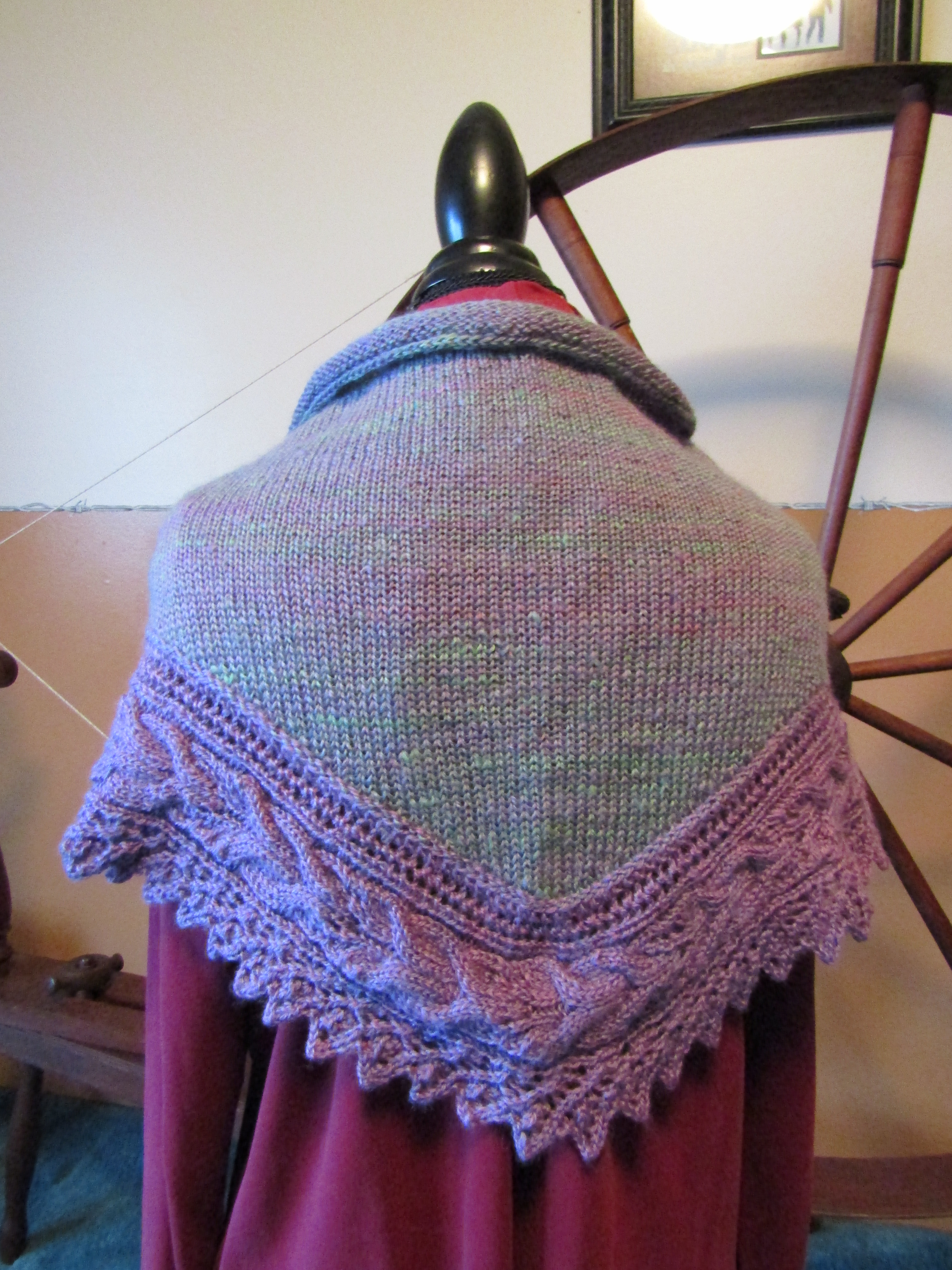
Enter Pegg’s Giveaway for this beautiful shawl by subscribing to her newsletter!

Pegg gives away one of her signature handspun, handknit, wool shawls with the release of each new story. To celebrate the release of Her Redcoat, Pegg is giving away the shawl Northern Lilacs. The Straits of Mackinac are known for their abundance of lilacs each spring and this shawl showcases their varied and gorgeous colors. Everyone who subscribes to Pegg’s newsletter is automatically entered in the drawing.